
Hook. f. & Thomson
Description
Rheum nobile, the Sikkim or noble rhubarb, is a spectacular high-alpine perennial of the eastern Himalaya, distributed from Nepal through Sikkim and northern India into Bhutan, Myanmar and south-western China, with around 220 occurrence records. It is a strict specialist of open alpine screes, moraines and rocky slopes, typically between about 4000 and 4800 m. The images derive from Sikkim at Lada-La (4400 m, June) and near Saniti Lake (4300 m, August), localities characteristic of the high, exposed scree habitat in which this iconic "glasshouse plant" grows.
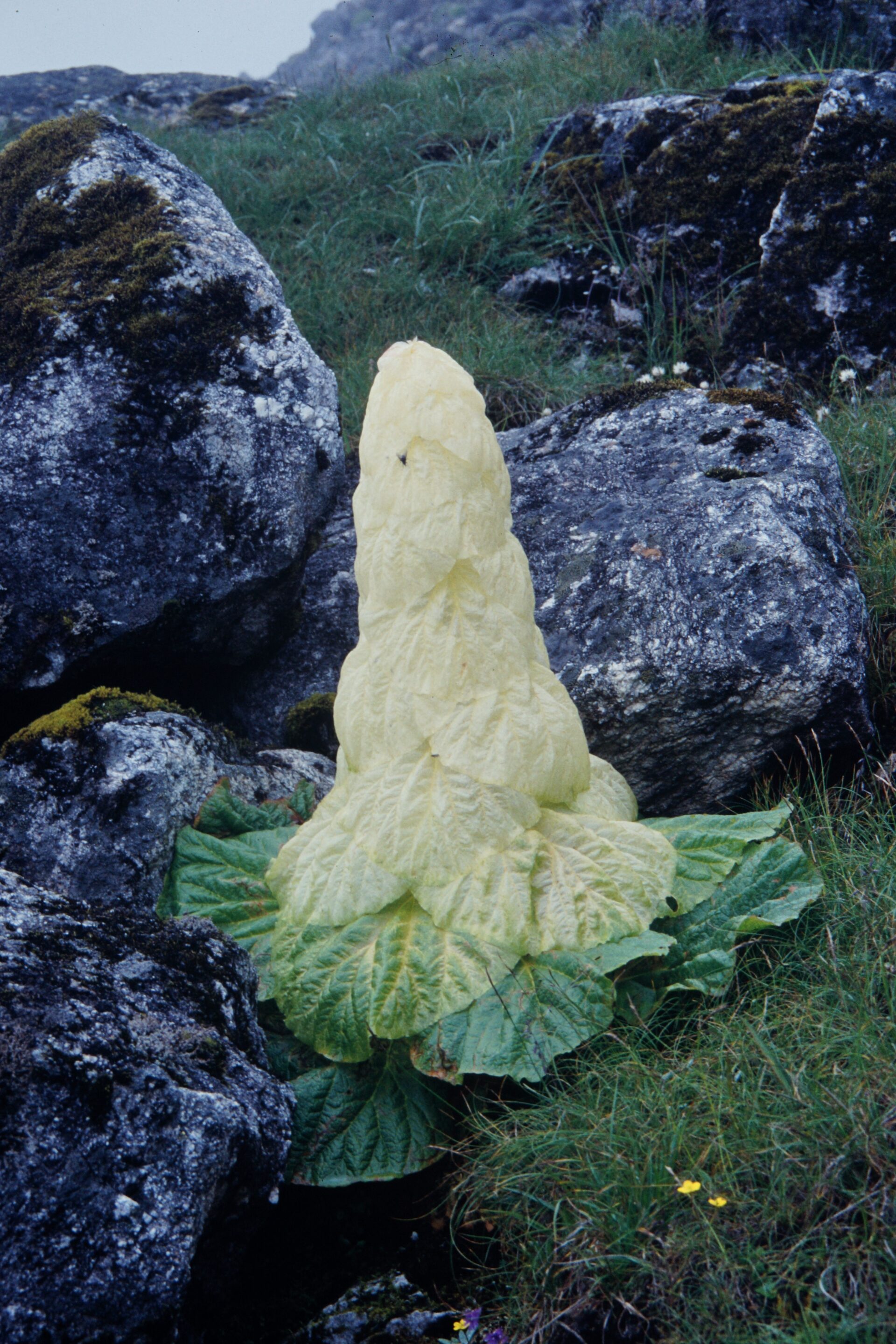
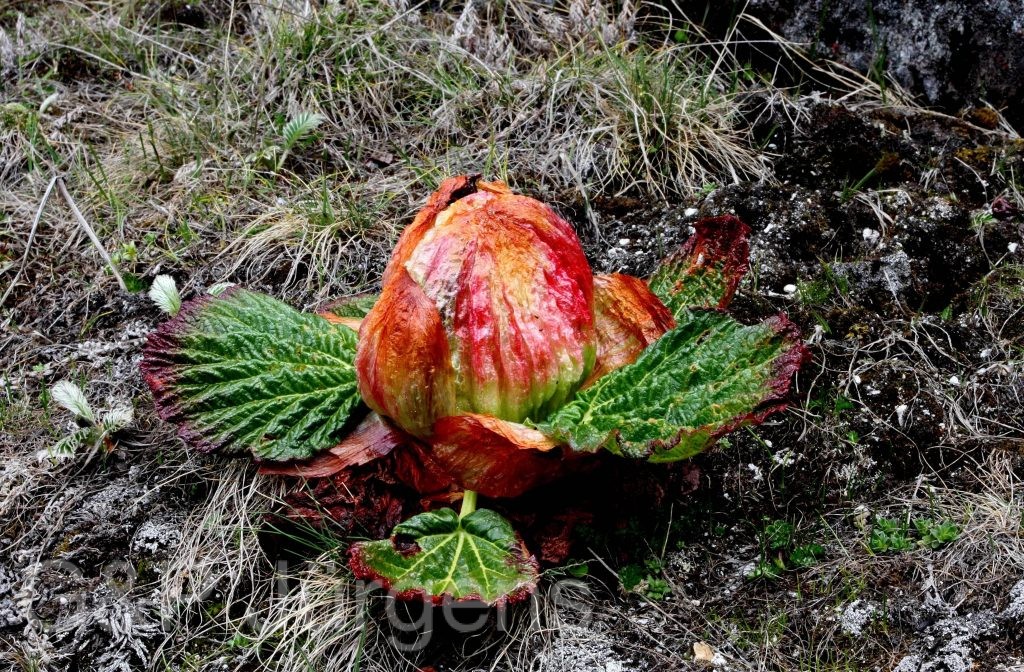
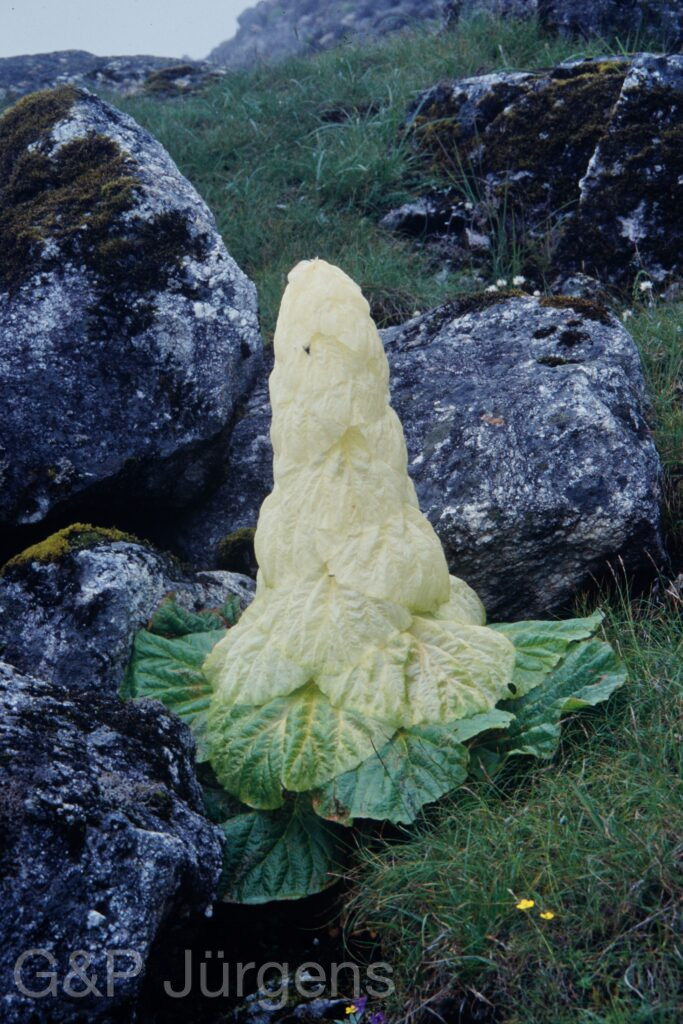
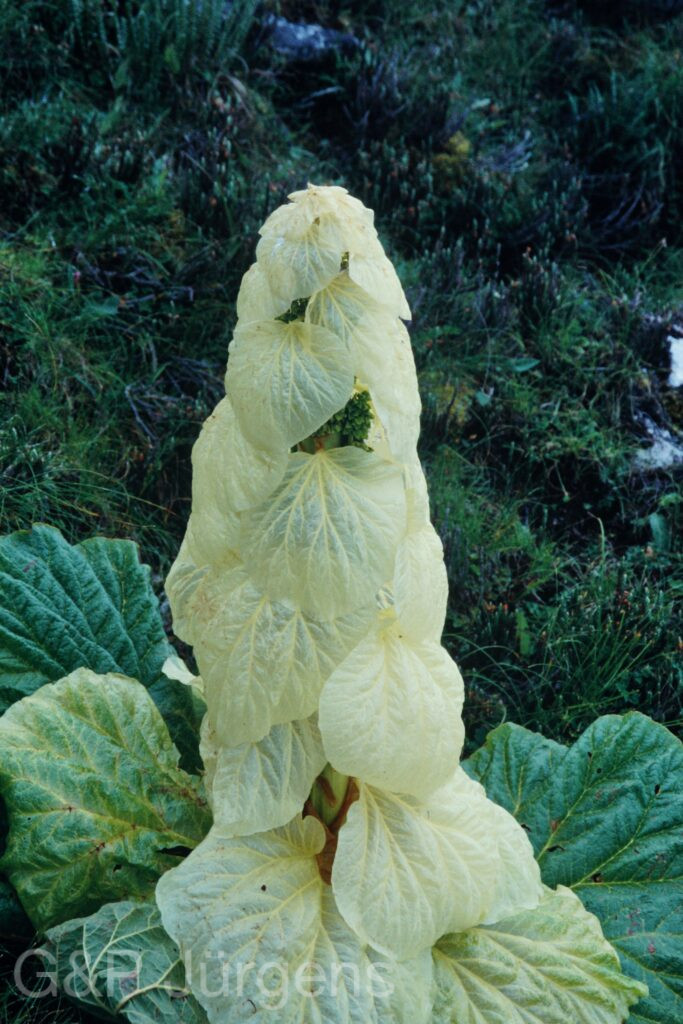
The species forms a stout, columnar flowering spike to about 1-2 m, arising from a thick taproot. Its most striking feature is the dense, overlapping series of large, translucent, straw-coloured to pale yellow bracts that sheathe the entire inflorescence, hiding the small flowers within. The basal leaves are large, broadly ovate to orbicular and reddish-margined, forming a rosette. The numerous small flowers are greenish and inconspicuous, concealed beneath the bracts, and develop into small, three-winged nutlets (achenes) typical of the genus.
Rheum nobile (Polygonaceae) is a classic example of a Himalayan "greenhouse" or glasshouse plant: the translucent bracts trap solar heat and create a warm, sheltered microclimate that protects the developing flowers from cold, wind and intense ultraviolet radiation while attracting and harbouring specialist pollinating midges. This remarkable adaptation, much studied in plant ecophysiology, makes the species a celebrated model of high-altitude floral biology. Though localised, it is of least conservation concern, but its restriction to a narrow alpine belt makes it potentially vulnerable to climatic warming.
Author: Hook. f. & Thomson · Sources: POWO (Kew), GBIF, Flora of China, Flora of Bhutan, Annotated Checklist of the Flowering Plants of Nepal, Losina-Losinskaja monograph of Rheum