
Ludlow
Description
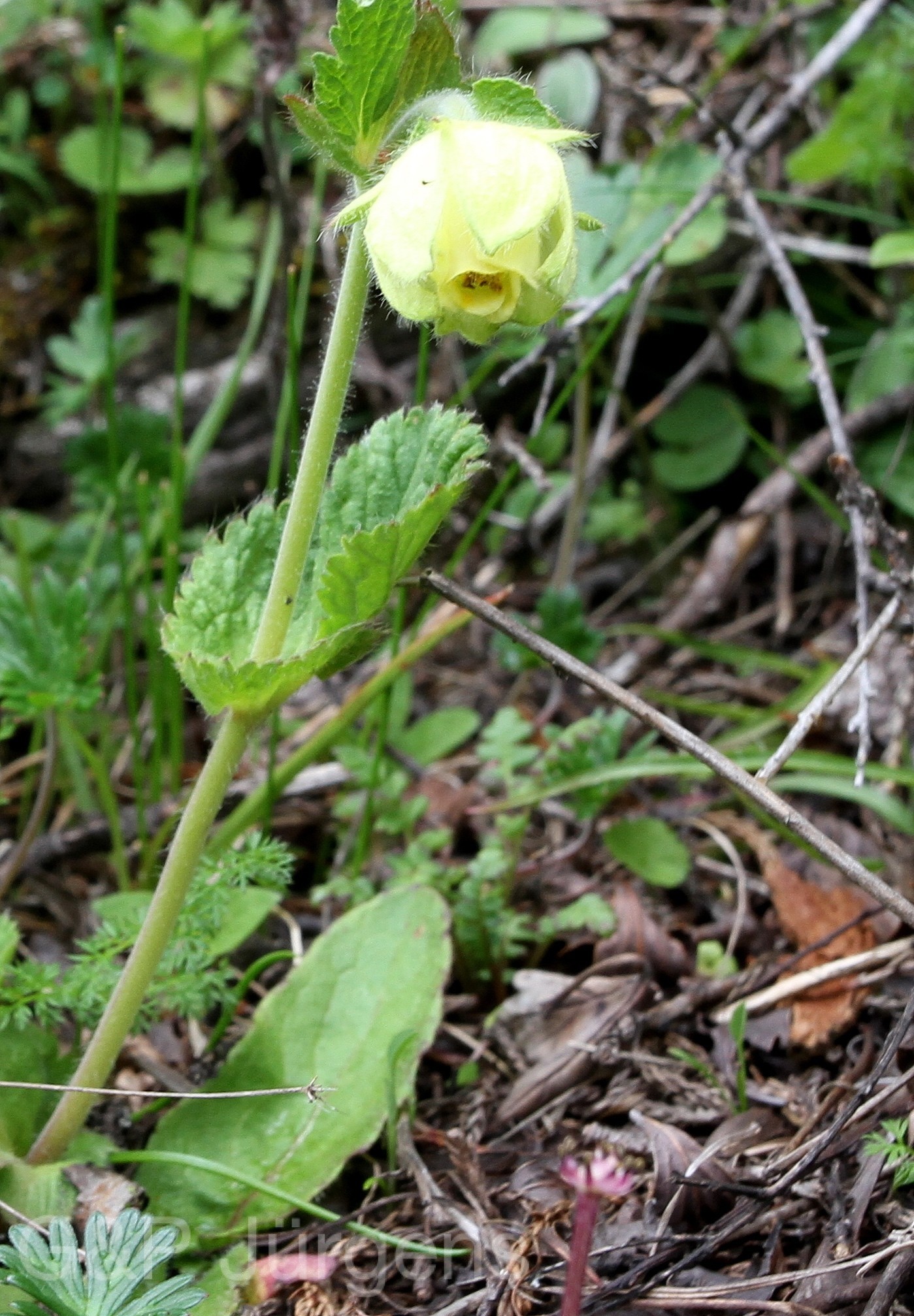
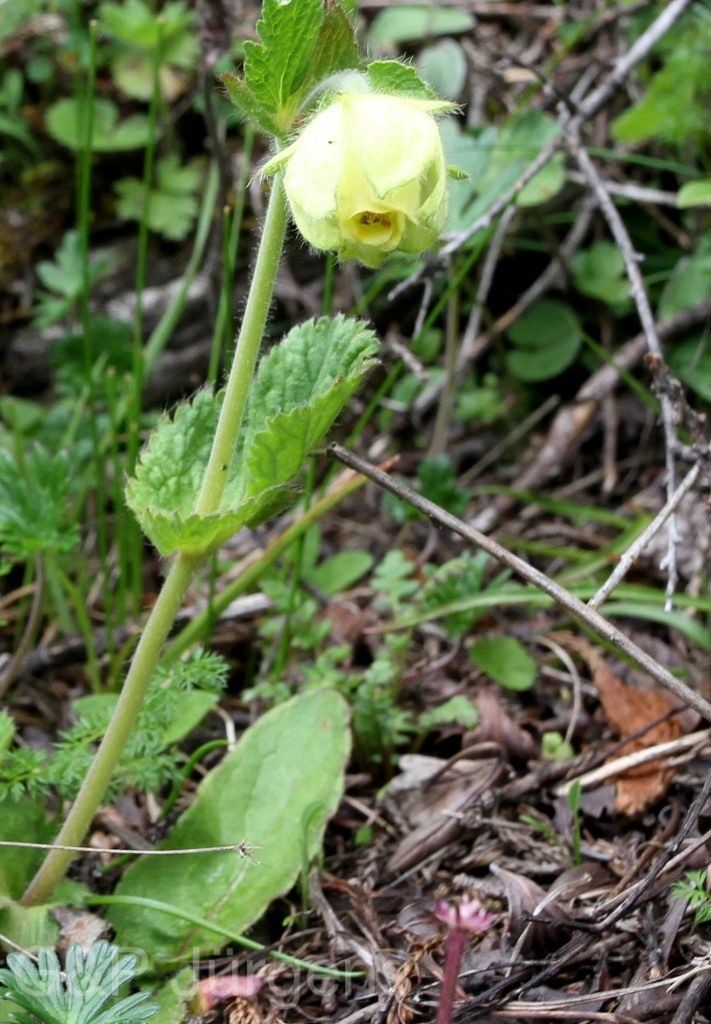
Geum macrosepalum Ludlow is a high-alpine rosaceous herb of the Eastern Himalaya and adjacent China, recorded from China, India and Bhutan (gbif_countries: CN, IN, BT) with only 20 occurrences in GBIF, marking it as a narrowly distributed mountain endemic. It grows in open alpine meadows, moist turf, rocky slopes and seepage ground, typically above about 3500 m. The illustrated plant from Tsochenchen in Bhutan at 3800 m, in July, captures it flowering at the height of the summer growing season in the cool, humid alpine belt of the eastern ranges.
It is a perennial herb arising from a stout rhizome, forming a basal rosette of pinnately compound, lyrate leaves with a large terminal leaflet and smaller lateral pairs, the margins toothed and the surfaces softly hairy. The flowering stems bear few reduced cauline leaves. The flowers, often solitary or few, are notable for their enlarged sepals, recorded in the epithet macrosepalum, which subtend yellow petals; an epicalyx is present outside the calyx. Numerous stamens and carpels occupy the receptacle, and the achenes mature with persistent styles that may be hooked or plumose, aiding dispersal, a feature linking the species to the segregate Acomastylis under which it has been treated.
The taxon has been placed in Acomastylis (Geum macrosepalum being the basis of Acomastylis macrosepala), reflecting the disputed generic limits within the Geum–Sieversia–Acomastylis complex; molecular work supports a broadly circumscribed Geum. Given its limited range across the eastern alpine zone, the species is of biogeographic interest as a regional endemic, and its small number of records suggests it warrants conservation attention.
Author: Ludlow · Sources: POWO (Kew), GBIF, Flora of China (Rosaceae), Flora of Bhutan, Smedmark & Eriksson phylogenetic study of Geum and allies