
Duthie ex Engl. & Irmsch.
Description
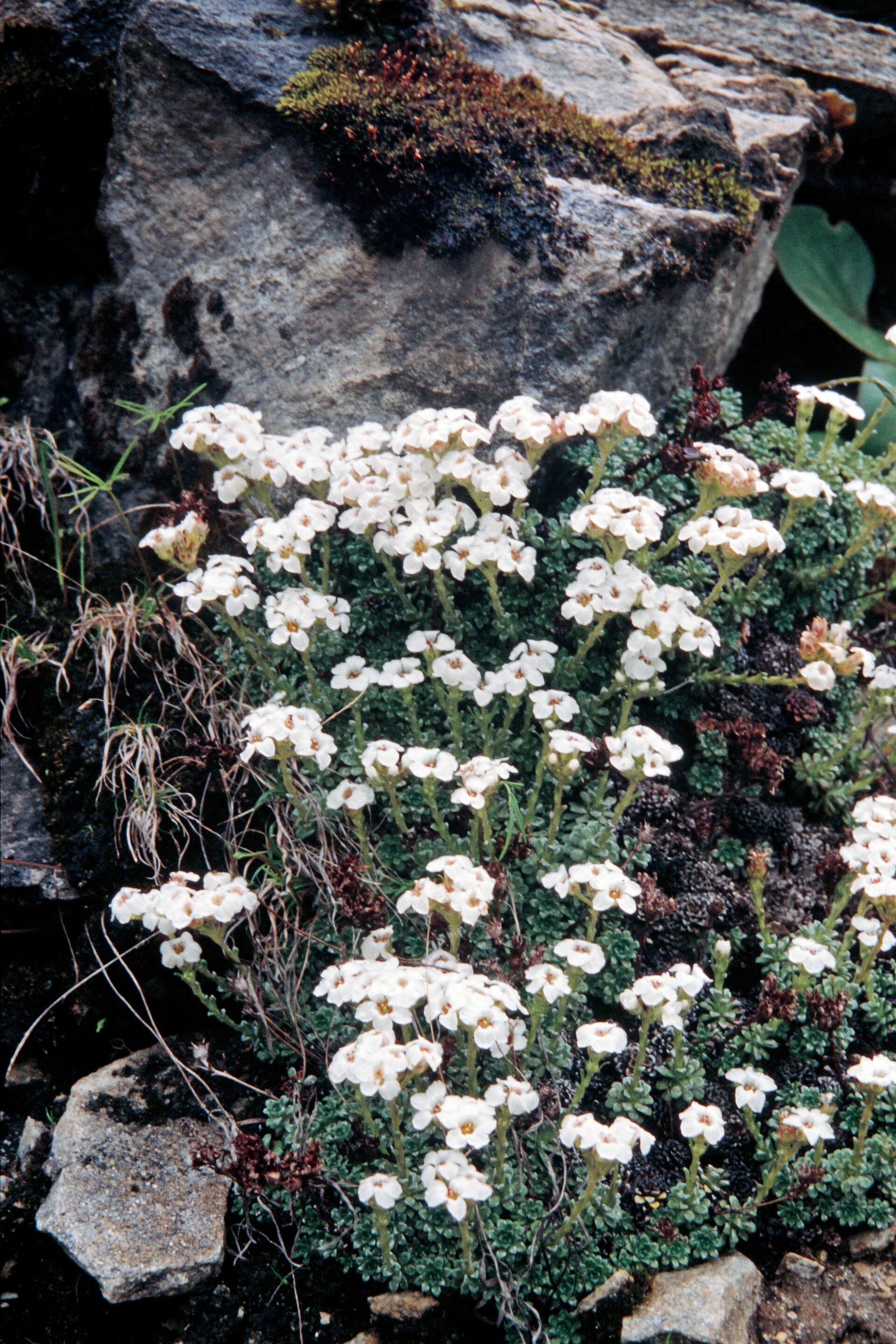
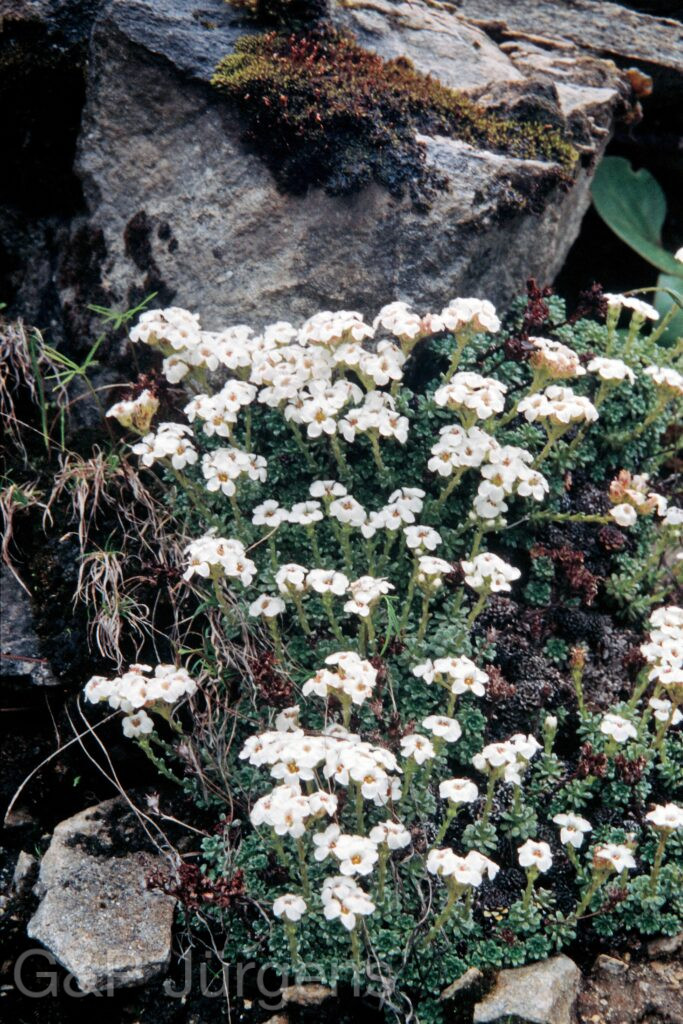
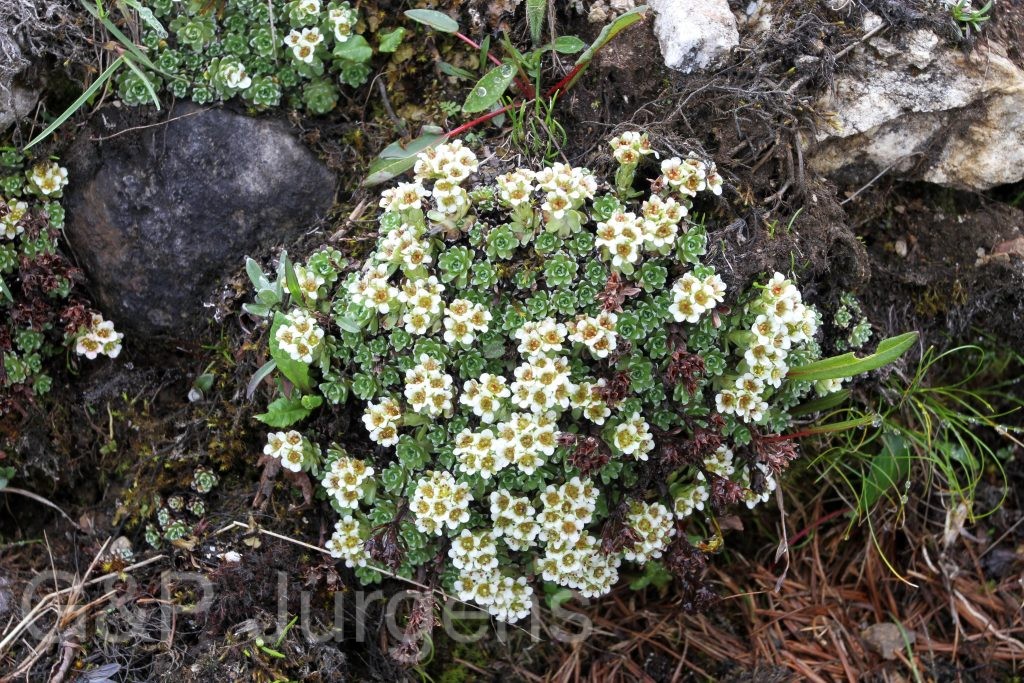
Saxifraga stolitzkae is a high-alpine saxifrage of the Himalaya, recorded from Nepal, India and Bhutan, with around 32 georeferenced occurrences indicating a sparse distribution across the upper ranges. It is a plant of severe high-altitude habitats — open stony slopes, moraine, rock ledges and gravelly ground kept moist by snow-melt — well above treeline. The illustrated material from Kagmara Phedi in Nepal at about 4000 m in July, and from Warrthang-La in Bhutan at around 4500 m in June, places it firmly among the highest-growing Himalayan saxifrages, flowering during the short high-mountain summer as the snow retreats.
The plant is a small perennial herb forming loose tufts or low cushions from a branched rootstock, with crowded rosettes of small, fleshy, oblong to spathulate leaves that are frequently glandular-hairy. The flowering stems are short and often reddish, glandular, bearing one to few flowers. Each flower has five free sepals, five spreading petals — typically yellow, often flecked or flushed with orange or red — and ten stamens. The two largely fused carpels mature into a bilobed capsule that opens between the divergent beaks to release numerous minute seeds, a fruiting structure shared across the genus.
The combination is attributed to Duthie ex Engler and Irmscher, the last two authors of the standard early-twentieth-century monographic treatment of Saxifraga; the species belongs to the assemblage of yellow-flowered, cushion- and rosette-forming Himalayan saxifrages adapted to extreme alpine conditions. Restricted to very high elevations and known from relatively few localities, S. stolitzkae is closely tied to reliable snow-melt moisture and short cool seasons, making it among the species most exposed to the upward shift of climatic zones in the Himalaya, though its remote habitat affords some protection from direct human pressure.
Author: Duthie ex Engl. & Irmsch. · Sources: POWO (Kew), GBIF, Flora of Bhutan, Flora of China (Saxifragaceae), Engler & Irmscher: Das Pflanzenreich, Saxifraga monograph