
Craib
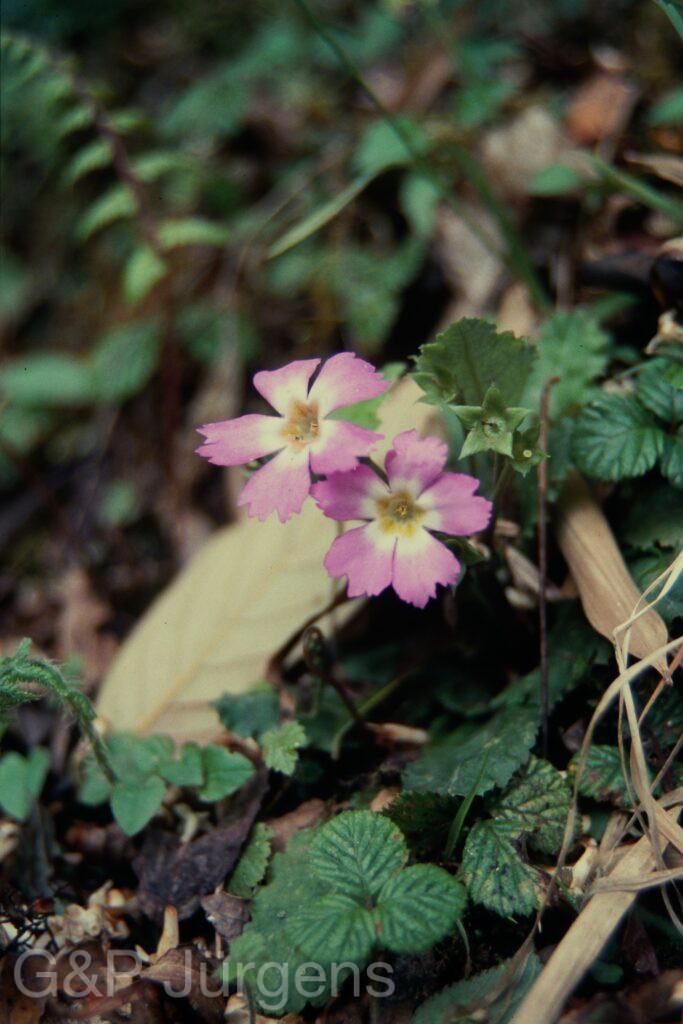
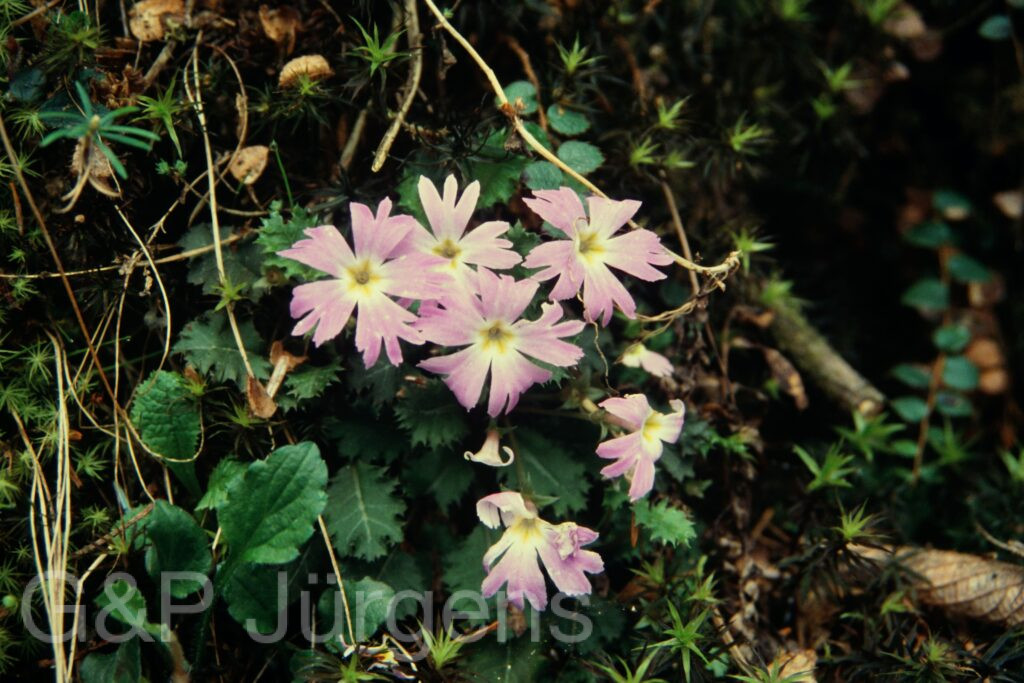
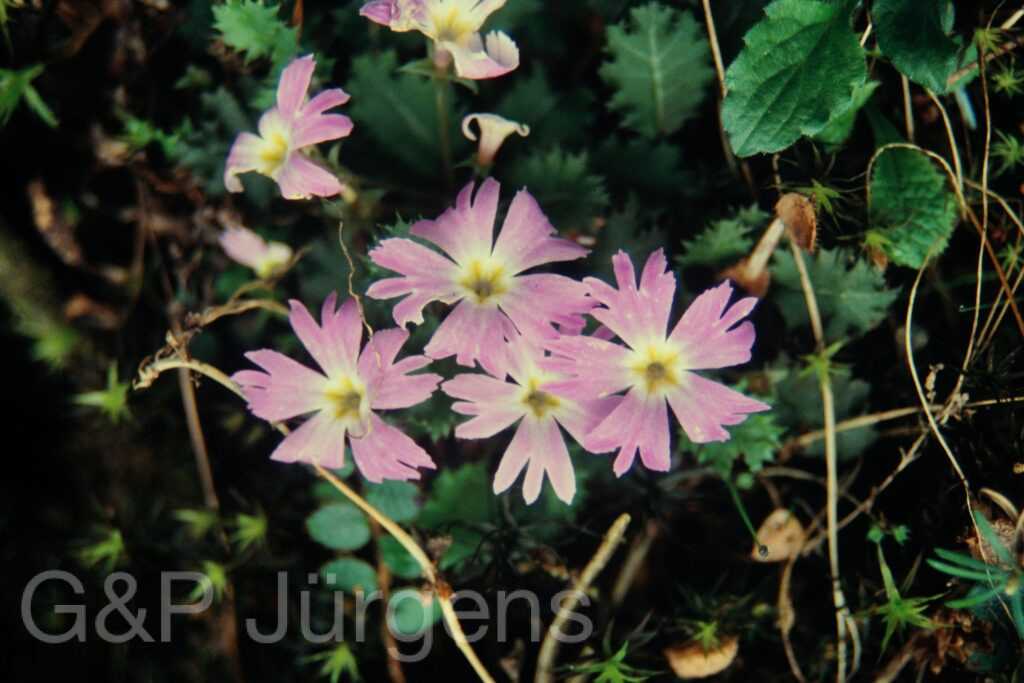
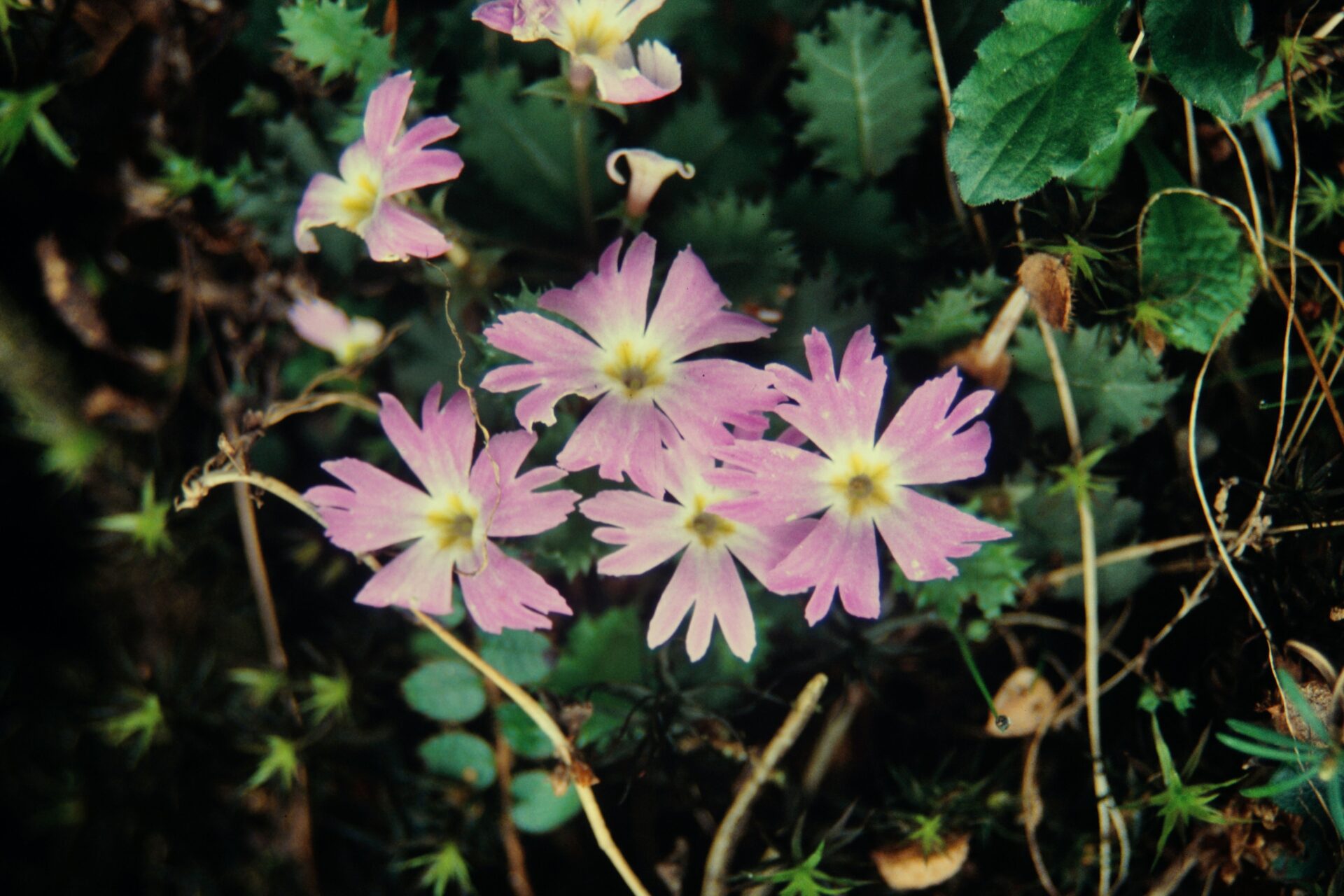
Description
Primula scapigera is an eastern Himalayan primrose recorded from northern India (Sikkim, West Bengal), Nepal, Bhutan and adjacent China, with 67 GBIF occurrences also reflecting cultivated material reaching Japan. It grows in cool, humid montane and subalpine habitats, on mossy banks, in open Rhododendron and conifer forest and along streamsides, generally between 2500 and 3800 m. The illustrated plants were collected at Bersay in the Sikkim/West Bengal borderland at 2600 m in April and at Kokchurong in Sikkim at 3600 m in May, spanning the species' spring to early-summer flowering across its altitudinal range.
It is a small perennial herb forming neat rosettes of obovate to spathulate leaves that are crenate to denticulate at the margin, narrowed to a winged petiole and often coated beneath, like the scape and calyx, with pale farina. The slender erect scape bears a terminal umbel of a few to several flowers. The corolla is rose-pink to purplish with a contrasting yellow or whitish eye, the limb divided into five obcordate, notched lobes; the plants are heterostylous, producing pin and thrum morphs. The fruit is a small capsule shorter than or equalling the persistent calyx.
The species is placed in Primula section Petiolares, a largely Sino-Himalayan group of farinose, rosette-forming primroses centred on the eastern Himalaya and Hengduan ranges. Within the section it is allied to P. petiolaris and P. gracilipes, from which it is separated by its scapose inflorescence and leaf characters. Like its congeners it depends on insect pollination facilitated by its distyly, and its restricted high-rainfall habitat makes it sensitive to disturbance and warming. Though not formally assessed, it remains a localised eastern Himalayan endemic of conservation interest.
Author: Craib · Sources: POWO (Kew), GBIF, Flora of Bhutan, Flora of China, Richards: Primula