
Buch.-Ham. ex D.Don
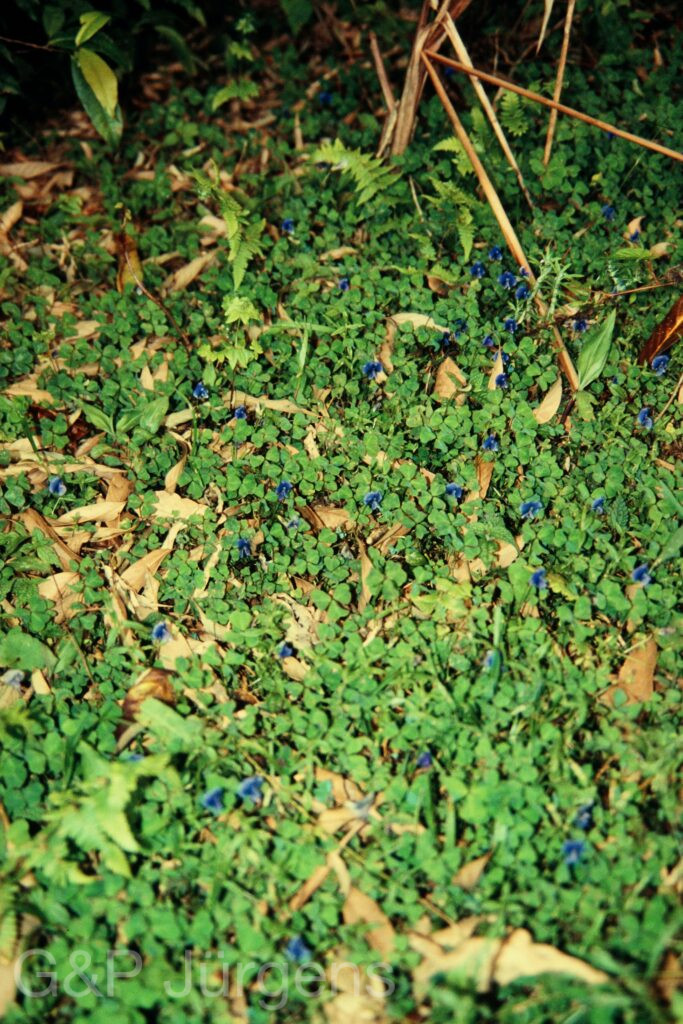
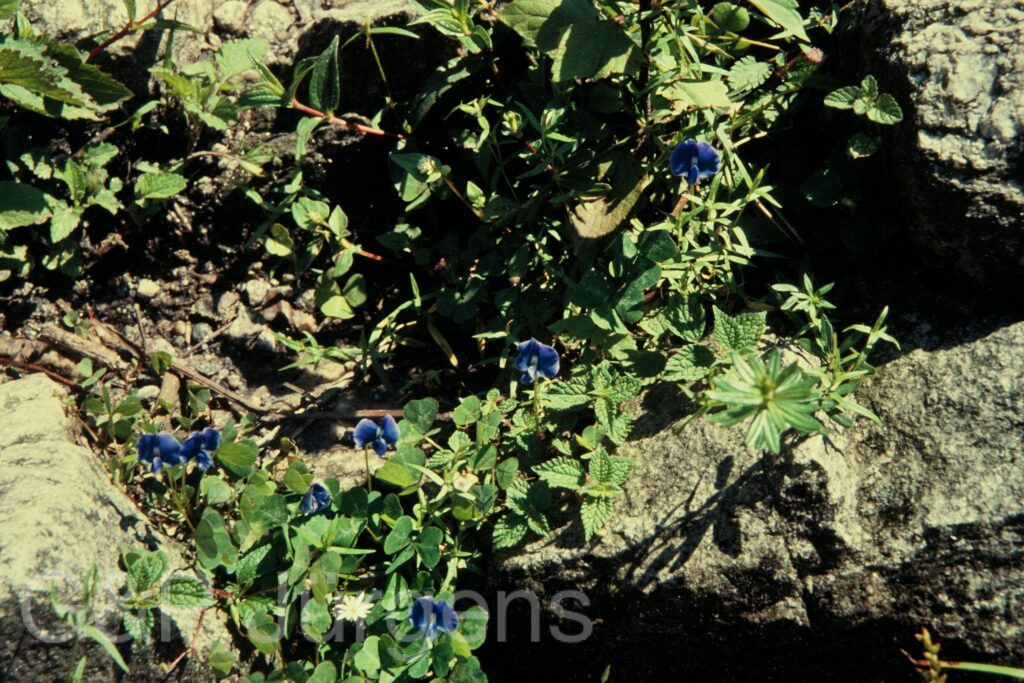
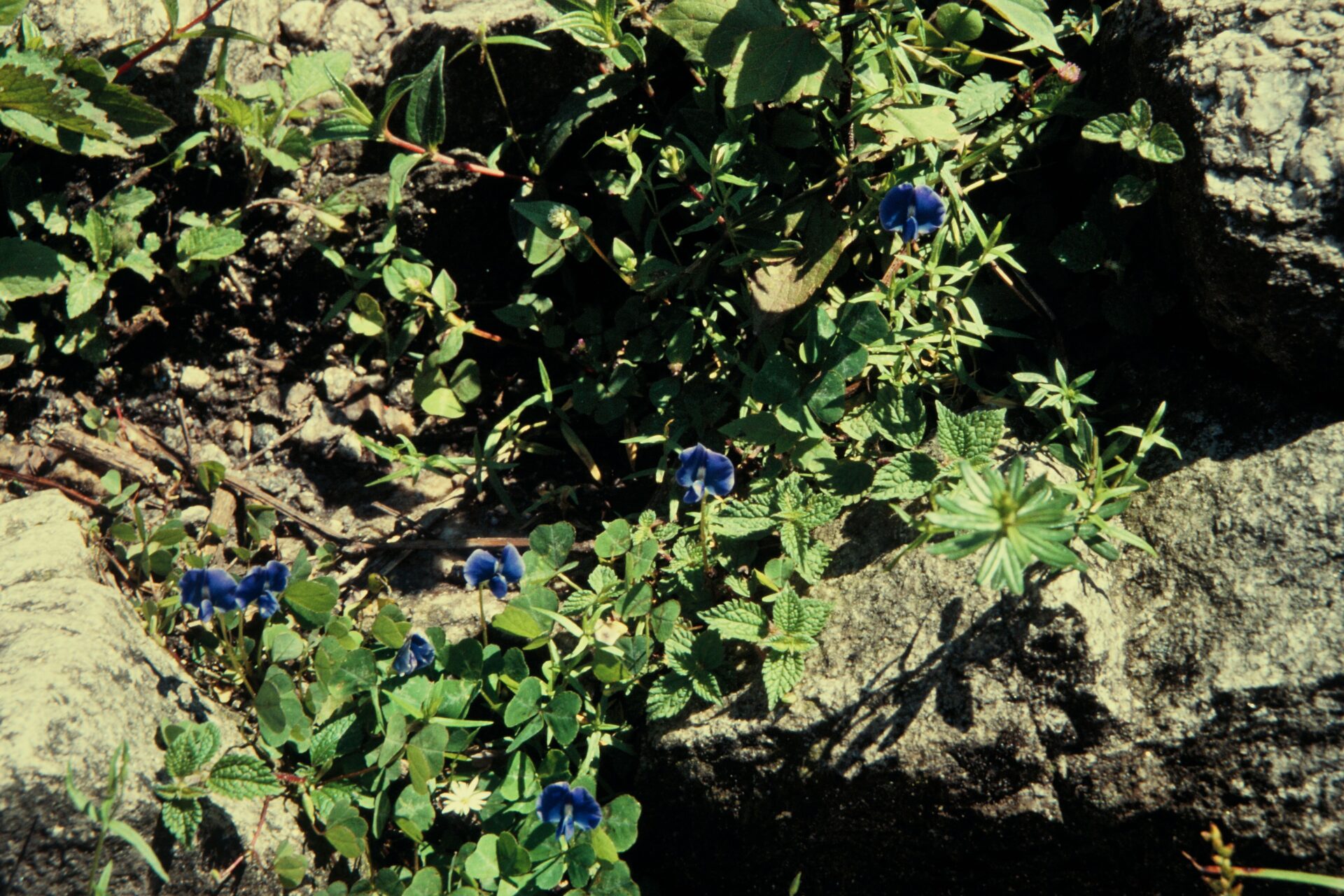
1900m April
Description
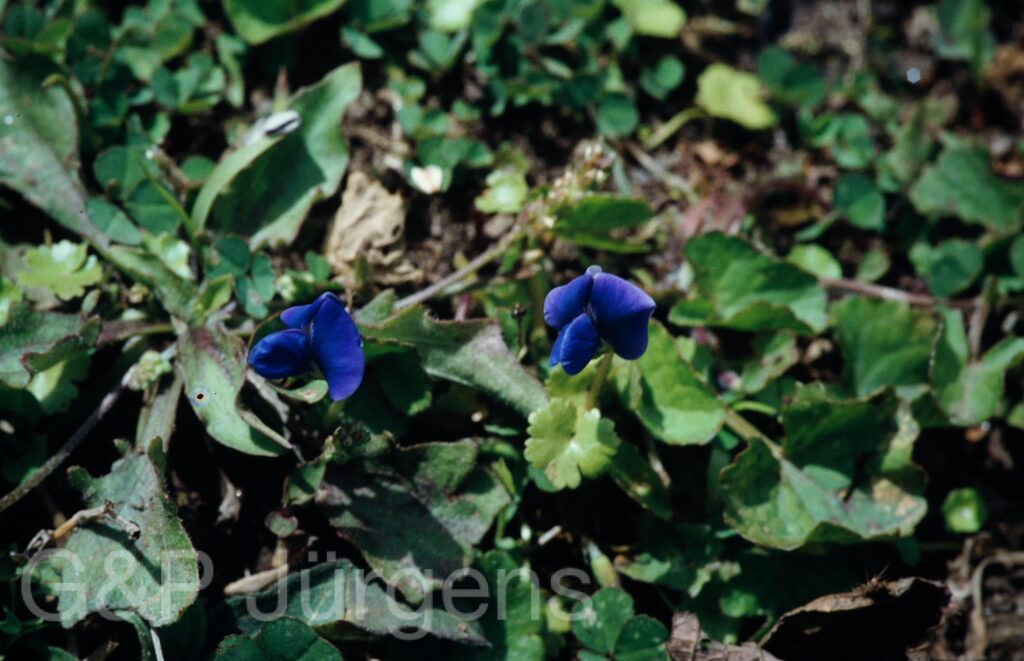
Parochetus communis, the shamrock pea, is a creeping perennial legume with a remarkably wide Afro-Asian montane distribution. GBIF documents around 1730 occurrences spanning the Himalaya (Nepal, India, Bhutan, China), Southeast Asia (Myanmar, Thailand, Vietnam, Malaysia, Indonesia, Sri Lanka), the East African highlands (Ethiopia, Kenya, Tanzania, Uganda, Rwanda, Burundi, DR Congo, Malawi) and naturalised in New Zealand. It grows in moist grassland, forest clearings, streambanks, terrace edges and shaded turf, generally between 1500 and 3000 m. The photographed plants are from eastern Nepal at Bhalukhob (1900 m, April) and the Arun Valley (1750 m, May), where it carpets damp banks in spring.
The plant forms prostrate, rooting stems that spread into loose mats and root at the nodes. The leaves are trifoliolate and clover-like, the obcordate leaflets often marked with a darker band, borne on slender petioles with small stipules. The flowers are solitary or paired in the leaf axils, papilionaceous with a standard, wing and keel; the corolla is a vivid cobalt to gentian-blue, occasionally with paler markings, exceeding the tubular calyx. The fruit is a slender, linear-oblong legume that dehisces to release several small seeds.
Parochetus (Fabaceae, subfam. Faboideae) is a small genus historically treated as monotypic until the segregation of the African P. africanus, leaving Asian material under P. communis. GBIF treats the name as accepted. Its disjunct, sky-island range across Asian and African mountains makes it a classic subject in studies of tropical-alpine biogeography. Widespread and adaptable, it is of least concern and is also cultivated as an ornamental groundcover.
Author: Buch.-Ham. ex D.Don · Sources: POWO (Kew), GBIF, Flora of China, Annotated Checklist of the Flowering Plants of Nepal, Polhill studies of Papilionoid legumes