
Roxb.
Description
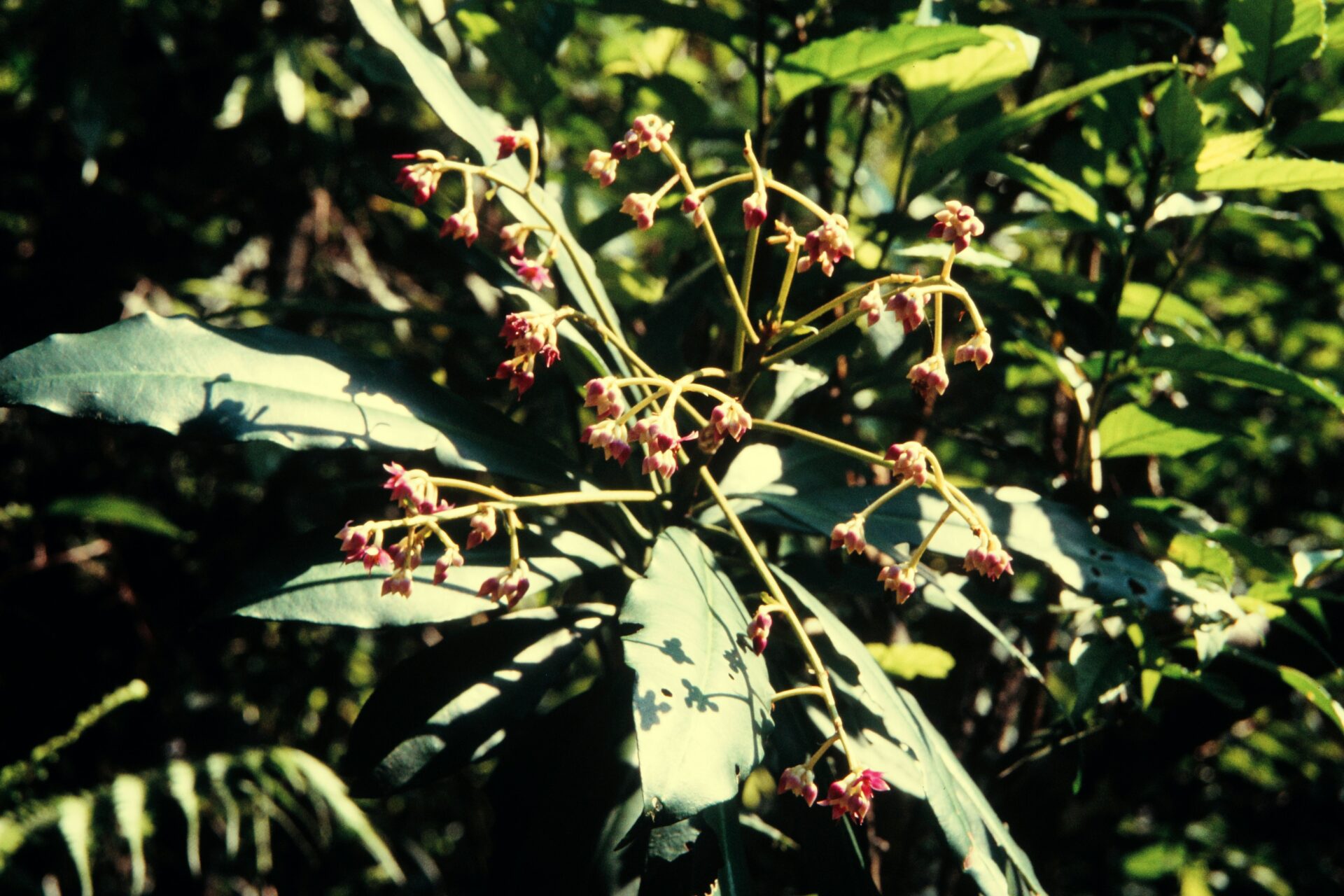
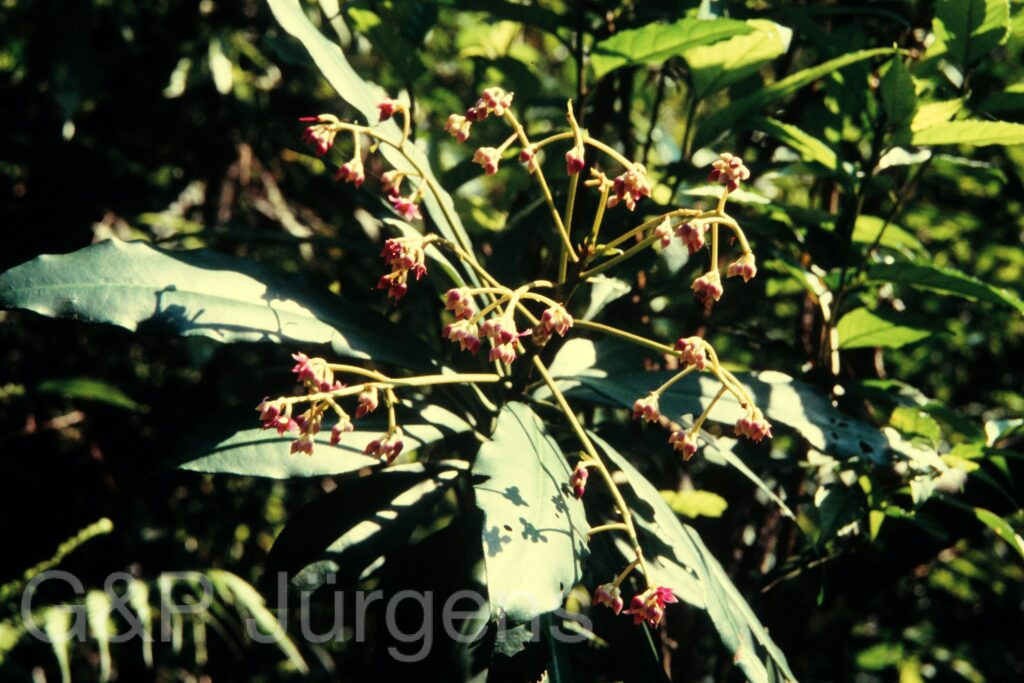
Ardisia solanacea is a widespread tropical and subtropical shrub of South and Southeast Asia, recorded from India, Nepal, China, Bangladesh, Myanmar, Thailand, Sri Lanka, Malaysia and Indonesia, and naturalised or cultivated more widely; its 865 GBIF records make it one of the better-documented species in this group. It occupies lowland and lower-hill forest, forest margins, secondary thickets and roadside scrub, generally below about 1500 m. The plant photographed in the Arun Valley of eastern Nepal at 900 m, flowering in May, typifies its preference for warm, humid lower-montane settings.
It is an evergreen shrub or small tree with glabrous, terete branchlets. The leaves are alternate, elliptic to obovate-oblong, leathery, entire and obscurely gland-dotted, tapering to a short petiole. The inflorescences are lateral, umbellate to corymbose racemes borne on short specialised branchlets; the flowers are pinkish to rose-purple, with five reflexed, often punctate corolla lobes and prominent connivent anthers forming a cone, in the characteristic Ardisia fashion. The fruit is a depressed-globose, single-seeded drupe that ripens from red to glossy purplish-black.
In GBIF the name carries a synonym flag, but Ardisia solanacea Roxb. is the accepted name for this taxon. The species sits within Ardisia (Myrsinoideae of Primulaceae, formerly Myrsinaceae), a large pantropical genus distinguished by glandular punctations and drupaceous fruits. It is common, weedy in places, and of no conservation concern; its fruits are eaten by birds and the plant is used locally in traditional medicine.
Author: Roxb. · Sources: POWO (Kew), GBIF, Flora of China, Flora of Nepal, Pipoly & Chen revision of Asian Ardisia