
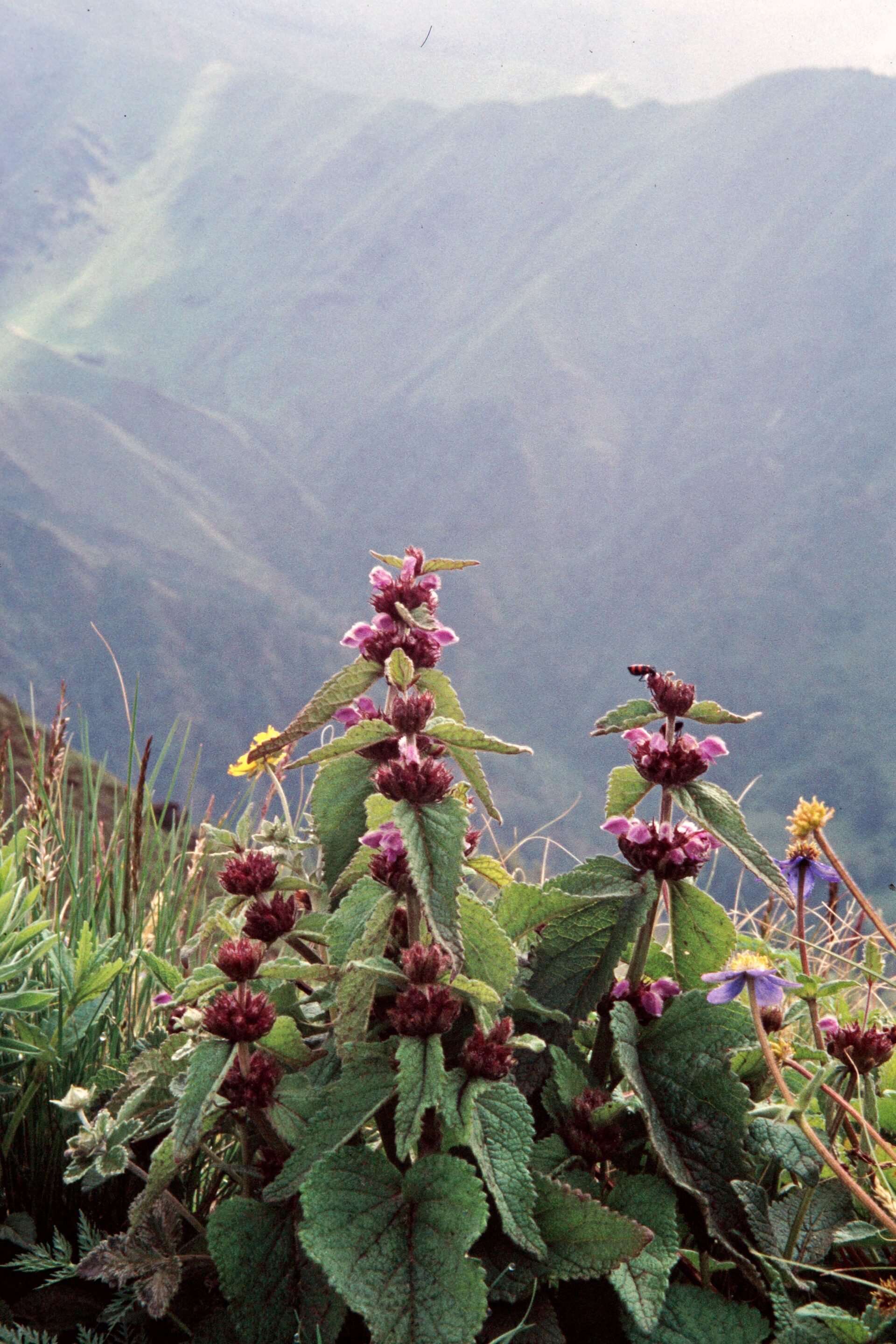
(Royle ex Benth.) Kamelin & Makhm.
Description
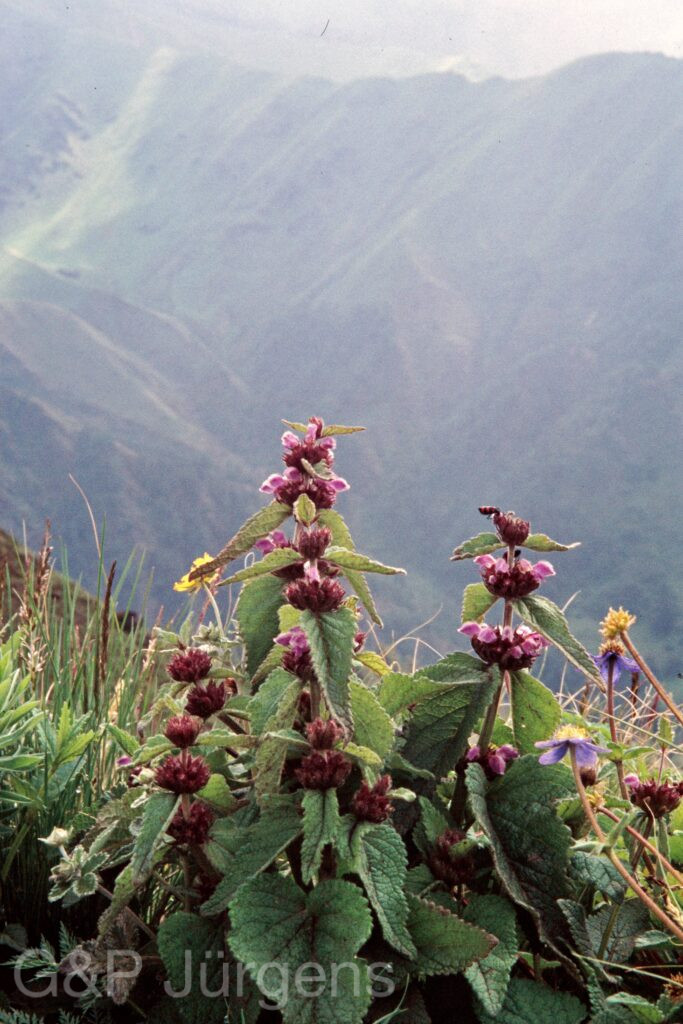
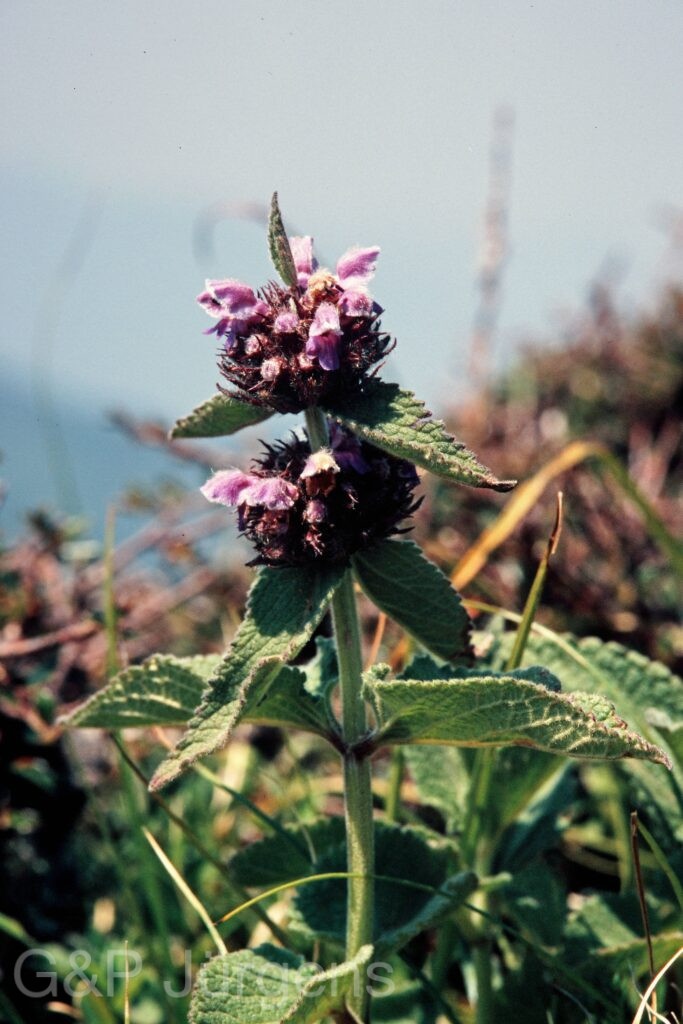
Phlomoides bracteosa is a robust perennial herb of the alpine and subalpine zones of the western and central Himalaya and adjacent Central Asia. Its distribution, documented from over 330 georeferenced records, spans India, Pakistan, Nepal, Afghanistan, China, Bhutan and Kazakhstan, reflecting a broad Irano-Turanian to Sino-Himalayan range. It favours open grassy slopes, forest margins, moist meadows and stabilised screes, typically between 2500 and 4000 m. The accompanying material was gathered at Kalmura in West Nepal at 3700 m and at Panwali in Garhwal, India, at 3300 m, both in June, near the onset of the monsoon flowering peak.
The plant forms erect, quadrangular, often purplish stems arising from a stout rootstock, reaching 0.5-1 m. The leaves are opposite, broadly ovate to cordate, rugose above with an impressed venation, crenate-serrate at the margin, and densely tomentose beneath. The inflorescence consists of several remote, many-flowered verticillasters subtended by conspicuous, often coloured and ciliate floral bracts that give the species its epithet. The two-lipped corolla is pink to purple, the upper lip galeate and bearded, enclosing didynamous stamens; the calyx is tubular with subequal teeth. The fruit is a schizocarp of four smooth trigonous nutlets.
The species belongs to a complex once treated under Phlomis, now segregated into Phlomoides on the basis of corolla, stamen and nutlet characters supported by molecular phylogenetics. It is a frequent component of Himalayan tall-herb and grazing communities, visited by long-tongued bees and bumblebees. Though not formally assessed, its wide range and tolerance of disturbed pasture suggest it is not currently threatened.
Author: (Royle ex Benth.) Kamelin & Makhm. · Sources: POWO (Kew), GBIF, Flora of Pakistan, Flora of China, Annotated Checklist of the Flowering Plants of Nepal, Kamelin & Makhmedov revision of Phlomoides