
Ludlow & Stearn
Description
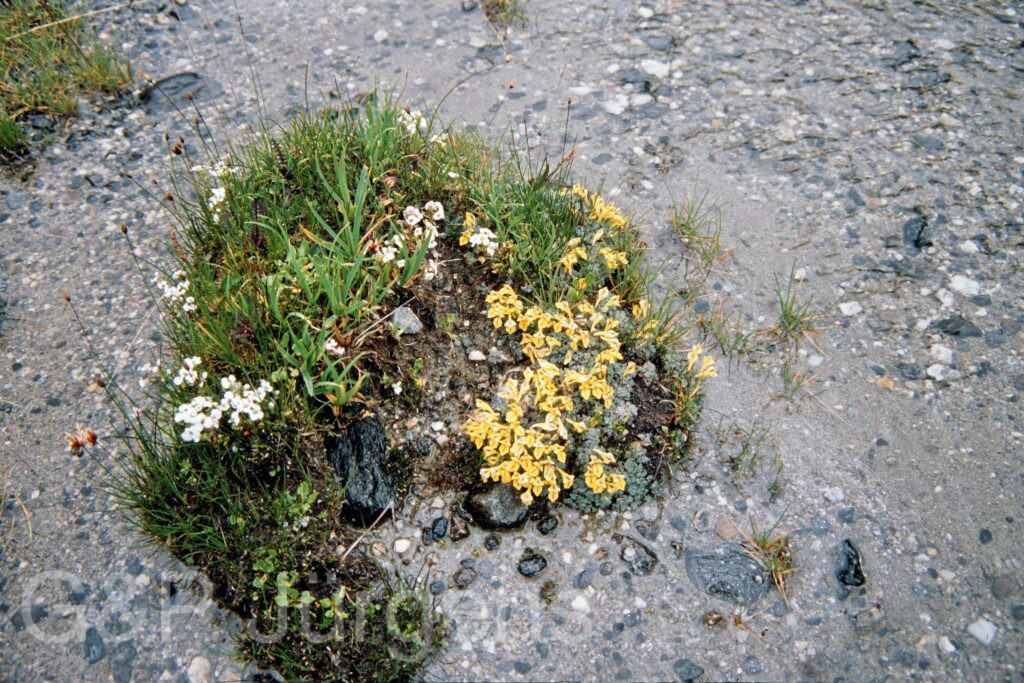
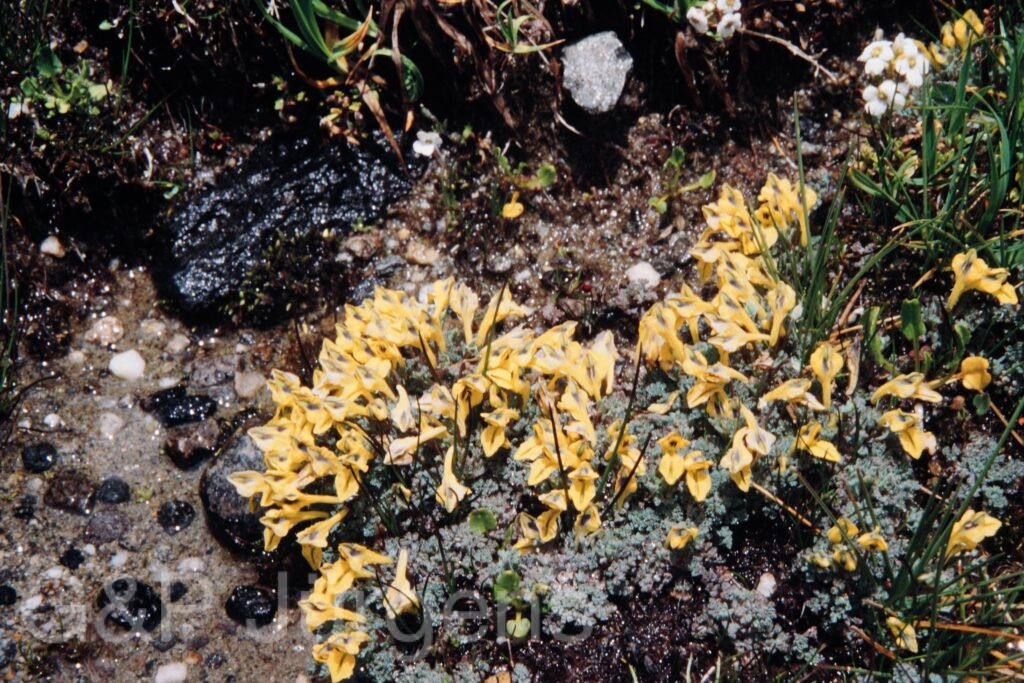
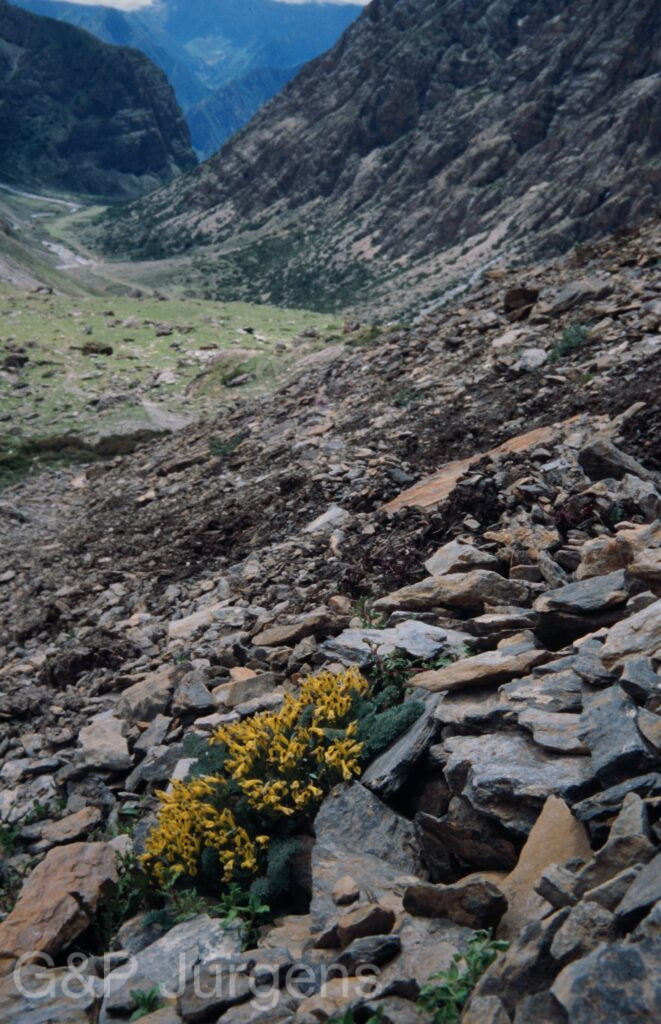
Corydalis megacalyx Ludlow & Stearn is a narrowly distributed Himalayan endemic known with certainty only from Nepal, where GBIF records just 37 occurrences. It is a plant of the subalpine and alpine zones, growing on damp rocky slopes, screes, moraine debris and stream banks where moisture from snowmelt is reliable. The photographed populations in West Nepal, at Churta-Khola around 3800 m in June and at Baga-La-Phedi near 4400 m in July, indicate a habitat band roughly between 3800 and 4400 m and a flowering period coinciding with the early monsoon thaw of the western Nepalese high country.
The species is a glabrous, somewhat fleshy perennial herb arising from a slender rootstock. Stems are ascending to erect, bearing alternate, glaucous leaves that are divided into rather broad, lobed segments. The inflorescence is a few- to several-flowered terminal raceme; the flowers are strongly zygomorphic, with a conspicuously enlarged calyx that gives the species its epithet megacalyx. Each blue to purplish-blue flower bears a single posterior spur and the crested outer petals typical of the genus. The fruit is an elongate dehiscent capsule containing small black seeds furnished with elaiosomes.
Within Corydalis, this species belongs to the blue-flowered Himalayan alpine assemblage and is distinguished by its prominent persistent calyx, an unusual feature in a genus where sepals are usually small and caducous. Like its relatives, it is pollinated by long-tongued insects able to access the spur and is dispersed by ants. Its restricted known range and low occurrence count make it a species of biogeographic interest and potential conservation concern, though its remote high-altitude habitat affords some protection from direct human pressures.
Author: Ludlow & Stearn · Sources: POWO (Kew), GBIF, Flora of Nepal, Flora of China, Lidén & Zetterlund monograph of Corydalis, Stearn studies of Himalayan Corydalis