
Nees
Description
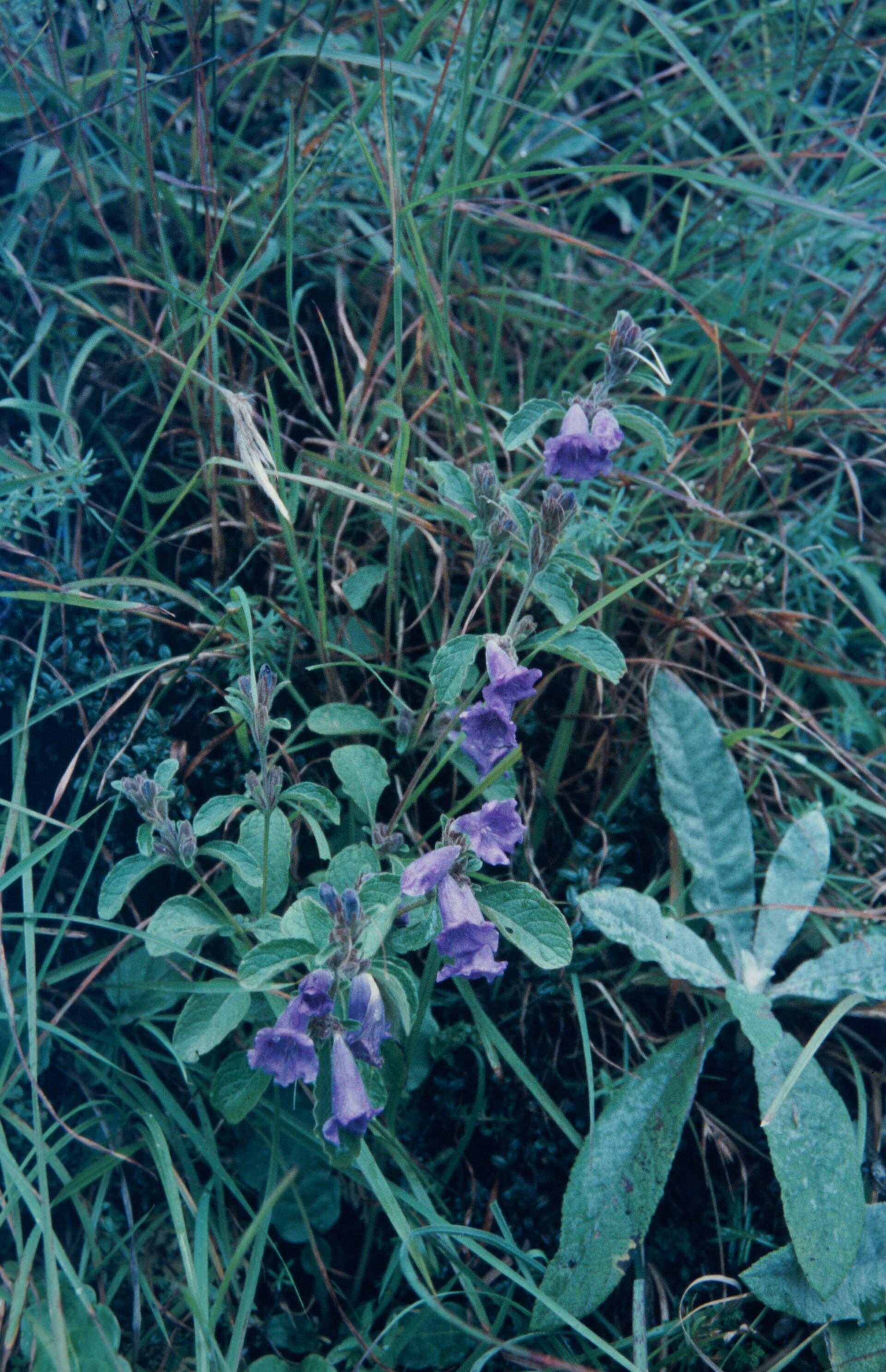
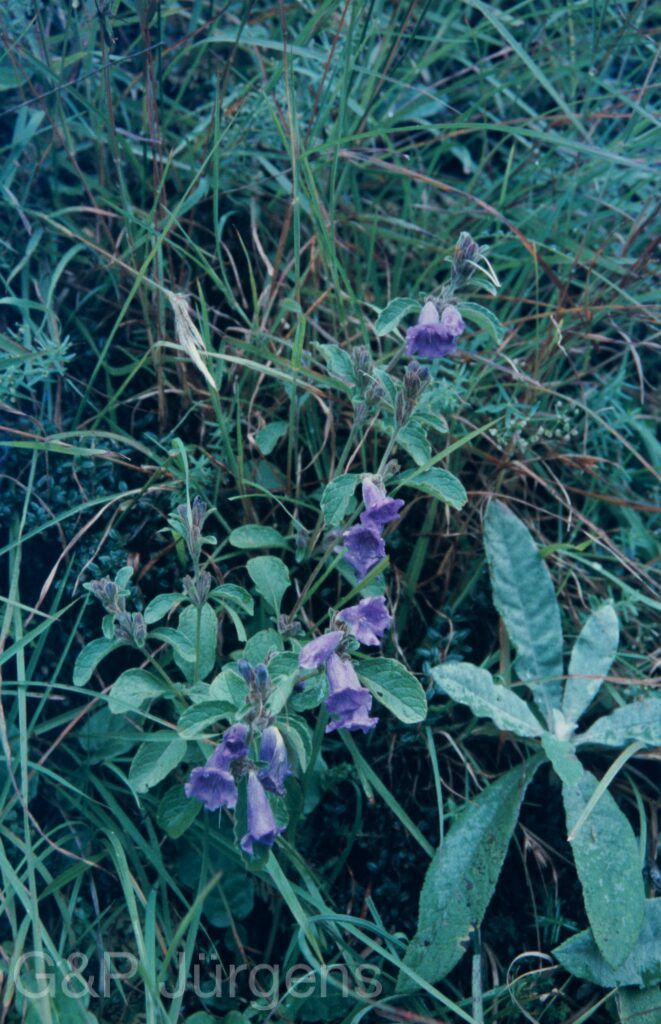
Strobilanthes atropurpurea Nees is a robust perennial herb of the Acanthaceae, distributed along the Himalaya from Pakistan and India through Nepal and Bhutan to southwestern China, with further records reaching Myanmar and Vietnam (GBIF: c. 328 occurrences). It is a characteristic understorey and forest-margin plant of moist temperate broad-leaved and mixed forests, favouring shaded, humid ravines and stream banks. The illustrated plant from Sitel in Garhwal, western India, at about 1,850 m and flowering in September, reflects its typical late-monsoon flowering in the mid-montane forest belt.
The plant is an erect, branched herb or subshrub reaching 0.5–1.5 m, with quadrangular stems often swollen at the nodes. The leaves are opposite and decussate, the pairs frequently unequal (anisophyllous), ovate to elliptic, acuminate, with crenate-serrate margins and prominent venation; cystoliths are usually visible as fine streaks on the leaf surface. The inflorescence is a terminal or axillary spike or panicle of cymose clusters subtended by bracts. The flowers have a tubular-funnelform corolla that is deep violet to purple, five-lobed and slightly two-lipped, with four didynamous stamens. The fruit is an explosively dehiscent capsule bearing few seeds on hooked retinacula.
Strobilanthes is a large, taxonomically difficult genus noted for gregarious, often plietesial (mast) flowering, in which many individuals bloom synchronously after several years and then die. Such cohort dynamics complicate field identification and herbarium representation. The species is locally common and not considered threatened, though its forest habitat is subject to regional degradation.
Author: Nees · Sources: POWO (Kew), Flora of China Vol. 19, Flora of Bhutan Vol. 2, Flora of Nepal, GBIF, Wood & Scotland: Strobilanthes monograph