
Wall. ex Lindl.
Description
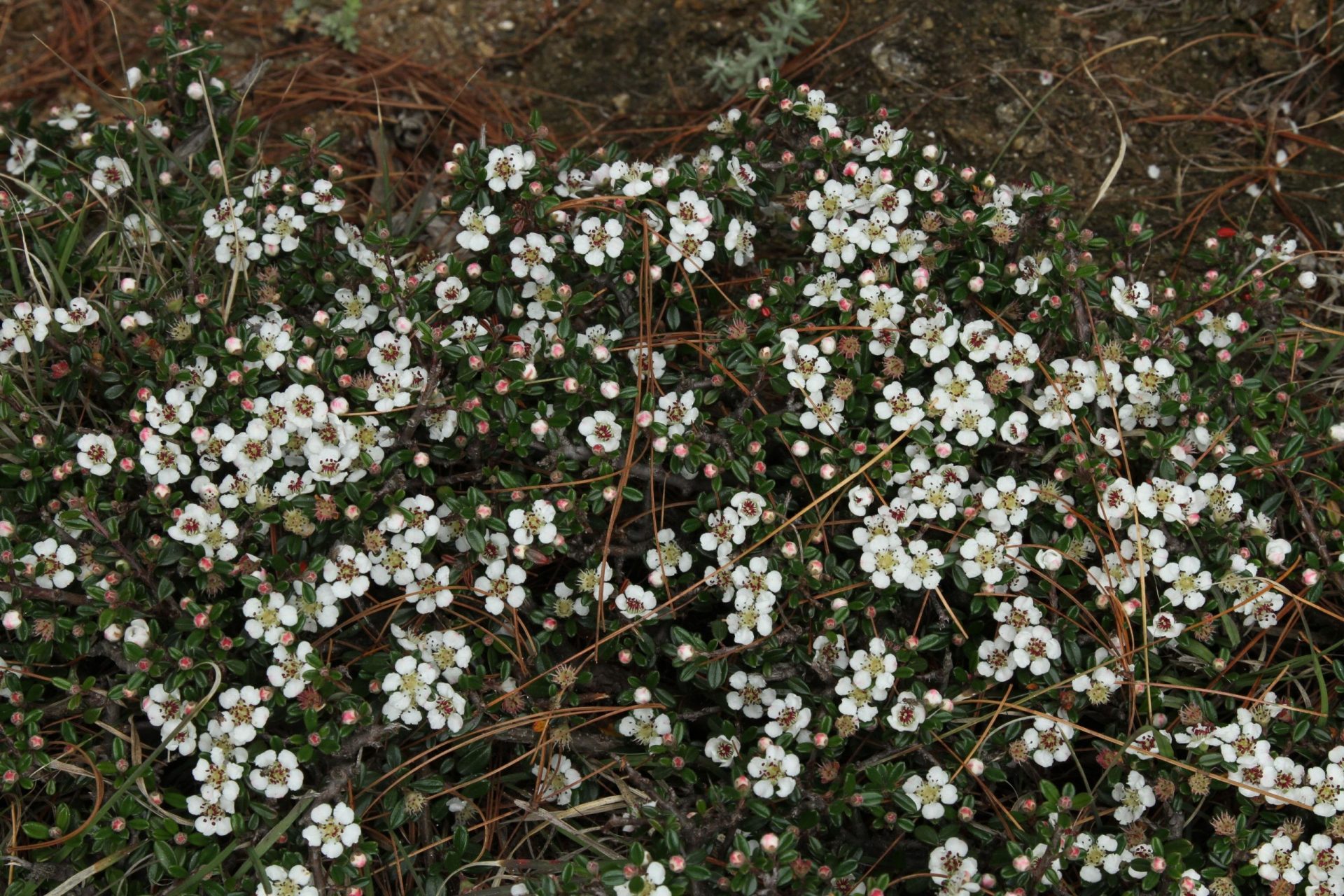
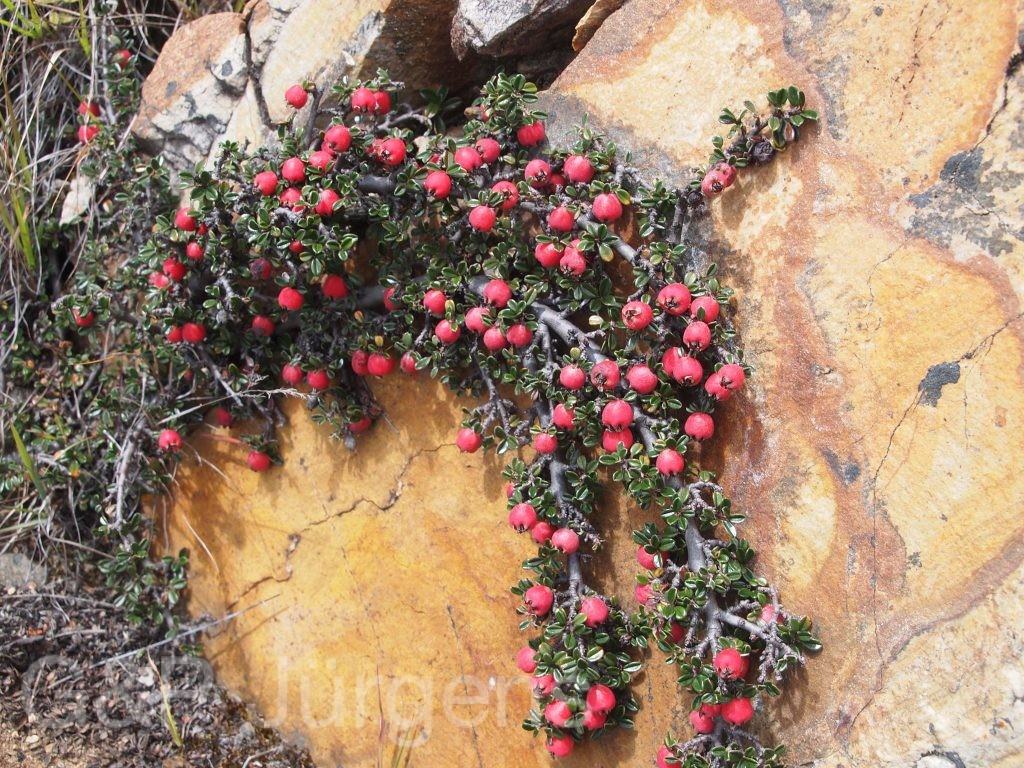
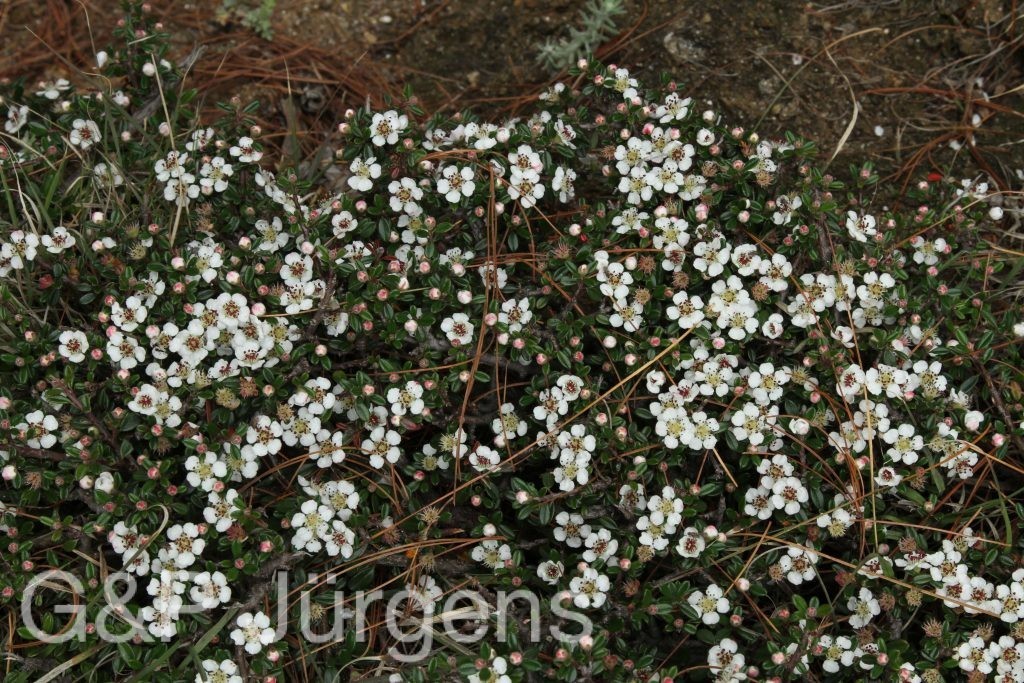
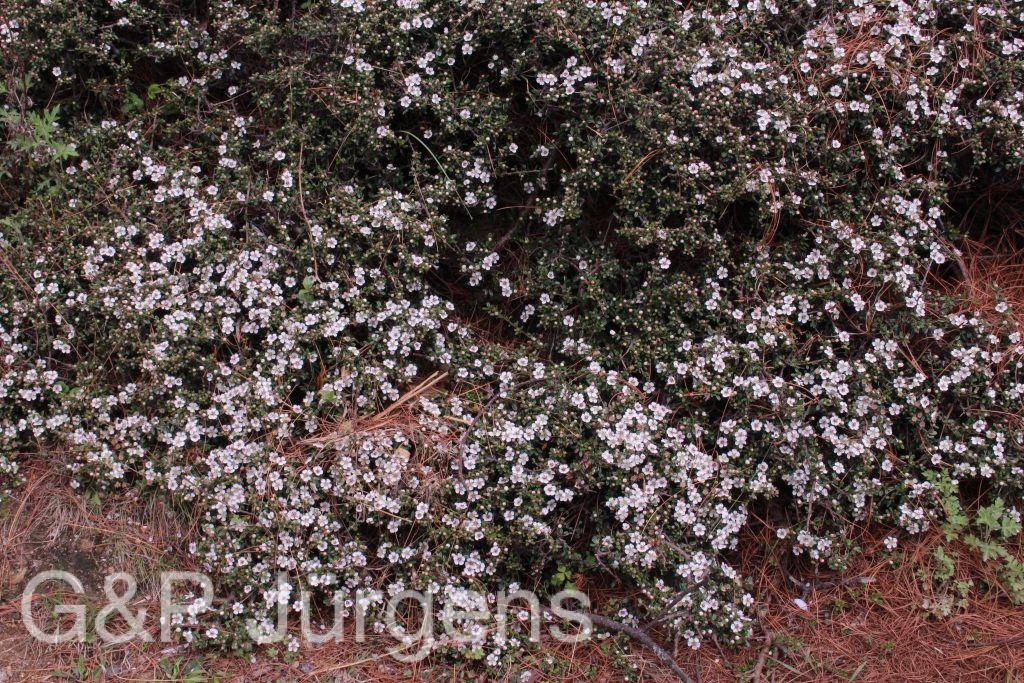
Cotoneaster microphyllus is a small-leaved, prostrate to spreading shrub native to the Himalaya and western China, recorded from Pakistan, Nepal, India, Bhutan and China; extensively grown as a groundcover and rock-garden plant, it has naturalised widely, giving GBIF records from Great Britain, Ireland, France, Germany, the United States, Australia and New Zealand among some 2800 occurrences. In its native range it grows on rocky slopes, cliff ledges, open hillsides and amid alpine scrub from the temperate to subalpine zone. The images document it in Bhutan at Tumching-La near 3850 m in October, when the fruit is ripe, and at Yatong-La around 2900 m in May at flowering.
It is an evergreen, much-branched shrub with rigid, spreading to procumbent branches, the young shoots strigose. The leaves are small, 4-10 mm, obovate to elliptic, dark glossy green and glabrescent above, grey-tomentose beneath, with revolute margins. The flowers are solitary or in pairs, with white, spreading petals, numerous stamens with reddish anthers, and two carpels. The fruit is a globose pome 5-8 mm in diameter, bright crimson to scarlet, crowned by the persistent calyx, conspicuous against the dark foliage and persisting into winter.
Cotoneaster microphyllus belongs to a taxonomically intricate, largely apomictic complex within the genus, in which many microspecies have been segregated and circumscriptions remain contentious; much horticultural material formerly under this name belongs to related taxa. Apomixis fixes minor variants as discrete lineages. The bird-dispersed fruit accounts for its frequent escape and naturalisation, and in some regions it is regarded as a minor invasive. The wild species is common and of least conservation concern.
Author: Wall. ex Lindl. · Sources: POWO (Kew), GBIF, Flora of China, Flora of Bhutan, Flora of British India, Fryer & Hylmö Cotoneasters: A Comprehensive Guide