
(Prain) D.G. Long
Description
Corydalis ecristata is a small alpine herb of the higher Himalaya, distributed through Nepal, India, China and Bhutan (NP, IN, CN, BT), with about 58 recorded occurrences. It grows on open stony slopes, in screes, alpine turf, moraine and damp gravelly ground near snowmelt, characteristically in the high alpine to subnival zone, broadly between about 3800 and 4800 m. The gatherings cited come from Lada-La in Sikkim at 4000 m and from Thitha-Tso in Bhutan at 4300 m, both flowering in June, an elevation and early-summer season typical of the species, which colonises freshly exposed, well-drained debris in the brief window following the retreat of snow.
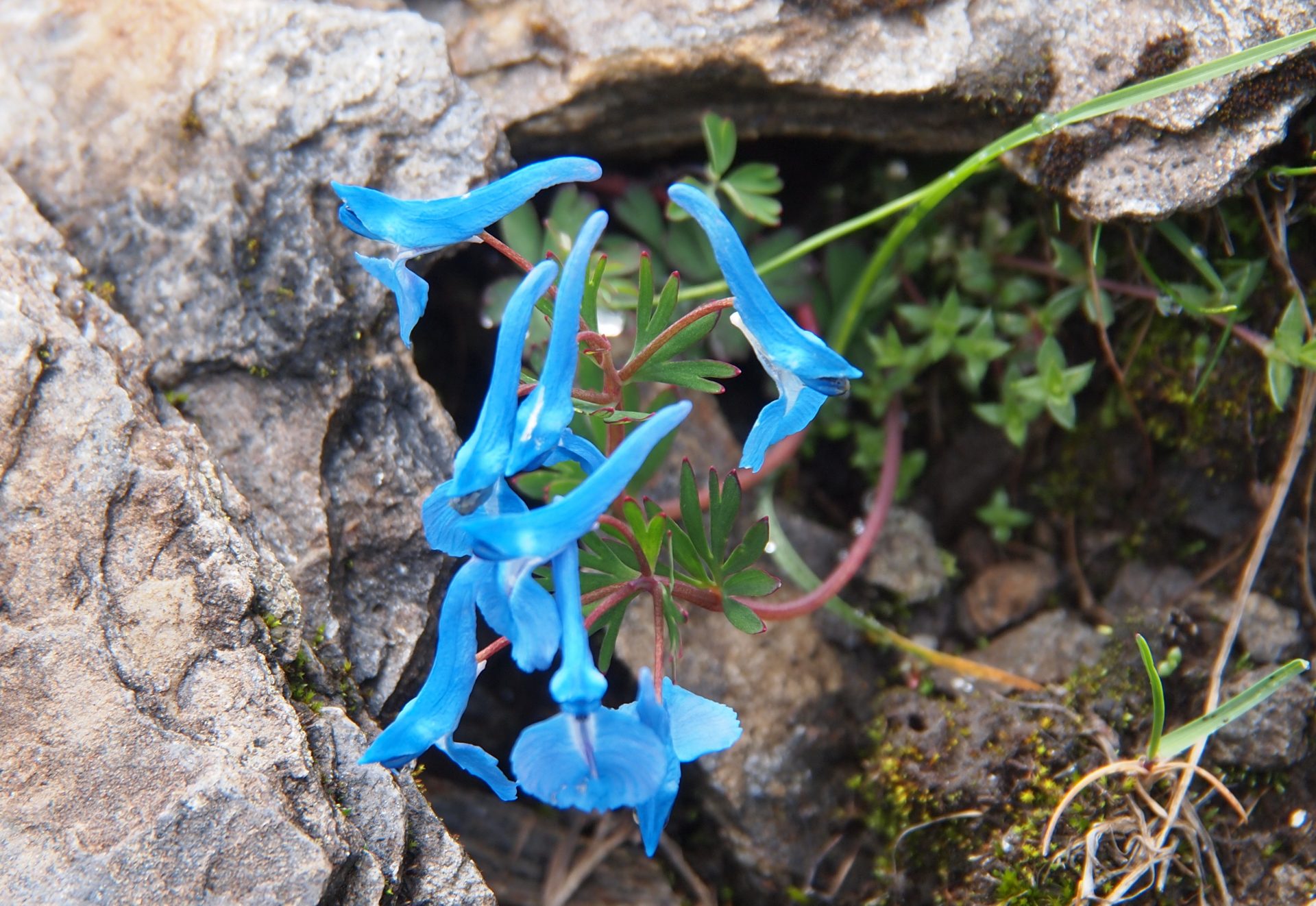
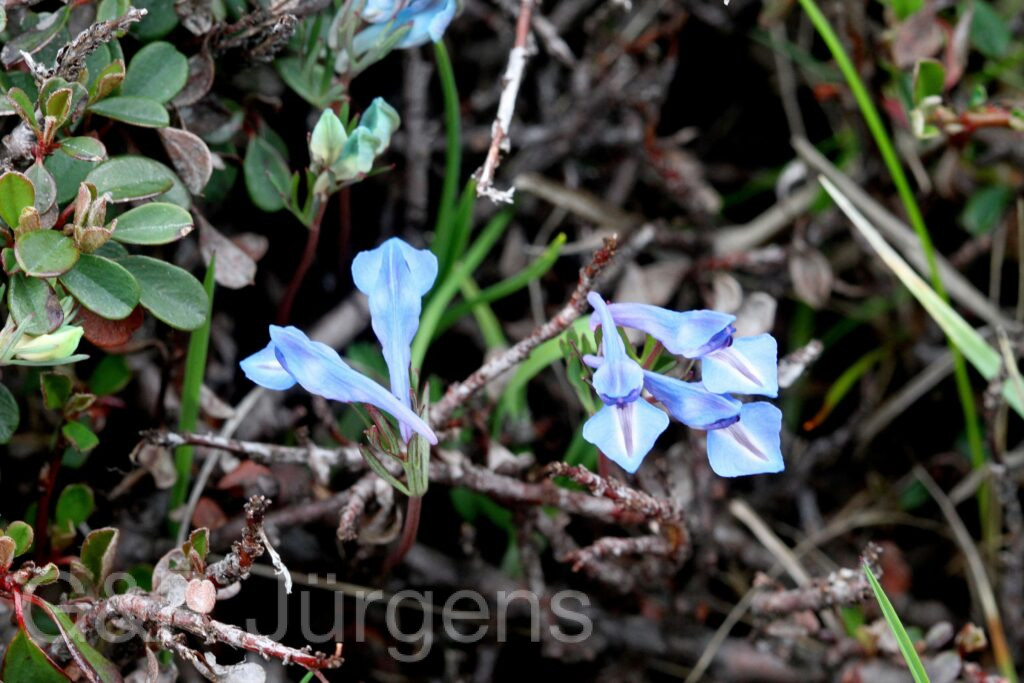
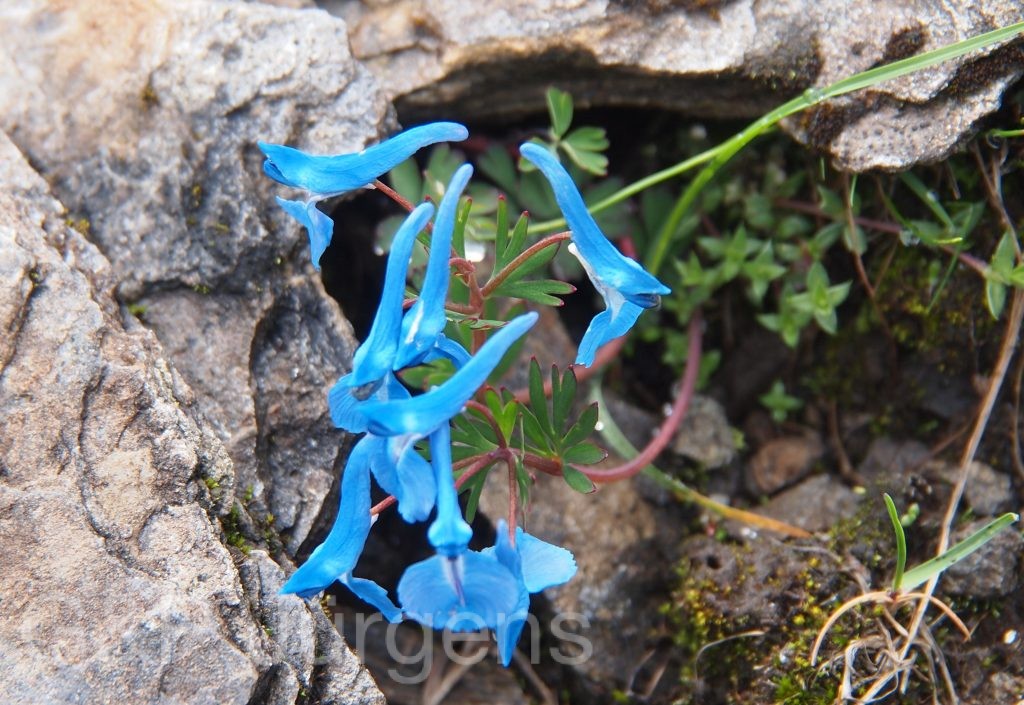
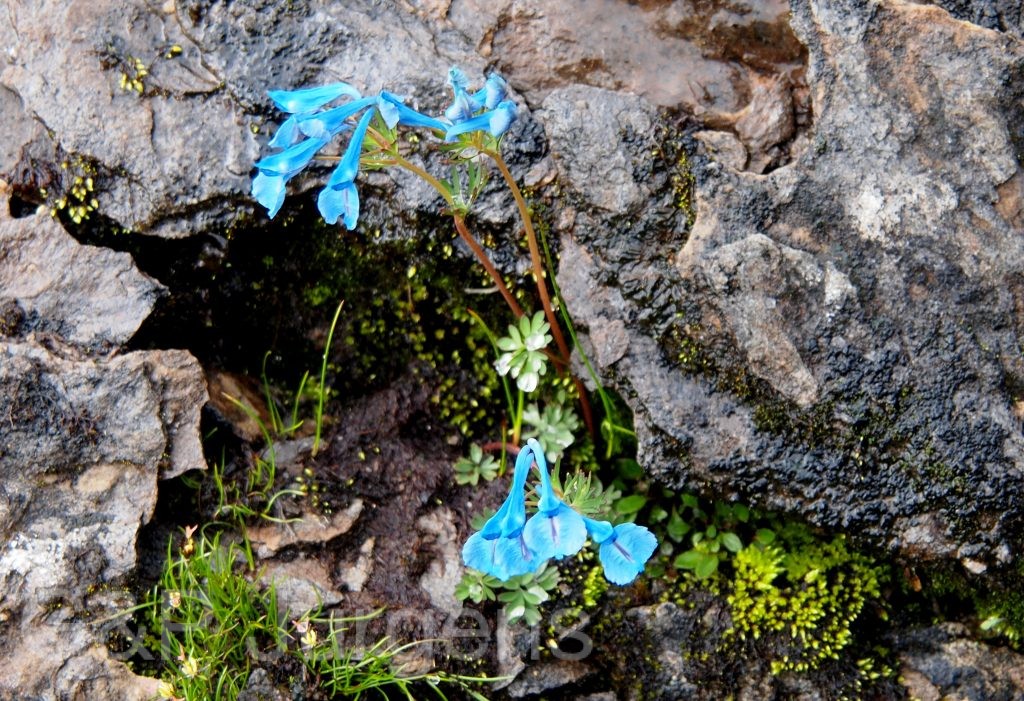
The plant is a small, glabrous, somewhat glaucous perennial herb arising from a slender tuber or rootstock. The leaves are mostly basal and finely divided, ternately to pinnately dissected into narrow ultimate segments, with long petioles. The flowers are few, borne in a short terminal raceme; each is strongly zygomorphic with four petals in two whorls, the outer upper petal prolonged backward into a nectar spur, the inner petals cohering over the stigma. As the epithet 'ecristata' indicates, the petals are crestless (lacking the dorsal wing or crest found in many congeners), the corolla blue to sky-blue, sometimes with darker markings. The fruit is a slender, dehiscent, few-seeded capsule.
Corydalis (subfamily Fumarioideae of the Papaveraceae, sometimes treated in Fumariaceae) attains exceptional diversity in the Sino-Himalayan alpine flora, where blue-flowered, tuberous species like C. ecristata are a conspicuous element of the high screes. The spurred, bilaterally symmetric flowers are pollinated chiefly by bumblebees seeking the nectar held in the spur. As a specialist of high-altitude scree and moraine with a fairly restricted range, it is dependent on stable alpine conditions, though it is not at present regarded as threatened.
Author: (Prain) D.G. Long · Sources: POWO (Kew), GBIF, Flora of Bhutan, Flora of China, The Genus Corydalis (Liden & Zetterlund monograph)