
D.Don
Description
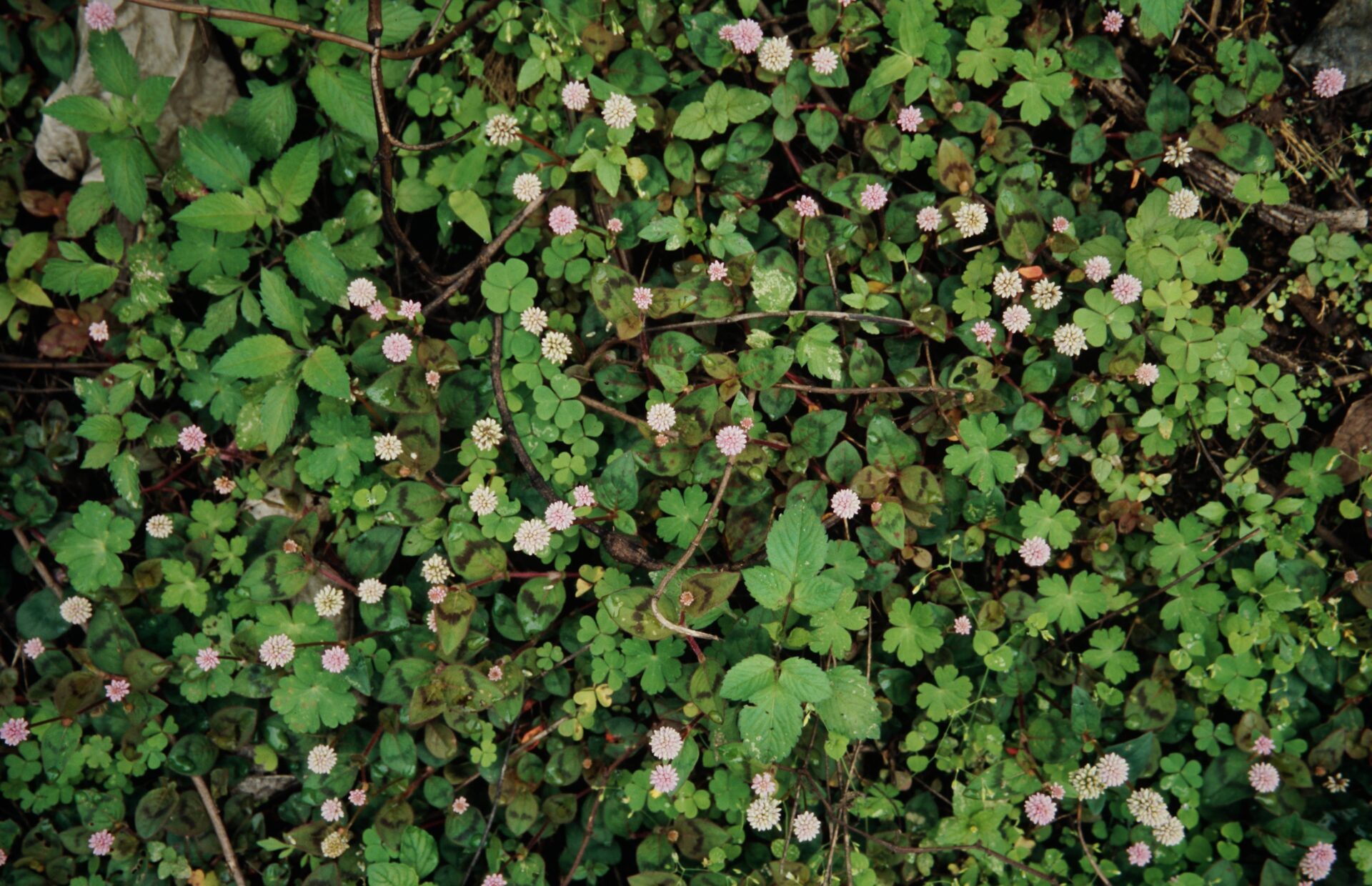
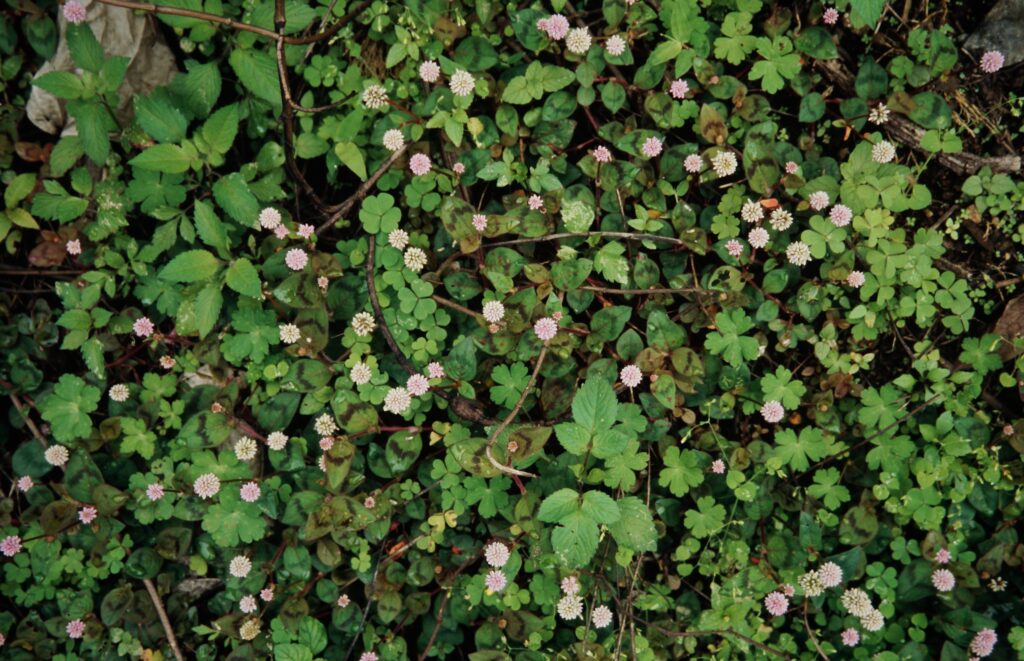
Polygonum microcephalum is a herb of the eastern Himalaya and montane Southeast Asia, widely distributed from Nepal and north-east India through Bhutan and south-western China (Yunnan, Sichuan, Xizang) to northern Myanmar and Vietnam. The very large global occurrence figures returned under the accepted genus Persicaria reflect aggregated records of the broader complex; this taxon is properly treated as Persicaria microcephala (D. Don) H. Gross. It grows in moist, shaded situations — forest understorey, streamsides, ditches and disturbed clearings — chiefly between about 800 and 2,800 m. The plant photographed at Lingza in West Bengal, India, at 1,300 m in May represents its typical low-montane subtropical broadleaf forest habitat.
It is a perennial herb with slender, often reddish, ascending to scrambling stems rooting at the lower nodes, the swollen nodes sheathed by membranous, cylindrical ochreae. The leaves are alternate, ovate to broadly lanceolate, acuminate, frequently marked with a dark chevron and red venation, the surfaces sometimes finely pubescent. The flowers are minute and aggregated into small, dense, head-like or short-spike inflorescences, the perianth of five tepals white to pinkish; stamens commonly eight. The fruit is a trigonous, dark, shining achene enclosed within the persistent perianth.
The segregation of Persicaria from Polygonum sensu lato, supported by molecular phylogenetics, places this species in a large genus characterised by ochreate sheaths and capitate or spiciform inflorescences. The dark-marked, often red-flushed foliage has brought certain forms into cultivation. The species is widespread, ecologically adaptable and of no conservation concern, behaving locally as a colonist of disturbed ground.
Author: D.Don · Sources: POWO (Kew), Flora of China Vol. 5, Flora of Bhutan Vol. 1, GBIF, Hong et al.: Polygonaceae in Flora of China