
L.
Description
Asclepias curassavica, the scarlet or tropical milkweed, is native to tropical America but is now a pantropical weed of cultivation and waste ground, reflected in its more than 40,000 GBIF occurrences spanning Mexico, the United States, Central America and the Caribbean, Brazil and Andean South America, and introduced populations across China, Taiwan, India and Australia. In the Himalayan region it is naturalised at lower warm elevations along roadsides, field margins and disturbed slopes, as shown by the Bhutanese record from Trashigang at 1300 m in May, well within its preferred frost-free montane-foothill zone.
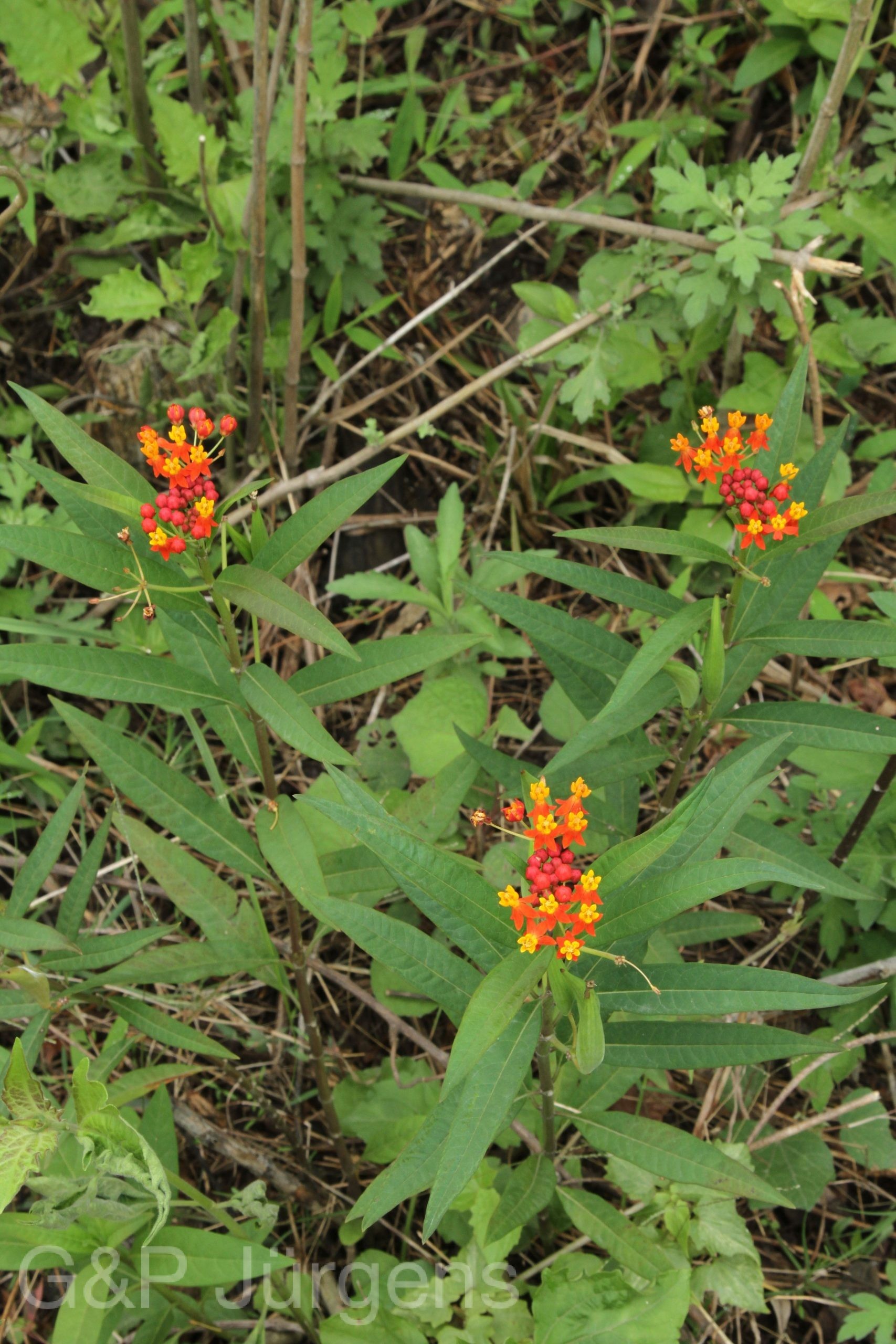
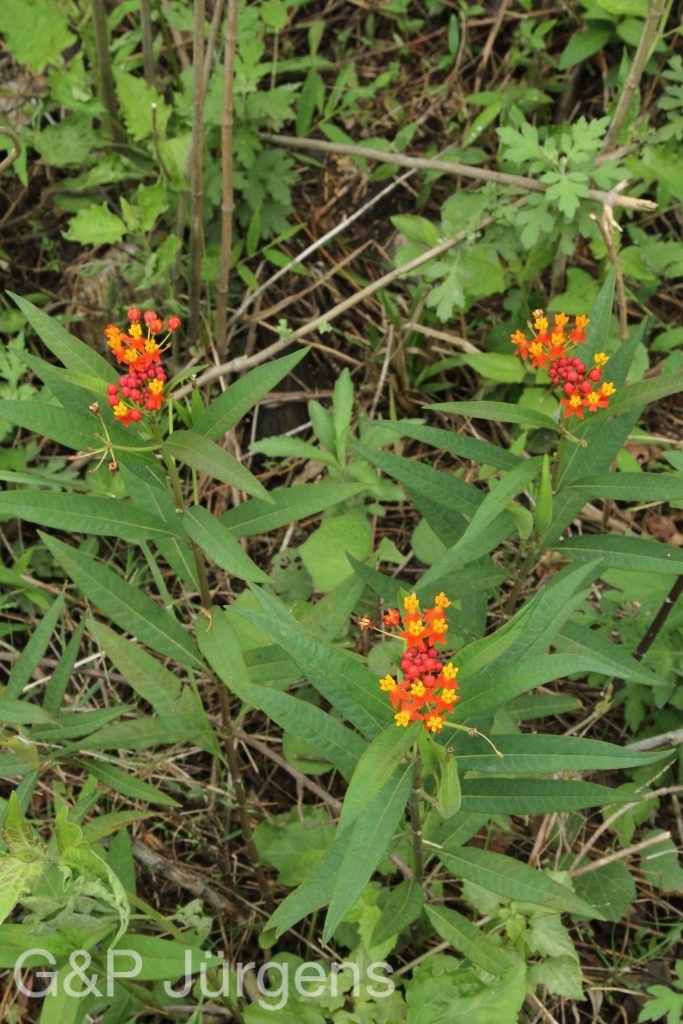
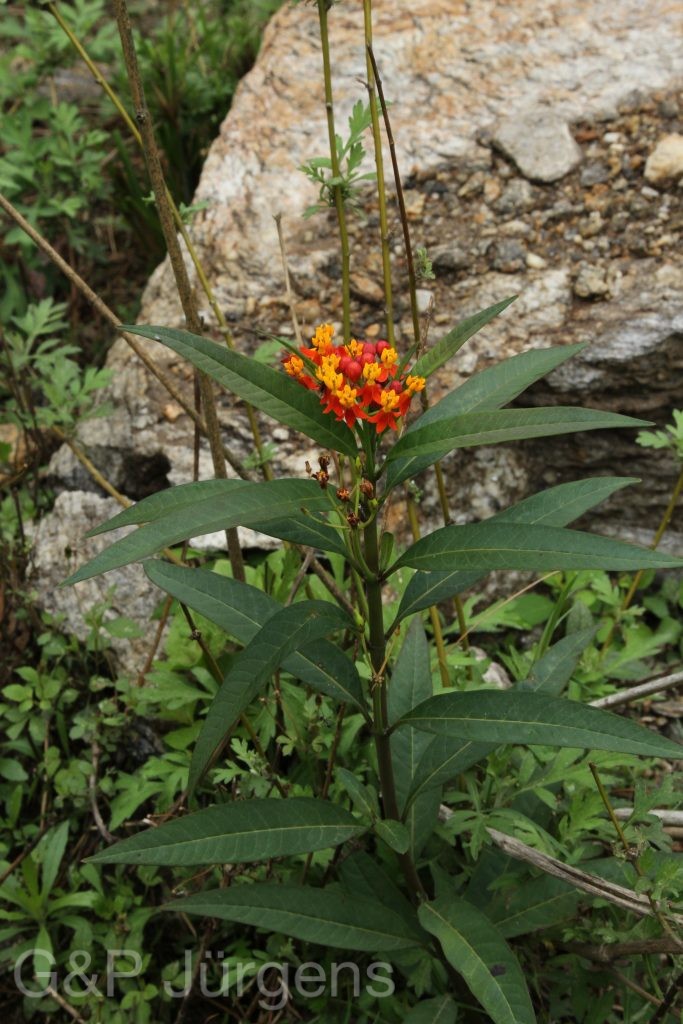
It is an erect perennial herb or subshrub 0.5-1 m tall with slender, sparingly branched stems exuding milky latex when cut. The leaves are opposite, lanceolate to narrowly elliptic, short-petioled and acuminate. The flowers are borne in terminal and axillary umbel-like cymes; each has five reflexed red to orange-red corolla lobes and a contrasting yellow to orange central corona (gynostegial hoods with incurved horns), the whole forming the characteristic asclepiad pollinarium-bearing structure. The fruit is a slender erect follicle splitting to release numerous flat seeds bearing a silky coma for wind dispersal.
A member of the milkweed subfamily Asclepiadoideae (now placed in Apocynaceae), it is rich in cardenolide toxins and serves as a host for monarch and other danaine butterflies. Widely grown ornamentally and for traditional medicine, it spreads readily and behaves as an invasive in many warm regions; it is of no conservation concern and is instead frequently managed as a weed.
Author: L. · Sources: POWO (Kew), GBIF, Flora of China, Flora of Bhutan, Flora of North America, Woodson monograph of Asclepias