
D.Don
Description
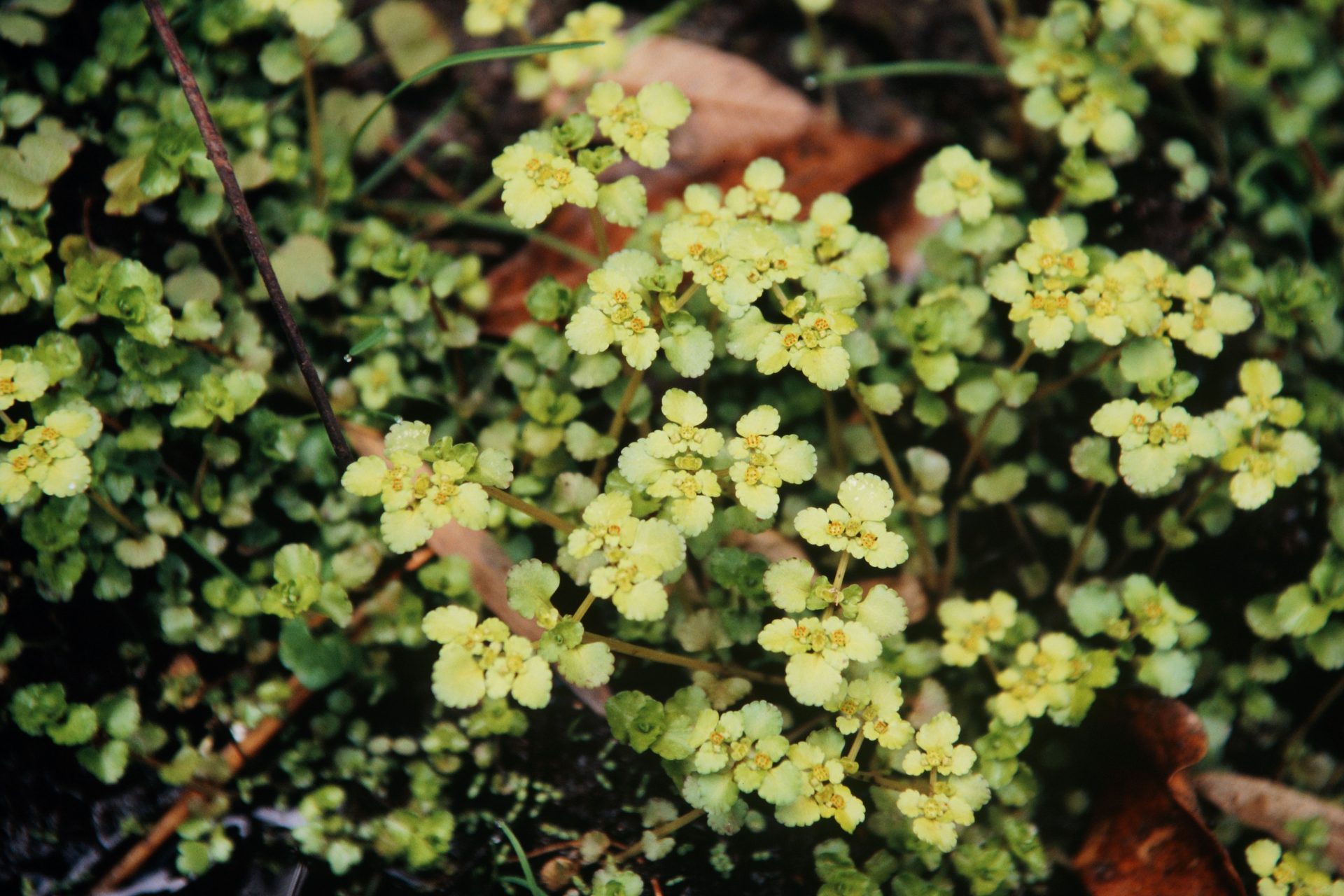
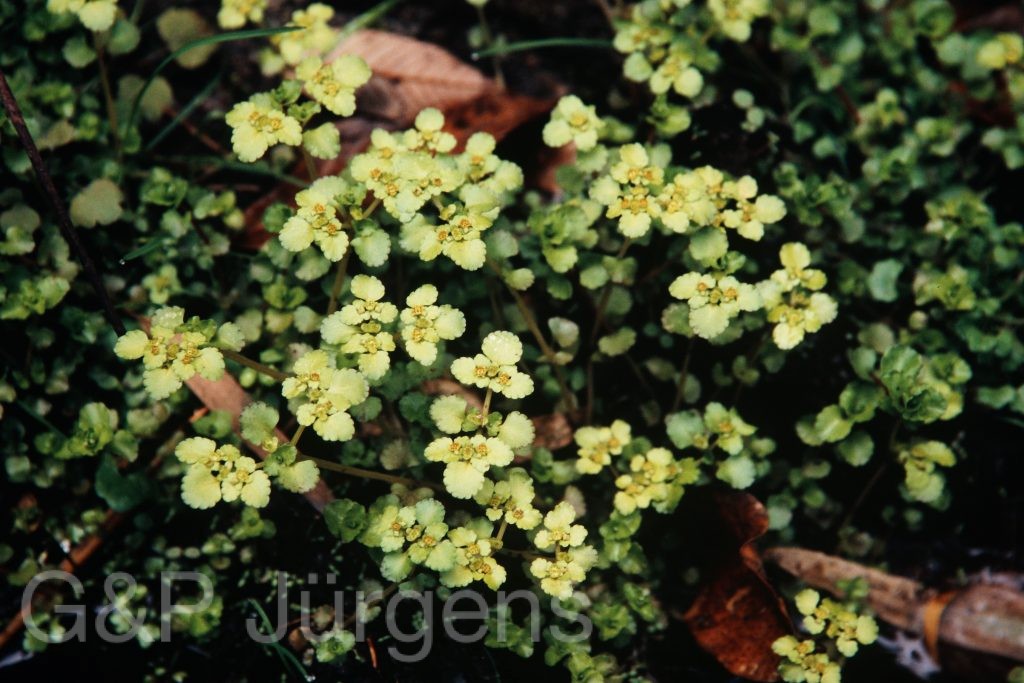
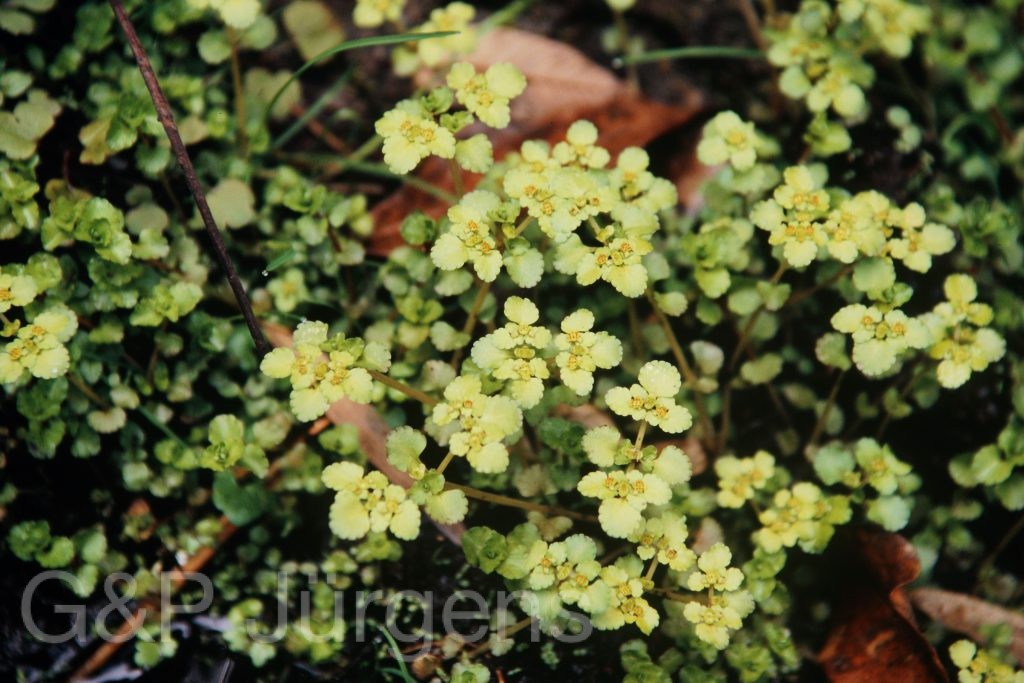
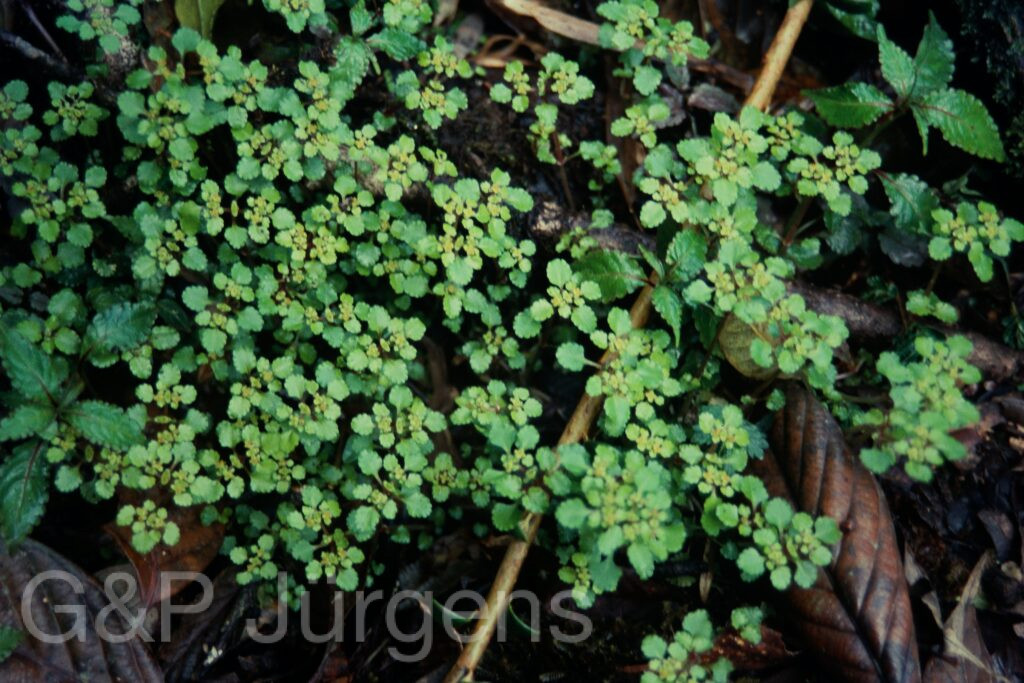
Chrysosplenium nepalense is a small herbaceous perennial of the eastern Himalaya and adjacent mountains, recorded by GBIF (339 occurrences) from Nepal, India, Bhutan, Myanmar and southwestern China. It is a plant of cool, perpetually moist habitats, colonising shaded stream banks, dripping rock faces, springs and damp humus-rich ground within temperate forest, generally between about 2500 and 3500 m. The collections illustrated from the Thimphu Chu in Bhutan at 2800 m and from Bersay in Sikkim, West Bengal, at 2810 m, both in April, are typical of its early-season flowering when snowmelt keeps the substrate saturated.
The plant is a low, mat-forming herb with slender, creeping and rooting stems that produce leafy stolons. The leaves are opposite, petiolate and reniform to broadly ovate, with a shallowly crenate margin and a cordate base. As in the genus, the flowers lack petals; the inflorescence is a flattened terminal cyme subtended by conspicuous yellowish-green leafy bracts that function as the principal visual attractant. Each small flower has four greenish-yellow sepals, four or eight stamens inserted around a flattened disc, and a half-inferior ovary. The fruit is a two-lobed, beaked capsule that splits widely to expose numerous minute seeds.
Chrysosplenium is a taxonomically intricate genus of moisture-loving saxifrages, and C. nepalense belongs to the opposite-leaved Himalayan assemblage that has been variously circumscribed. The petal-less flowers are pollinated by small flies and beetles drawn to the bract display, while the dispersal of seeds is aided by raindrop splash from the open capsules. The species is widespread within its moist montane niche and faces no recognised conservation threat, though its dependence on undisturbed seeps makes it locally sensitive to changes in hydrology and forest cover.
Author: D.Don · Sources: POWO (Kew), GBIF, Flora of China, Flora of Bhutan, Annotated Checklist of the Flowering Plants of Nepal, Monograph of Chrysosplenium (Hara)