
C. Marquand
Description
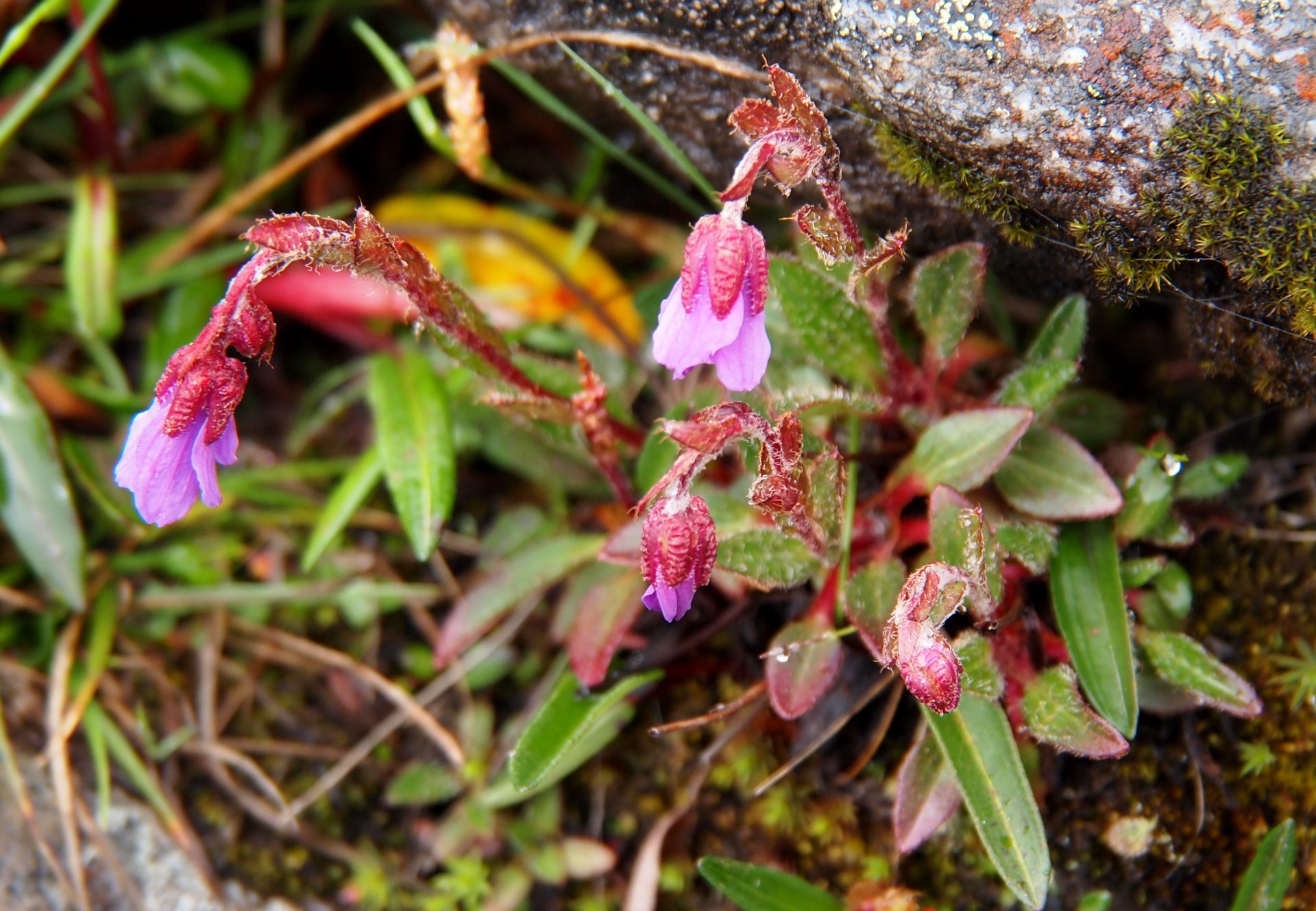
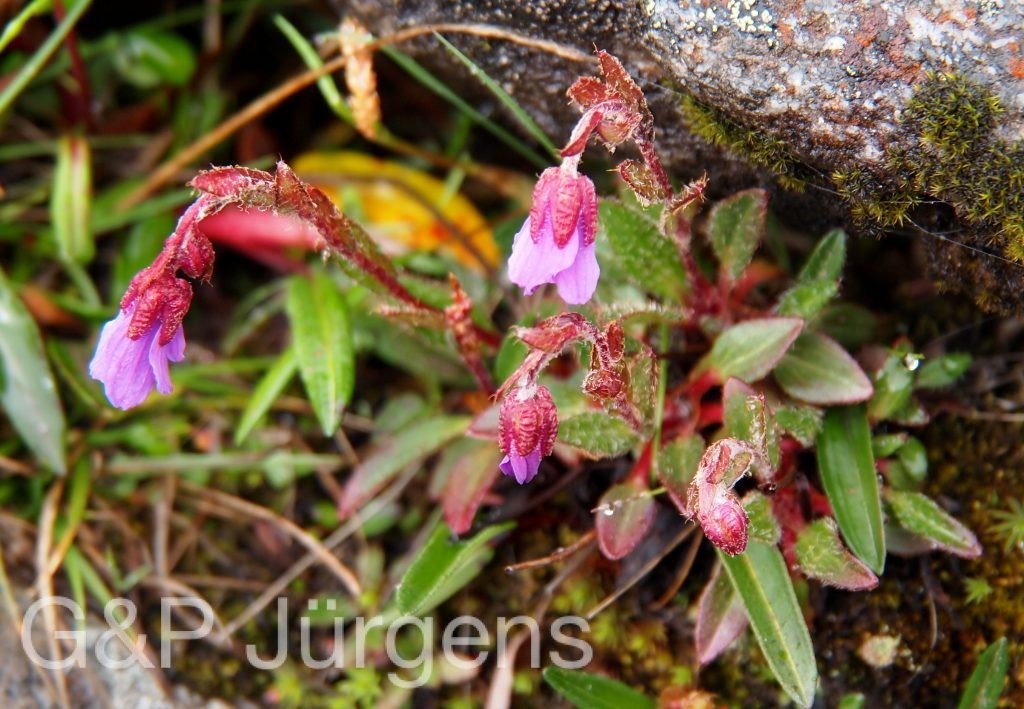
Saxifraga bergenioides is a high-alpine cushion-forming herb of the eastern Himalaya, recorded from China, Bhutan and India, with 102 occurrences in GBIF reflecting its narrow range and restricted habitat. It is a plant of cold, exposed alpine terrain: rock crevices, ledges, moraine and stony turf at very high elevations, typically between 4000 and 4800 m. The collection illustrated, from the Ludlow-Sherriff Trail near Dem-Tso at 4650 m in Bhutan in July, exemplifies its occupancy of the upper alpine zone, where it flowers in midsummer on cold, well-drained rocky substrates near the limit of vascular plant growth.
The plant forms low, compact tufts or cushions arising from a branched, woody-based rootstock. The leaves are mostly basal in dense rosettes, thick and somewhat leathery, obovate to spathulate with entire or obscurely toothed margins, the firm Bergenia-like texture giving rise to the epithet. The flowering stems are short, erect and glandular-hairy, bearing few-flowered cymes; each flower has five spreading sepals and five obovate to oblong petals, white to pale yellow, around two whorls of stamens with a bicarpellate, partly inferior ovary. The fruit is a two-beaked capsule splitting between the divergent styles to release numerous small seeds.
Saxifraga (Saxifragaceae) is a large genus of cold-temperate and arctic-alpine regions, with the Sino-Himalaya a major centre of diversity; S. bergenioides is placed among the leathery-leaved Himalayan saxifrages. Its compact cushion habit is a classic adaptation to wind exposure, cold and physiological drought at extreme altitude. With its limited distribution and specialised high-alpine niche, it is potentially sensitive to climate warming, although its remote habitat currently buffers it from direct human pressures.
Author: C. Marquand · Sources: POWO (Kew), GBIF, Flora of China, Flora of Bhutan, Saxifrages of the World (Monograph of the Genus Saxifraga)