
Losinsk.
Description
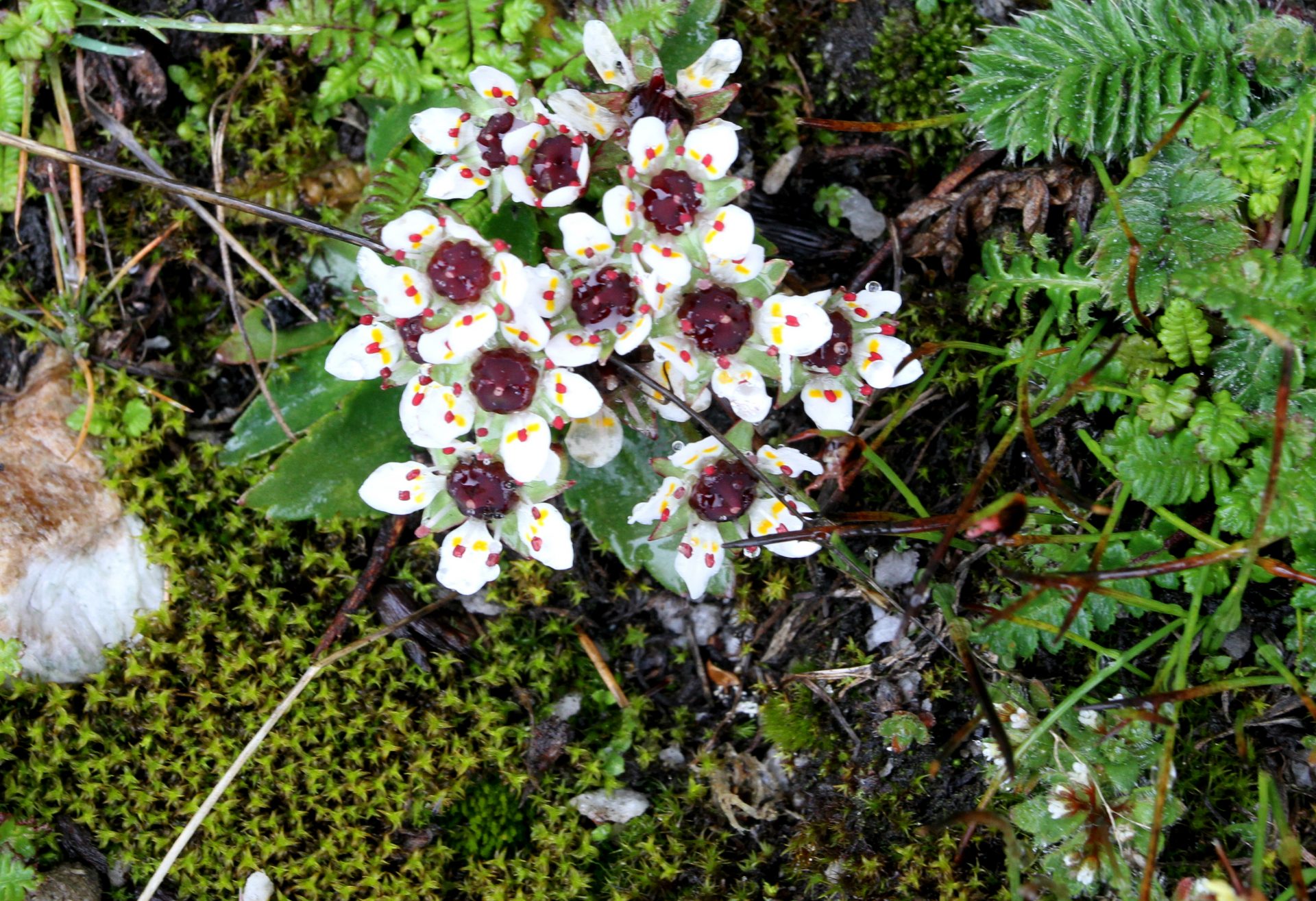
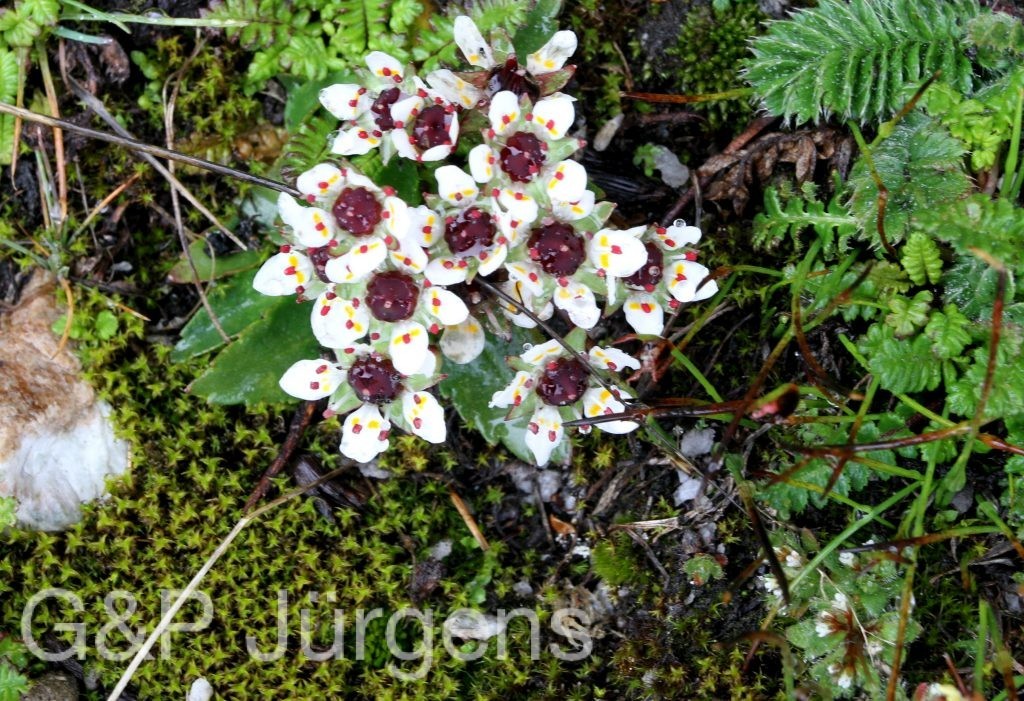
Micranthes melanocentra (long known as Saxifraga melanocentra) ranges through the high mountains of China, Nepal, India, Bhutan and Pakistan, with about 784 records tracing the Himalaya and the Hengduan and Tibetan ranges. It is a true alpine, the image documenting it at Jule-Tso in Bhutan at about 4300 m in June, at the onset of the brief alpine summer. It occupies open alpine meadow, stony slopes, moraine, streamsides and damp turf above the treeline on moist, well-drained gravelly and rocky substrates, where snowmelt provides early-season moisture and the growing season is compressed into a few weeks.
It is a small rosette-forming perennial herb arising from a short rootstock. The leaves are basal, obovate to spathulate, with crenate to dentate margins, narrowing to a broad petiole and often somewhat fleshy. From the rosette rises a leafless, glandular-hairy scape bearing a corymbose to subcapitate cyme of several flowers. The flowers have five white (sometimes pink-tinged) petals, and the species takes its epithet from the dark, almost blackish, contrasting centre formed by the deep-coloured ovary and the conspicuous reddish to purple-black anthers. The fruit is a two-beaked capsule releasing numerous small seeds.
The species was described by Losinskaja and is now placed in the segregate genus Micranthes, separated from Saxifraga sensu stricto on molecular and morphological grounds, comprising the rosette-leaved, scapose saxifrages. Its dark-centred white flowers are visually distinctive among Himalayan alpines and provide a contrasting nectar guide for insect pollinators. Adapted to cold, high-radiation alpine conditions, it is widespread and locally common across its montane range and is not considered threatened.
Author: Losinsk. · Sources: POWO (Kew), GBIF, Flora of China, Flora of Bhutan, Saxifragaceae monograph and Micranthes phylogenetic studies