
Franch.
Description
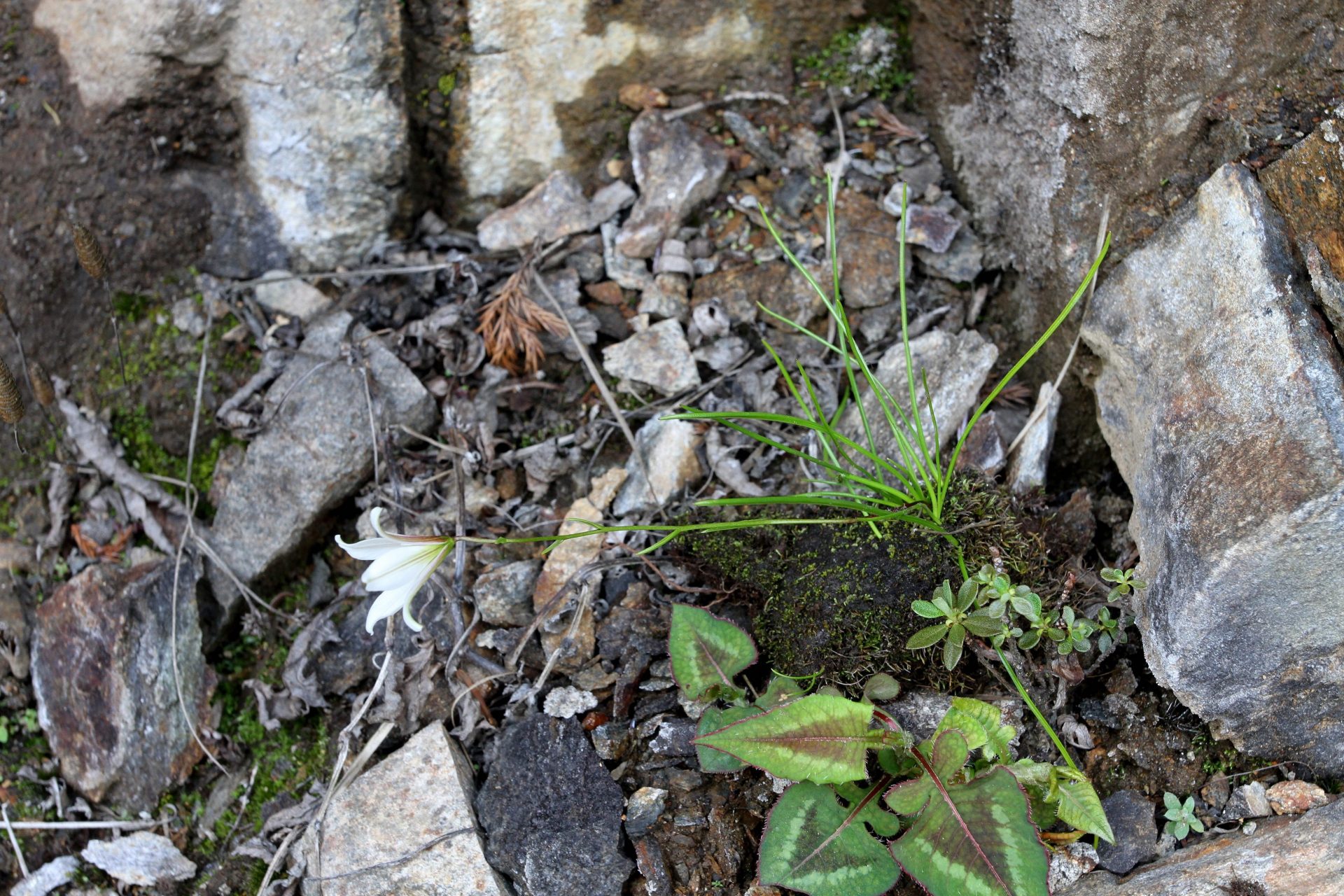
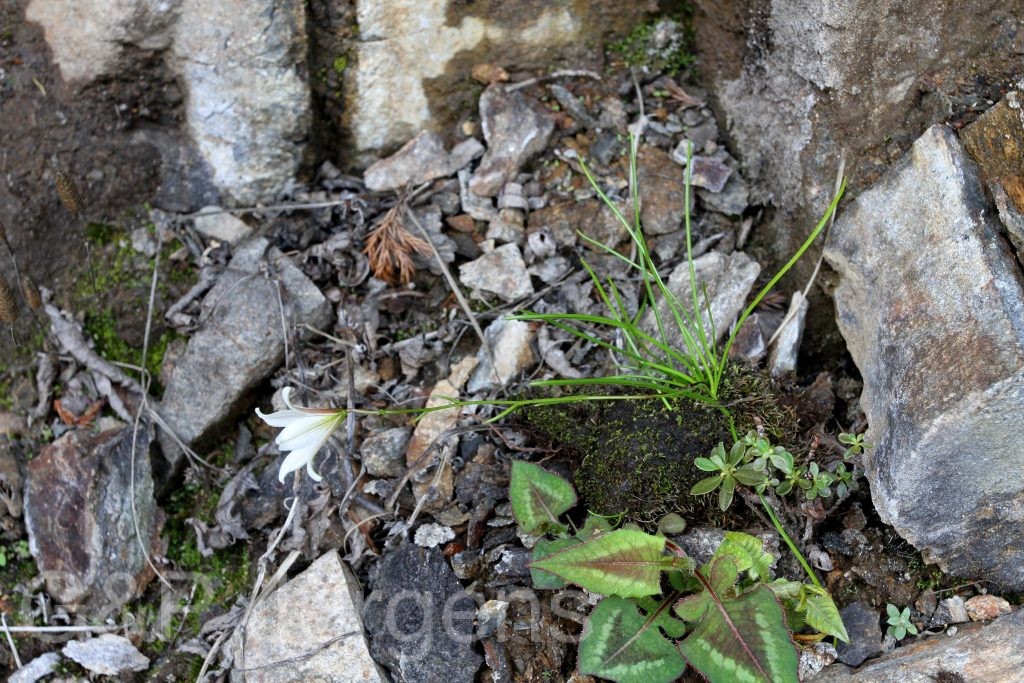
Lloydia yunnanensis is a small alpine bulbous herb ranging across south-central China (notably Yunnan and Xizang), the Indian Himalaya, Bhutan and Nepal, with around one hundred and thirty GBIF records testifying to a fairly continuous high-mountain distribution. It grows in alpine and subalpine meadows, on grassy and rocky slopes, in open scrub and among rocks, typically between about 3000 and 4500 m. The photographed plant from Tsochenchen in Bhutan at 3550 m, flowering in June, is characteristic of its early-summer flowering as the snow recedes from the upper pastures it favours.
The species arises from a small ovoid bulb with a fibrous tunic and produces a slender, erect stem. The leaves are few, narrowly linear and grass-like, the lower ones basal and the upper cauline and reduced. The flowers are solitary or few, erect, with six free, spreading tepals that are white to pale yellow, often veined or tinged with purple toward the base and bearing a nectary at the inner base; the six stamens have slender filaments and the superior ovary bears a single style. The fruit is a small loculicidal capsule containing numerous flat seeds.
Lloydia yunnanensis is here treated under the accepted name Lloydia yunnanensis. Although the genus Lloydia has frequently been merged into Gagea in modern molecular treatments, the segregate name is retained here following the input. Its dwarf stature, bulb-protected perennating organ and rapid post-snowmelt flowering are classic adaptations to the brief alpine growing season. The species is widespread and not regarded as threatened, though high-altitude grassland degradation could affect local populations.
Author: Franch. · Sources: POWO (Kew), GBIF, Flora of China, Flora of Bhutan, Peruzzi & Zarrei revision of Gagea/Lloydia (Liliaceae monograph)