
Schott
Description
Arisaema propinquum is a Himalayan tuberous aroid distributed from Pakistan and northern India through Nepal, Sikkim and Bhutan into south-western China and Myanmar, with 257 GBIF occurrences across the central and western Himalaya. It grows in moist temperate forest, shrubberies, alpine meadow margins and open slopes, typically between about 2400 and 3700 m. The cited Nepalese collections – from Kharka in the Gorkha district at 3100 m and from Koktrok in Helambu at 2600 m, both in May – place its flowering in the late-spring period as the cobra-lilies emerge with the first monsoon moisture.
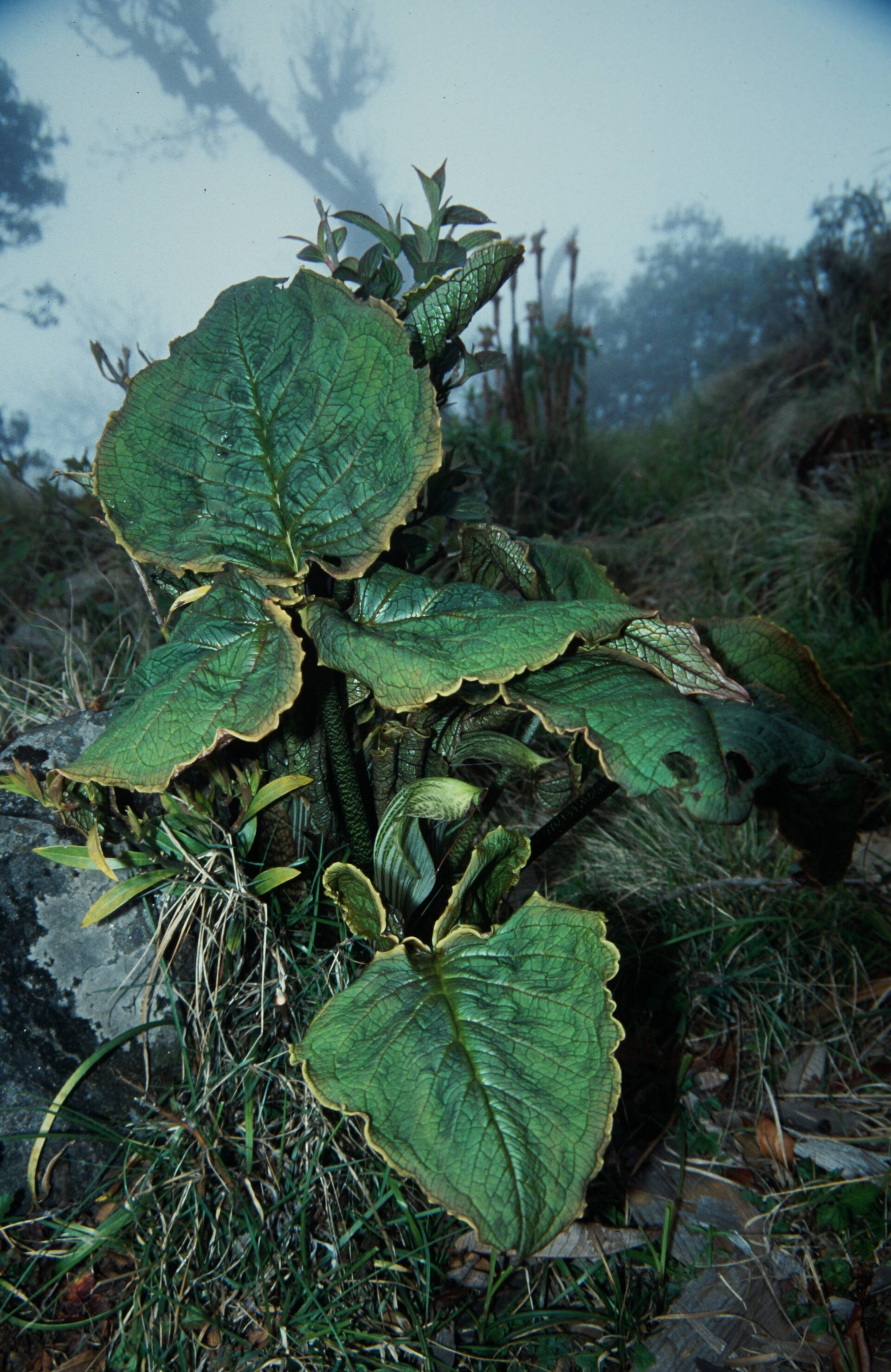
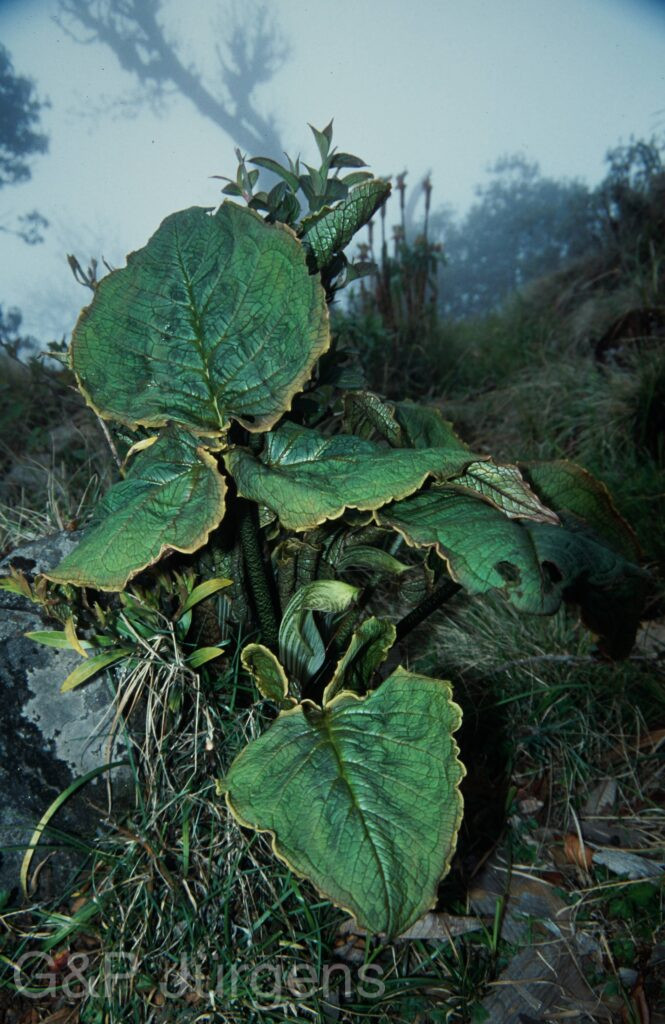
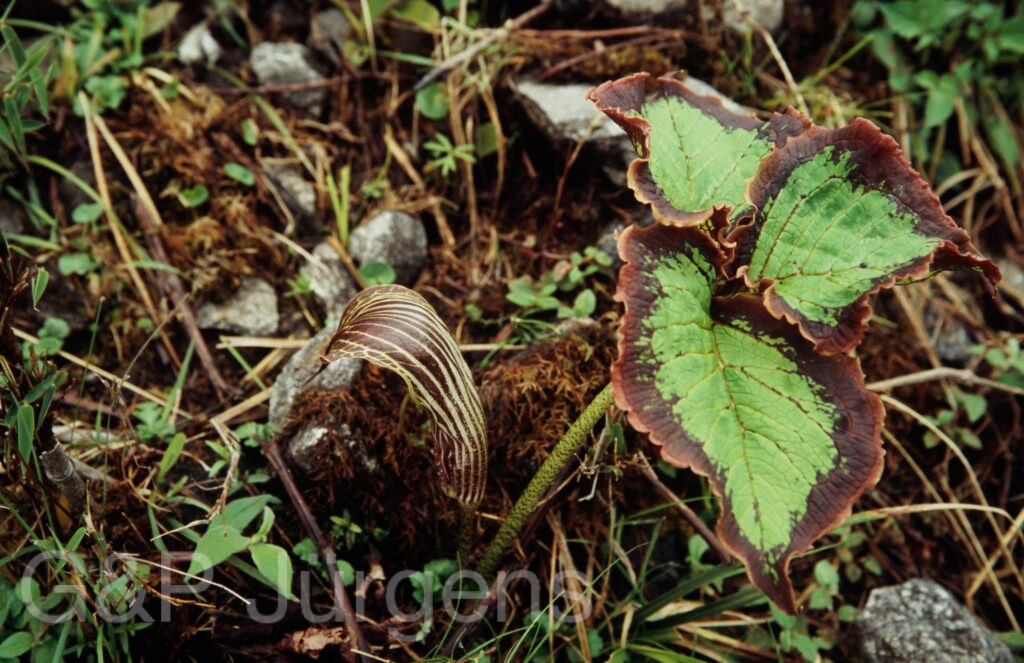
It arises from a depressed globose corm and usually produces a single (or paired) leaf divided into three broadly ovate to elliptic leaflets, the lateral ones obliquely based and the whole sometimes flushed purple beneath. The inflorescence is a typical aroid spadix enclosed in a spathe; in A. propinquum the spathe is dark purple with bold whitish or greenish longitudinal stripes, the tube cylindrical and the broad limb arching forward into a long, often filiform tail. The spadix appendage is slender and curved, exserted from the spathe mouth. The fruiting head is a dense ovoid cluster of bright red berries.
Arisaema is a large genus celebrated for paradioecy, in which individuals change sex between female and male states according to size and resources, and for its specialised fly- and fungus-gnat pollination within the trap-like spathe. A. propinquum belongs to the Himalayan striped-spathe assemblage and, while ornamentally prized, remains widespread and is not of conservation concern.
Author: Schott · Sources: POWO (Kew), GBIF, Flora of China, Flora of Bhutan, Annotated Checklist of the Flowering Plants of Nepal, Gusman & Gusman monograph of Arisaema