
L.
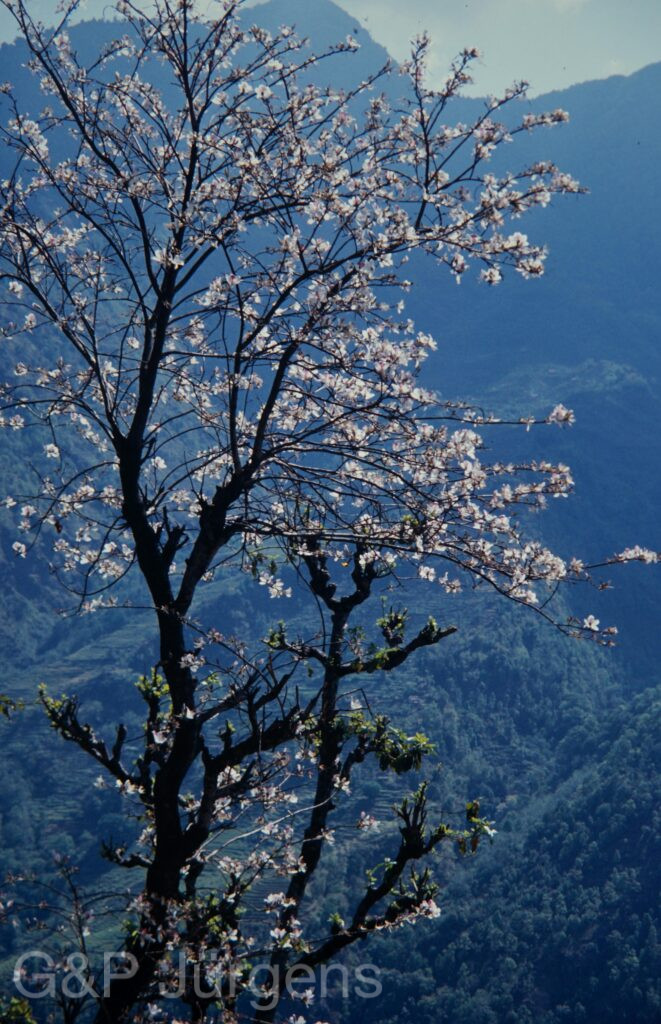
1850m April
Description
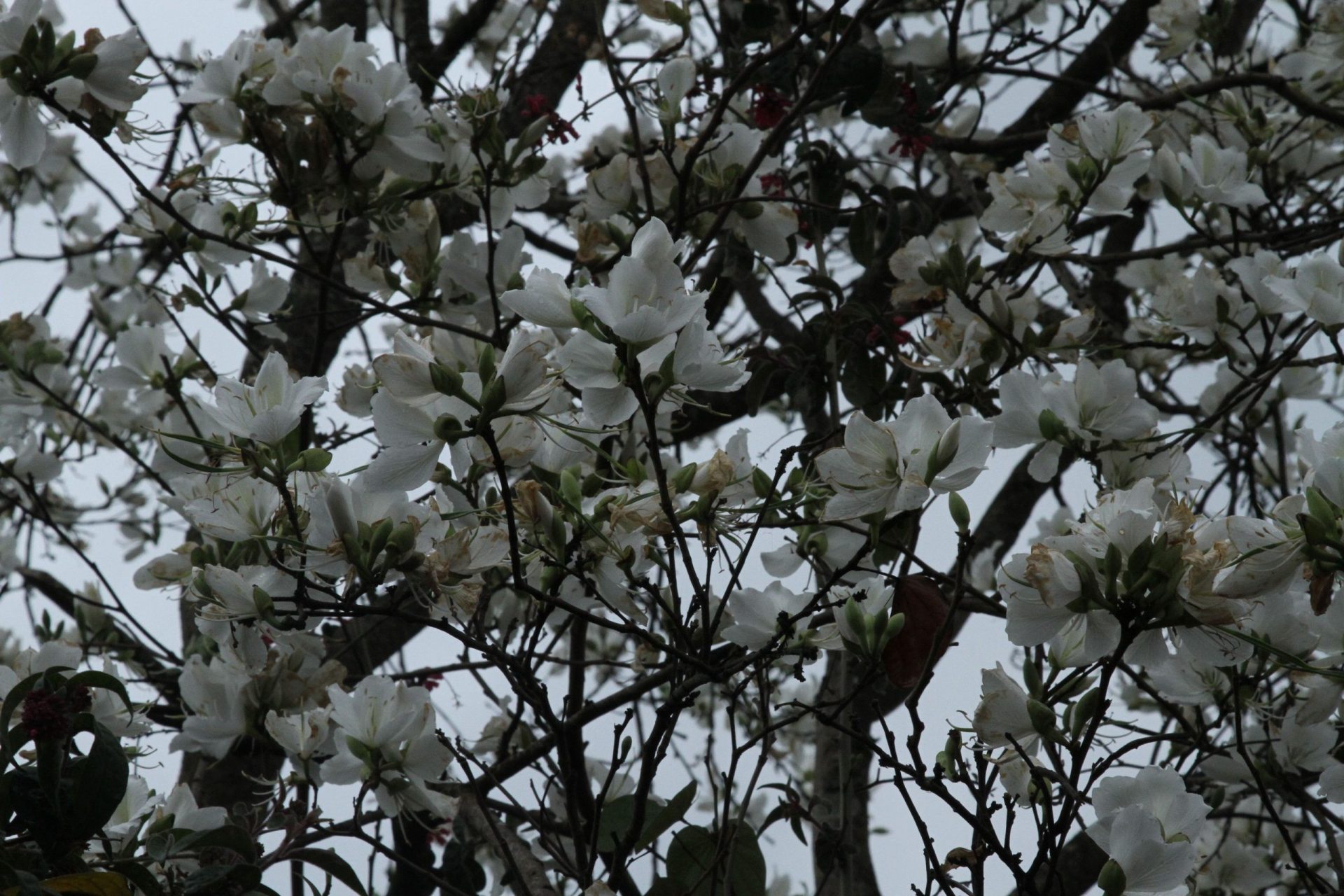
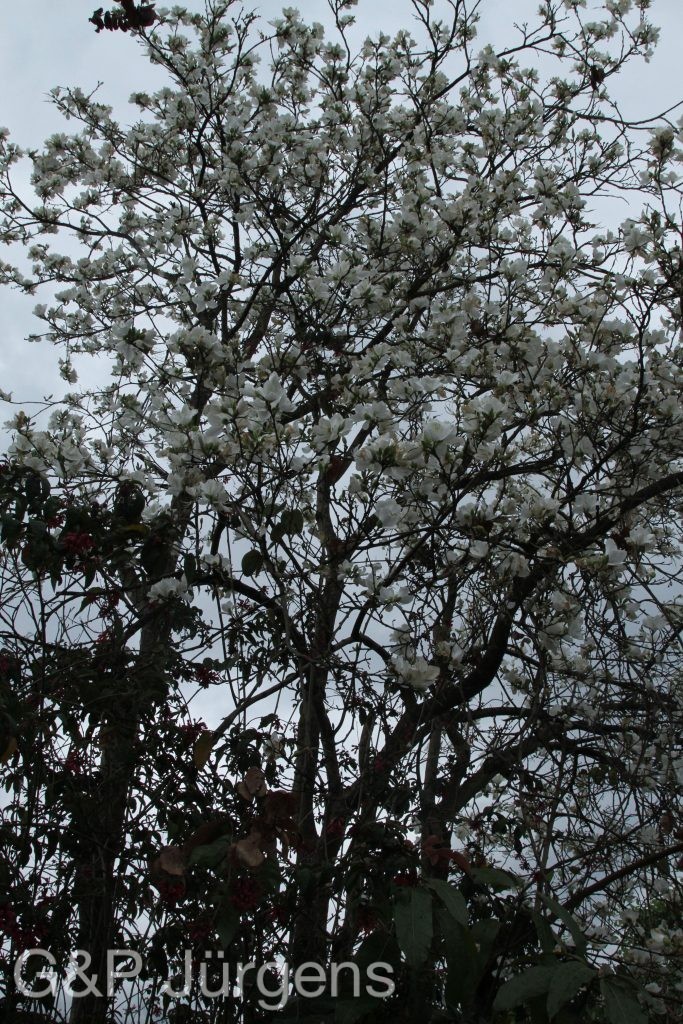
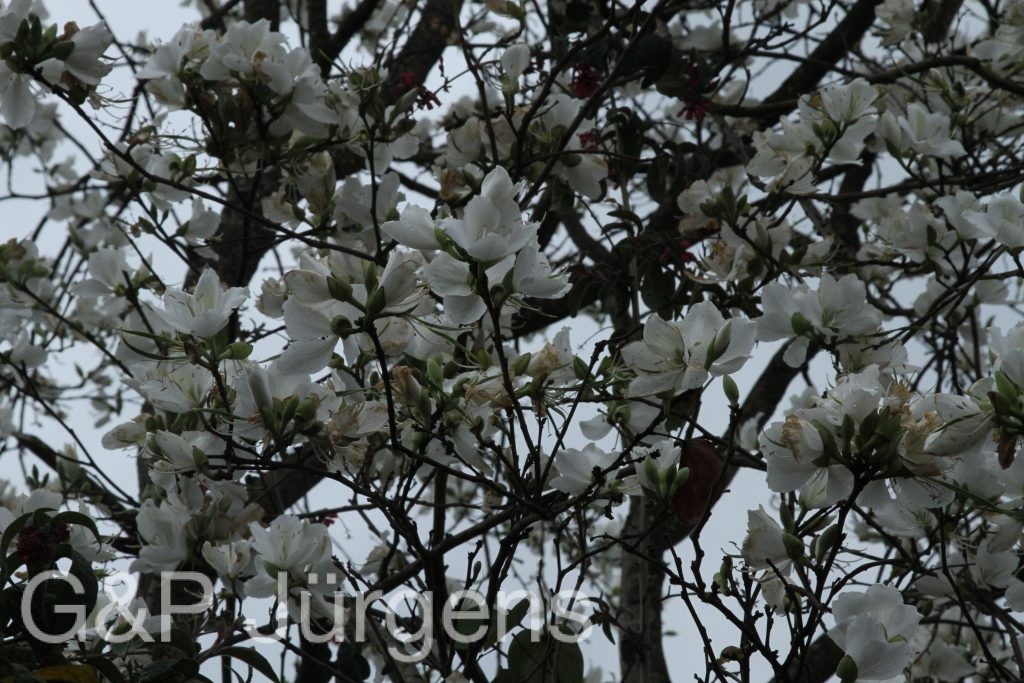
Bauhinia variegata, the orchid tree or kachnar, is a deciduous tree native to tropical and subtropical Asia and now pantropically naturalised, reflected in GBIF's nearly 5000 occurrences spanning India, Nepal, China, Myanmar, Thailand and Pakistan as well as introduced ranges in Brazil, the United States, Mexico, South Africa, Australia and Spain. In the Himalayan foothills it occupies warm, seasonally dry broadleaf forest, riverine slopes and disturbed ground from the plains to about 1900 m. The photographed trees from Trashigang in eastern Bhutan at 1200 m in May and from the Mewa-Khola in eastern Nepal at 1850 m in April illustrate its lower-montane habitat, where it flushes conspicuous blossoms in the dry pre-monsoon months on largely leafless branches.
It is a small to medium tree with grey-brown bark and a spreading crown. The alternate leaves are broadly ovate-cordate, bilobed for up to one-third their length into two rounded lobes giving the characteristic camel-footprint outline, with palmate venation. The showy, fragrant flowers are borne in short axillary or terminal racemes; each has five obovate, clawed petals ranging from white through pink to mauve-purple, the uppermost broader and streaked with deeper veining, and typically three to five fertile stamens. The fruit is a flat, dehiscent, woody legume up to 30 cm long containing several compressed seeds.
A member of Fabaceae (Caesalpinioideae), Bauhinia is the type genus of the diagnostically bilobed-leaved tribe Cercideae. The species is extensively cultivated as an ornamental and avenue tree, while its flower buds, bark and young pods are used as vegetables and in traditional medicine. Widespread, weedy and able to fix little nitrogen yet tolerant of poor soils, it is of Least Concern and locally invasive beyond its native range.
Author: L. · Sources: POWO (Kew), GBIF, Flora of Bhutan, Flora of China, Annotated Checklist of the Flowering Plants of Nepal, Larsen & Larsen revision of Bauhinia