
Hook.f.
Description
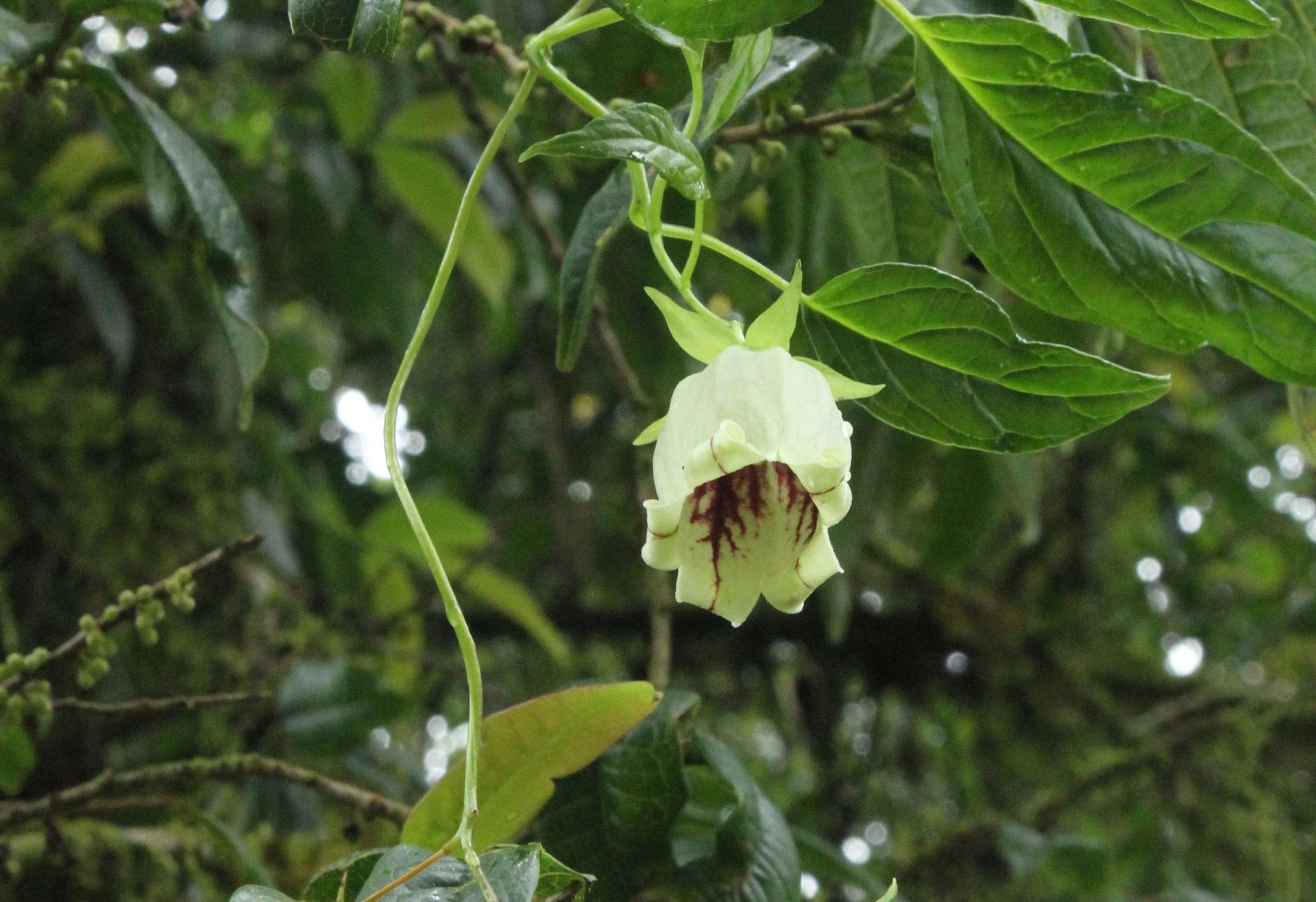
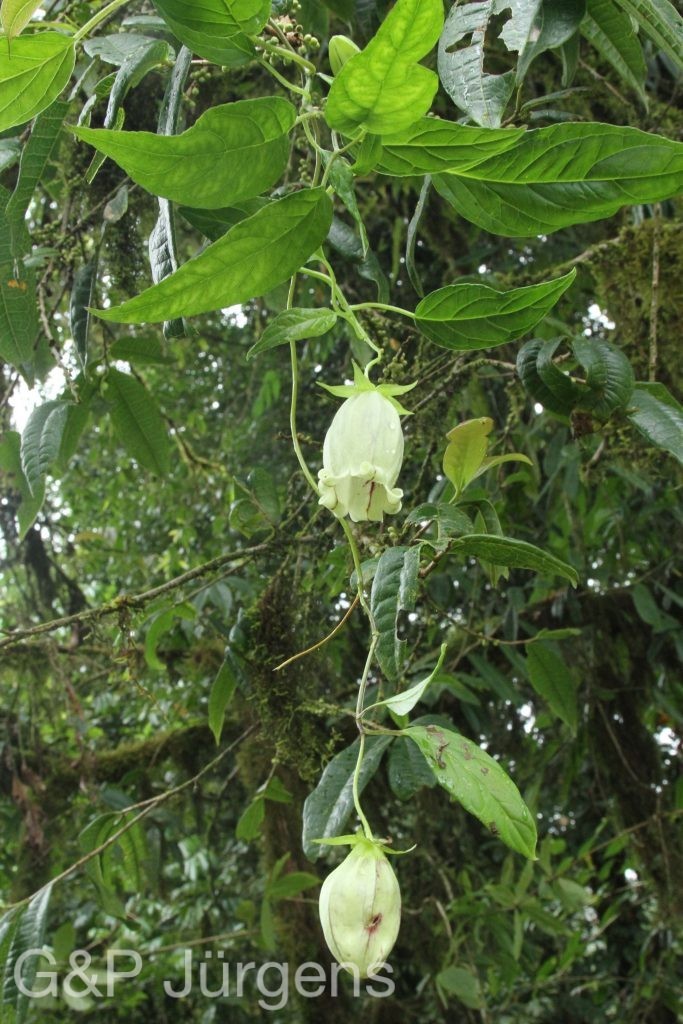
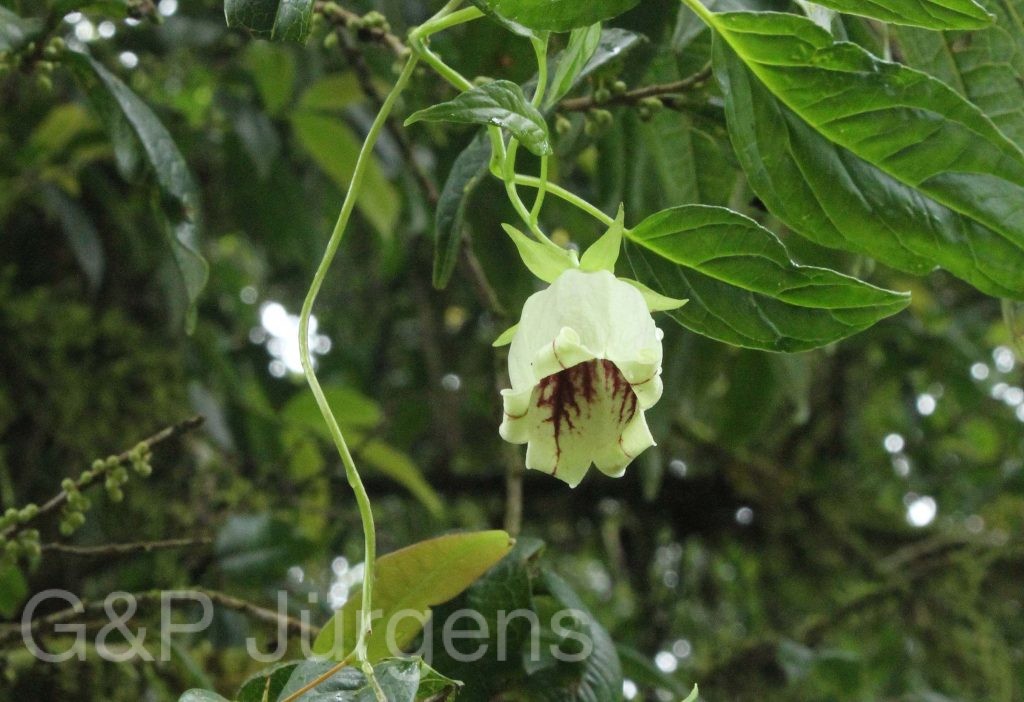
Codonopsis inflata is a herbaceous twining perennial of the eastern and central Himalaya, recorded from India, Nepal, Bhutan, China and Myanmar. It grows in forest margins, thickets, scrub and among tall herbs on shaded slopes and stream banks in the subtropical to lower temperate belt, generally between about 1000 and 2500 m, scrambling over surrounding vegetation. The photographed plant comes from Tserang in Bhutan at around 1000 m, flowering in September. With around 107 georeferenced records it is a moderately documented Himalayan bellflower relative, characteristic of the humid, vegetated lower montane zone where its slender climbing stems are supported by neighbouring shrubs and herbs.
It arises from a fleshy, often swollen rootstock and produces slender, twining, glabrous stems that exude latex when cut and emit the characteristic foetid odour of the genus. The leaves are alternate or subopposite, ovate to lanceolate, with entire to shallowly toothed margins and slender petioles. The flowers are solitary and nodding on long pedicels; the calyx has five lobes adnate to the lower part of the ovary, and the corolla is broadly campanulate to somewhat inflated, pale greenish, yellowish or bluish and usually marked within by darker veins or blotches. There are five stamens, and the inferior to half-inferior ovary ripens into a capsule that dehisces to release numerous small seeds.
Codonopsis is a large Sino-Himalayan genus, several species of which are valued in traditional Chinese and Himalayan medicine, the fleshy roots (dang shen) used as tonics; C. inflata shares this ethnobotanical use. Its taxonomy is complicated by variation in corolla form and by close affinity to allied Himalayan species. As a fairly widespread plant of vegetated montane habitats it is of least conservation concern.
Author: Hook.f. · Sources: POWO (Kew), GBIF, Flora of China, Flora of Bhutan, Lammers monograph of Campanulaceae (Codonopsis)