
DC.
Description
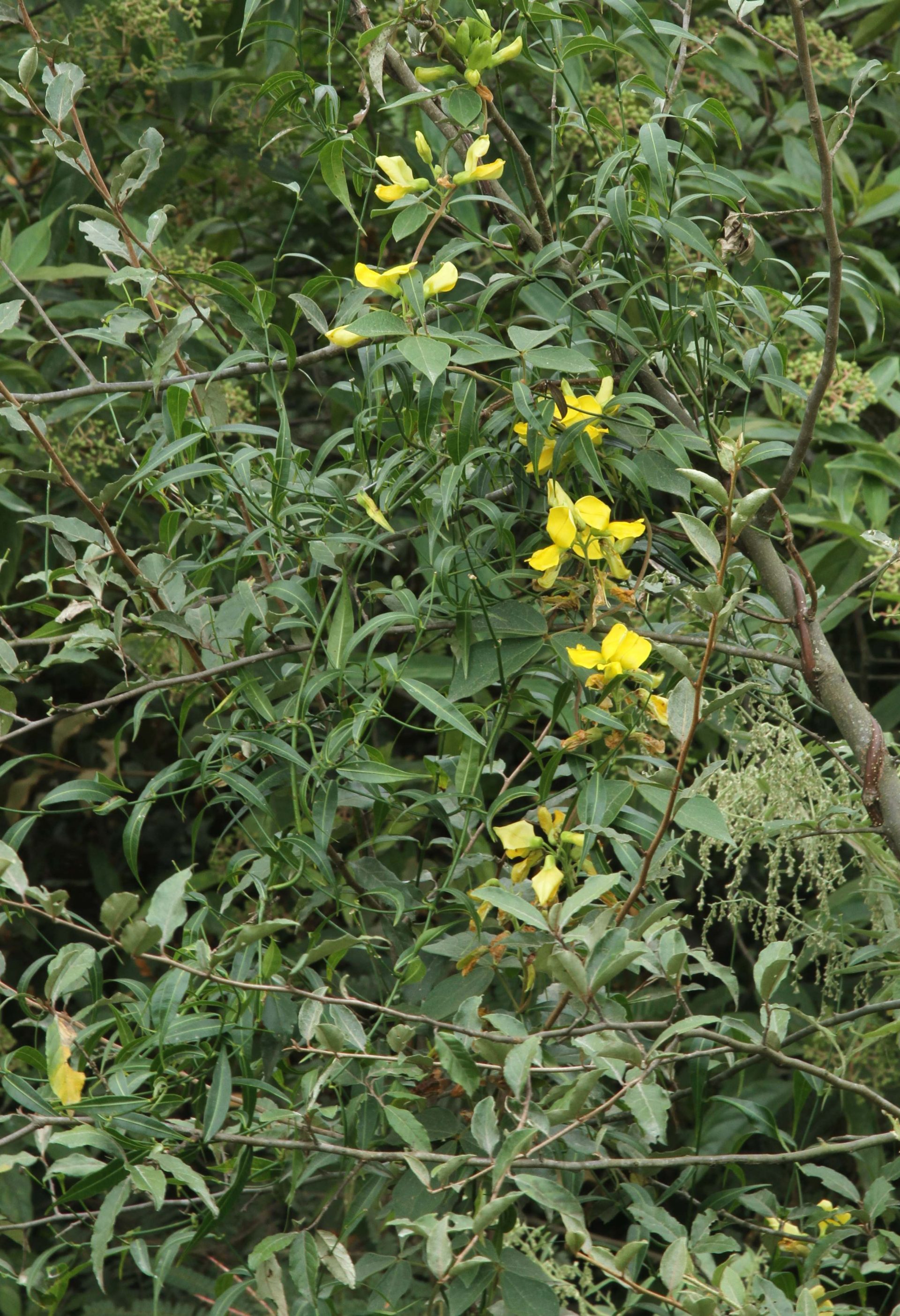
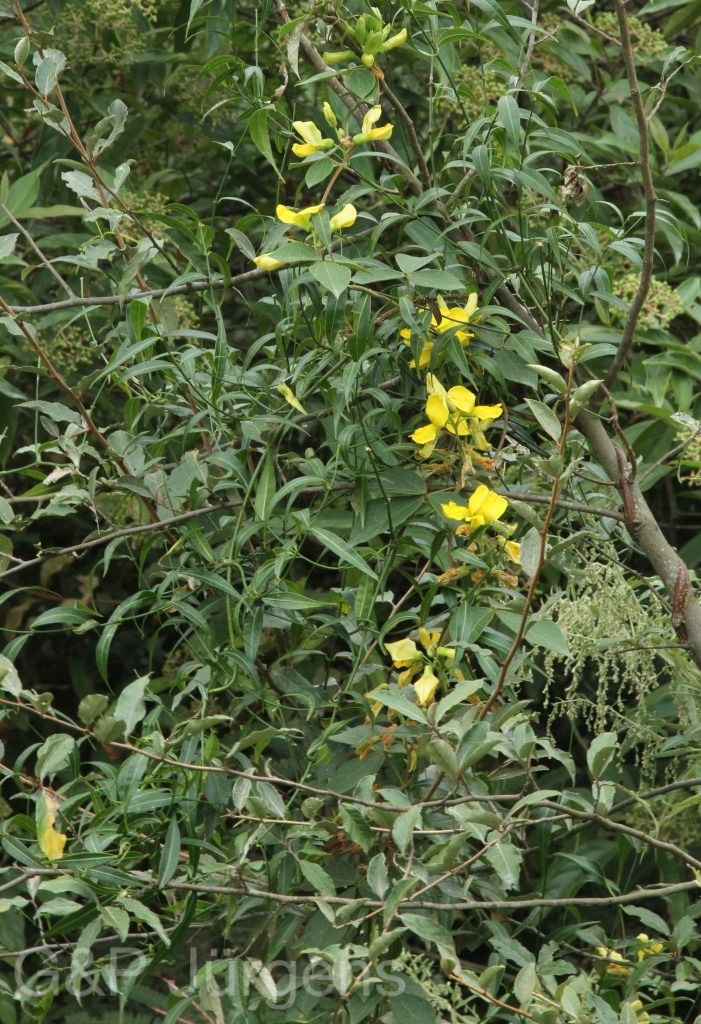
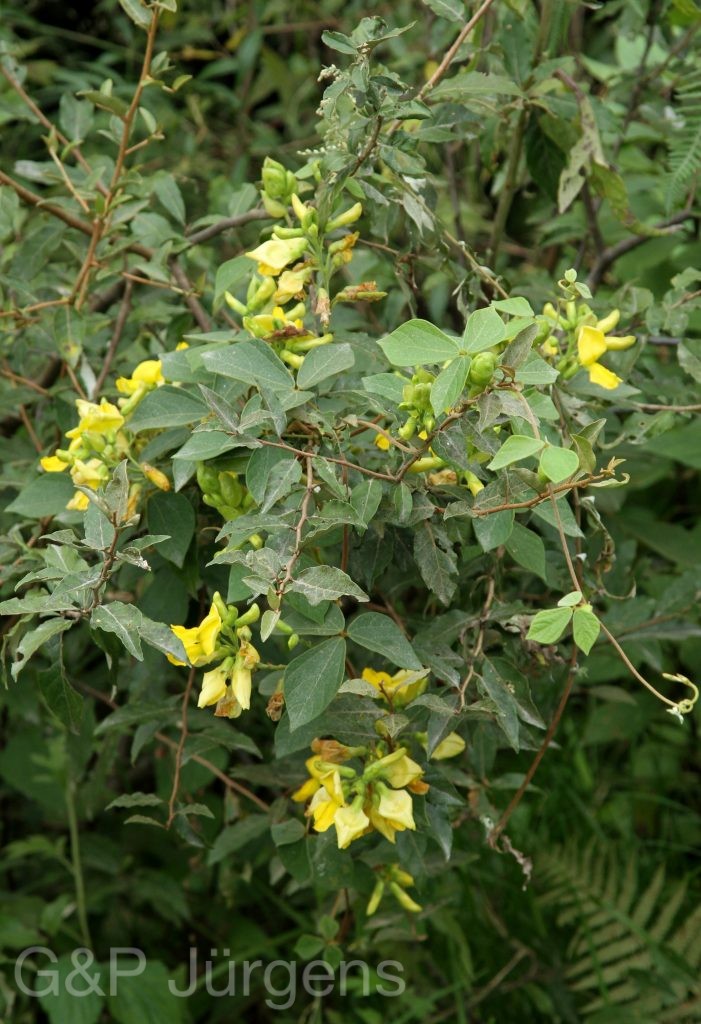
Crotalaria cytisoides is a shrubby rattlepod of the Himalaya and into Southeast Asia. GBIF records it from China, India, Nepal, Myanmar, Thailand, Bhutan, Laos, Malaysia and Indonesia, with further occurrences extending to Madagascar and Uganda, totalling over 400 records. It grows on open hill slopes, scrub, grassy banks, forest margins and roadsides at lower to middle elevations, broadly between 1000 and 2700 m. The plant shown was photographed near Trongsa in central Bhutan at 2100 m in October, flowering in the post-monsoon period along the warm temperate hill zone where this species is a frequent component of disturbed scrub.
It is a much-branched shrub or undershrub with silky-pubescent young branches. The leaves are trifoliolate, the obovate to elliptic leaflets softly hairy beneath, subtended by small stipules. The flowers are borne in terminal and leaf-opposed racemes; the papilionaceous corolla is yellow, sometimes veined or flushed reddish-brown on the standard, with the keel beaked as is typical of the genus. The fruit is an inflated, oblong legume in which the loosened ripe seeds rattle when shaken, the feature giving Crotalaria its English name rattlepod.
Crotalaria is a large pantropical legume genus, and like its relatives it forms root nodules with nitrogen-fixing rhizobia, enriching poor soils and contributing to its success as a coloniser of disturbed ground. Many species, including this one, contain pyrrolizidine alkaloids that deter herbivores and can be toxic to livestock. With its wide distribution, ruderal tendency and abundant seed production, C. cytisoides is common and of no conservation concern across its broad range.
Author: DC. · Sources: POWO (Kew), GBIF, Flora of China, Flora of Bhutan, Annotated Checklist of the Flowering Plants of Nepal, A revision of the genus Crotalaria (Leguminosae)