
Andrews
Description
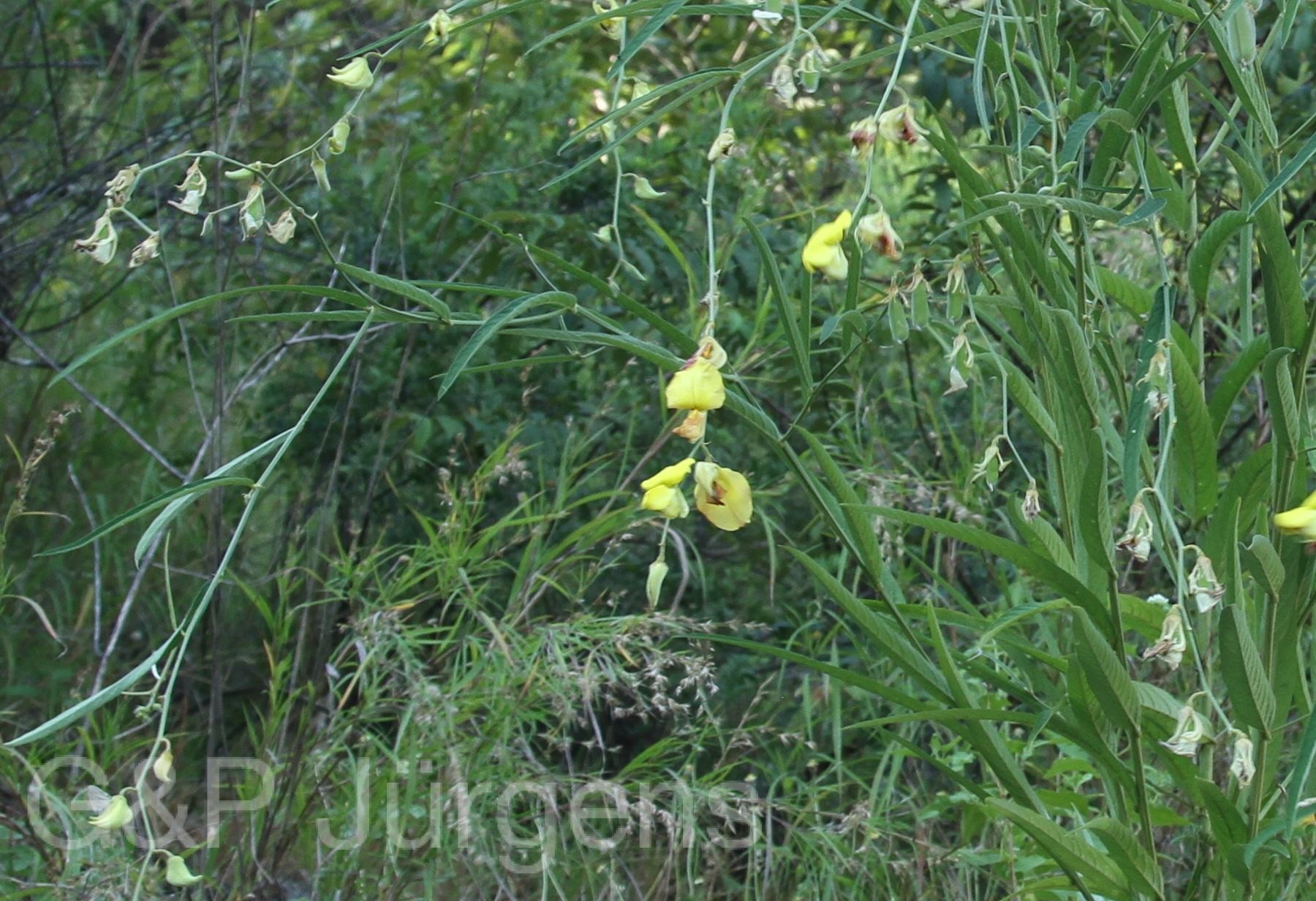
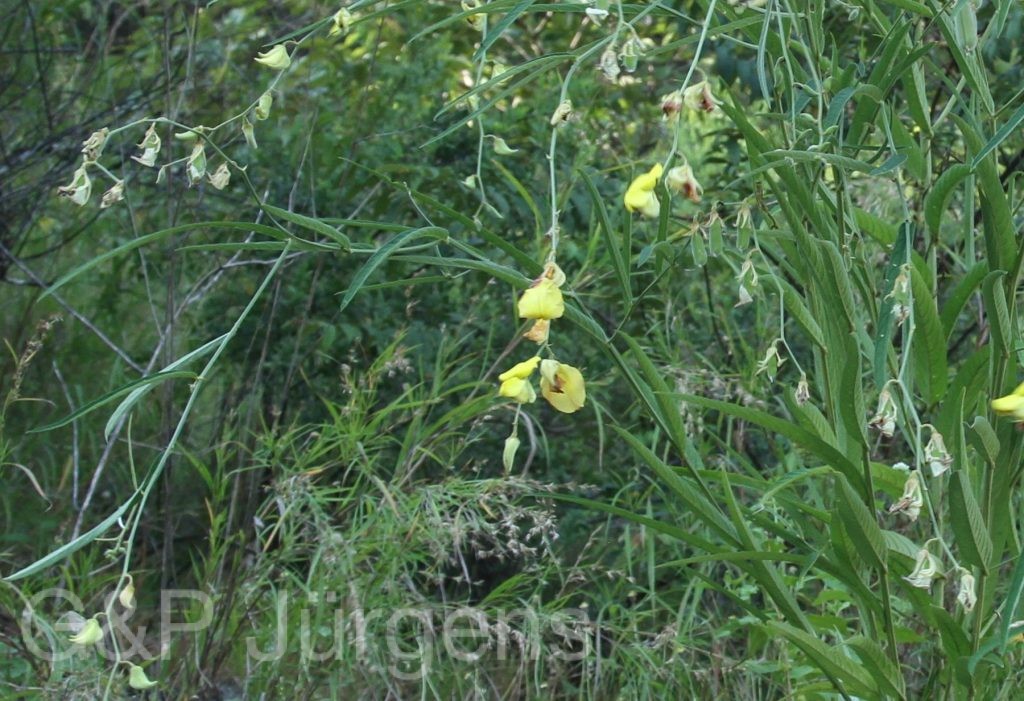
Crotalaria tetragona Andrews is a tall rattlepod widely distributed across tropical and subtropical Asia, native from India, Nepal, Bhutan and Bangladesh through southern China, Myanmar, Thailand, Laos, Vietnam, Cambodia and the Malesian region; GBIF lists about 405 occurrences, with records from Brazil, Jamaica, Colombia and Mauritius indicating introduction and naturalisation. It grows in open grassland, forest margins, scrub and disturbed roadside ground in the warm subtropical and submontane zone, generally below about 2000 m. The photographed plant from Trashiyangtse in eastern Bhutan at around 1780 m, flowering in October, reflects its occurrence in warm, lower-elevation valley habitats.
The species is a robust erect perennial herb or subshrub with conspicuously four-angled, often winged stems, the epithet tetragona alluding to this quadrangular form. The leaves are simple, elliptic to lanceolate and entire. The flowers are borne in long terminal racemes and are large and bright yellow, with the standard frequently veined reddish-brown; the calyx is deeply lobed and the keel beaked in the papilionaceous arrangement. The fruit is a large, inflated, oblong pod that turns blackish and rattles when the loose seeds detach at maturity, giving the genus its common name.
Crotalaria (Fabaceae, subfamily Faboideae, tribe Crotalarieae) is a large pantropical genus of nitrogen-fixing legumes, several used as green manure and fibre plants. C. tetragona is locally common and weedy, of least conservation concern, and like its congeners may contain pyrrolizidine alkaloids rendering it toxic to livestock.
Author: Andrews · Sources: POWO (Kew), GBIF, Flora of China, Flora of Bhutan, Flora of British India, Polhill monograph Crotalaria in Africa and Asia