
Roxb.
Description
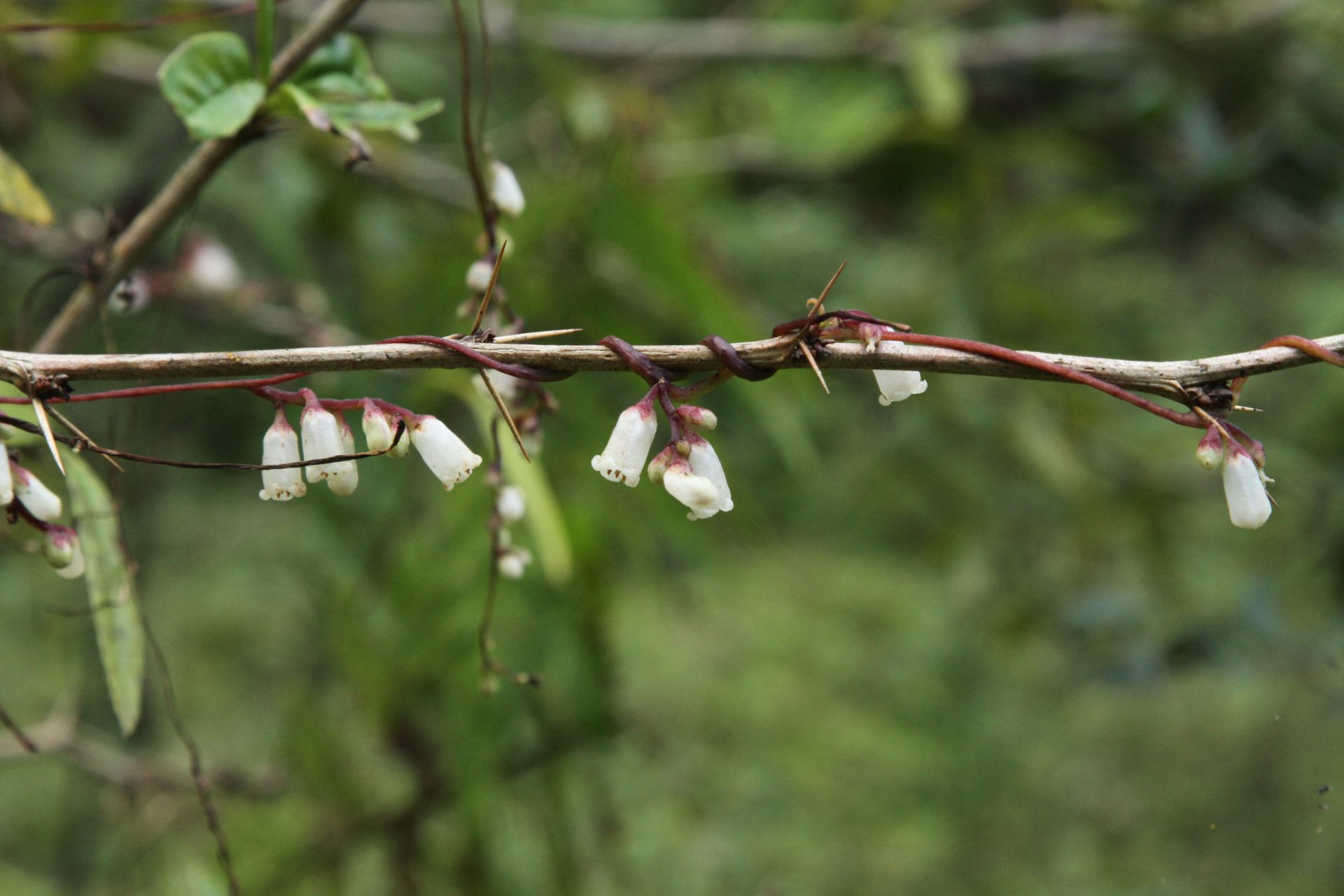
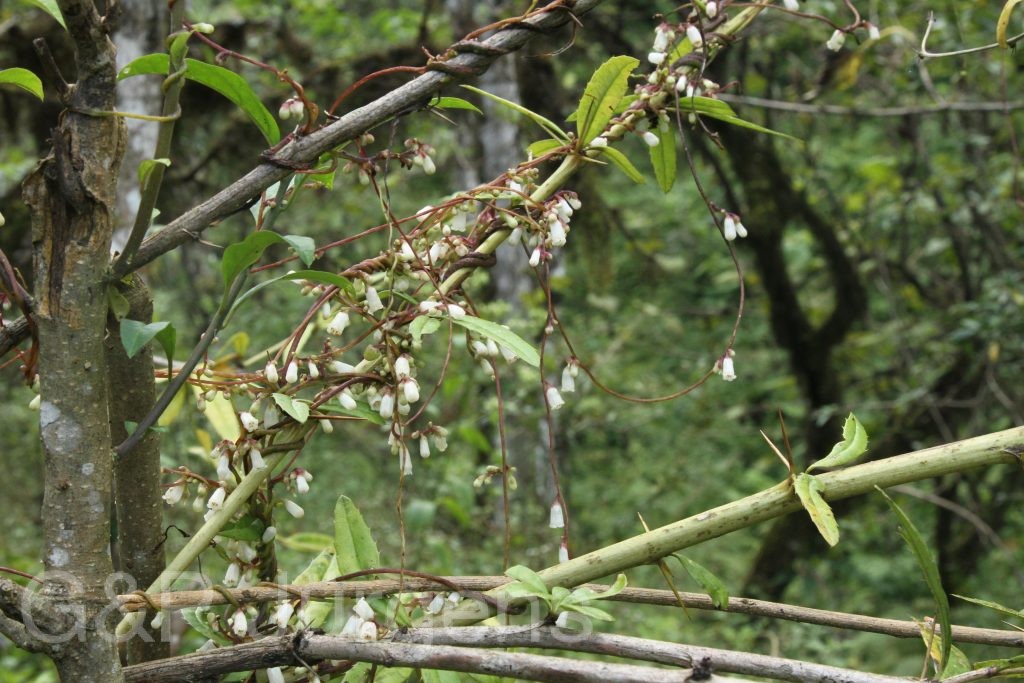
Cuscuta reflexa, the giant or Asiatic dodder, is a parasitic twiner widely distributed across South and Southeast Asia, from Afghanistan, Pakistan, India, Nepal, Bhutan and Sri Lanka through Bangladesh, Myanmar and Thailand to China, with introduced records reaching Britain, Kenya, Mauritius, Iraq, Korea and the United States; its more than 1000 GBIF occurrences reflect both abundance and weediness. It occurs from the plains into the lower mountains, scrambling over shrubs, hedges, trees and crops in open scrub, forest margins, gardens and waste ground. The plant photographed at Wangdue Phodrang in Bhutan at about 2000 m in October sits at the upper part of its range, which extends from near sea level to roughly 3000 m.
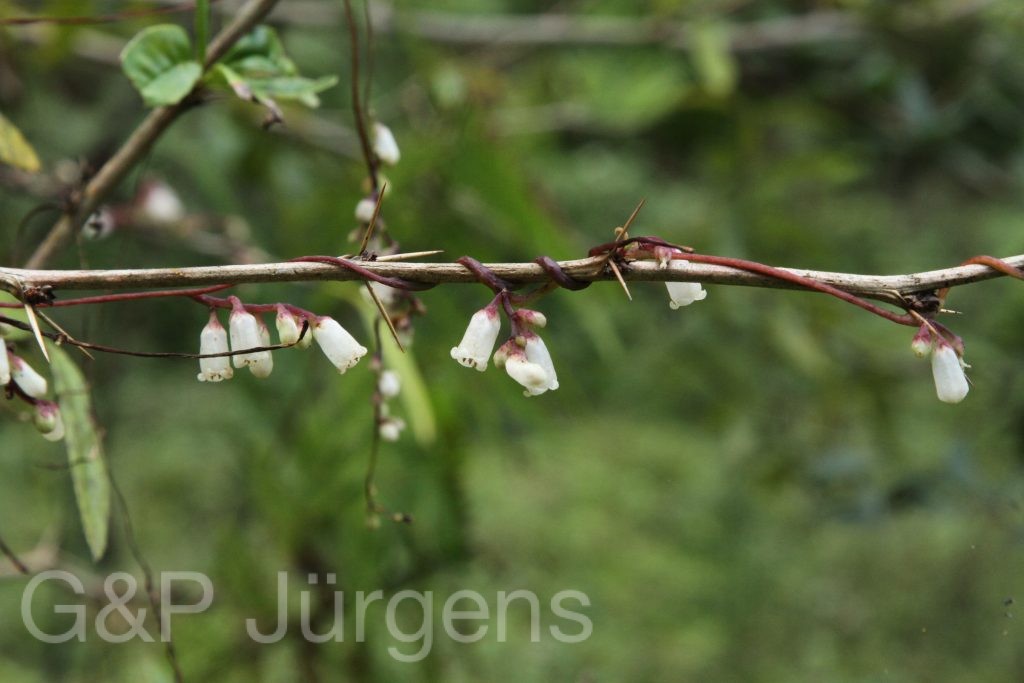
It is a leafless, rootless holoparasite whose body consists of slender, much-branched, twining stems that are yellow to orange and essentially without chlorophyll, attaching to the host by intrusive haustoria that tap the vascular tissue. Leaves are reduced to minute scales. The flowers are small, white to creamy, fragrant and bell-shaped, borne in dense lateral racemose or spike-like clusters; the campanulate corolla has five reflexed lobes (the source of the epithet reflexa) and encloses scale-like infrastaminal appendages. The fruit is a globose capsule that opens by a circumscissile lid to release several small seeds.
Though listed here under Convolvulaceae, Cuscuta is frequently segregated into its own family Cuscutaceae; molecular evidence nests the genus firmly within Convolvulaceae, validating the family placement given. C. reflexa is the largest-stemmed Asian dodder and an agriculturally significant parasite that can damage ornamentals, hedges and tree crops, while also being widely employed in traditional medicine. Its broad, partly anthropogenic distribution and its appearance as an introduced weed in distant regions mark it as a successful generalist parasite.
Author: Roxb. · Sources: POWO (Kew), GBIF, Flora of China, Flora of Pakistan, Yuncker monograph of Cuscuta, Stefanovic Convolvulaceae phylogeny