
Hook.f. & Thomson
Description
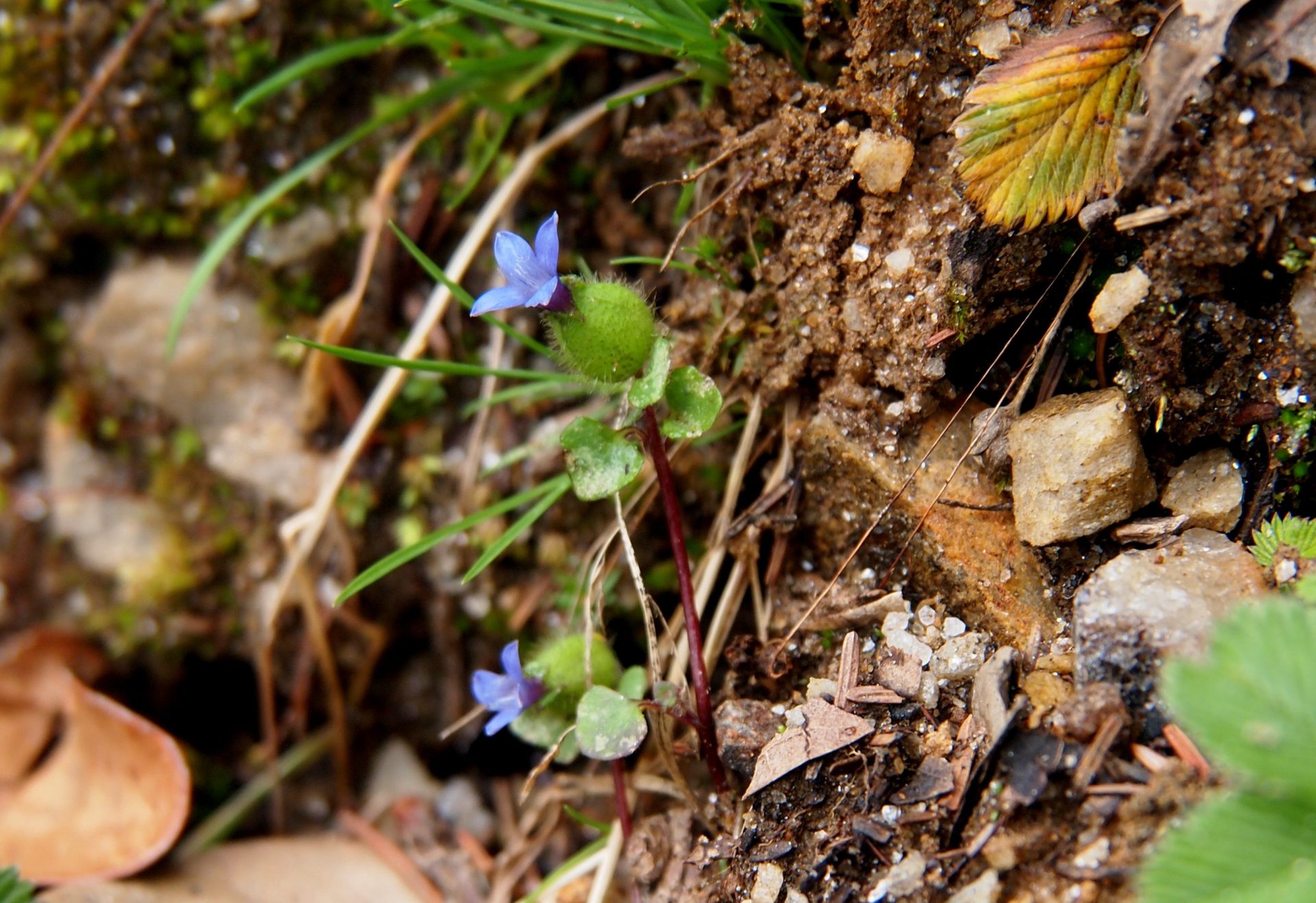
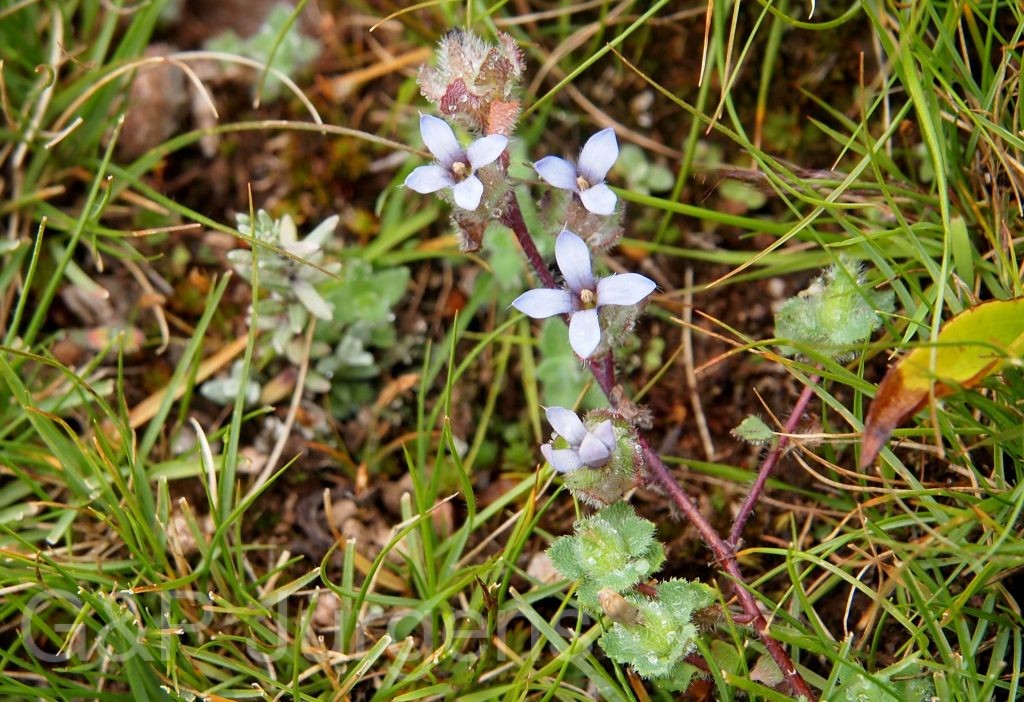
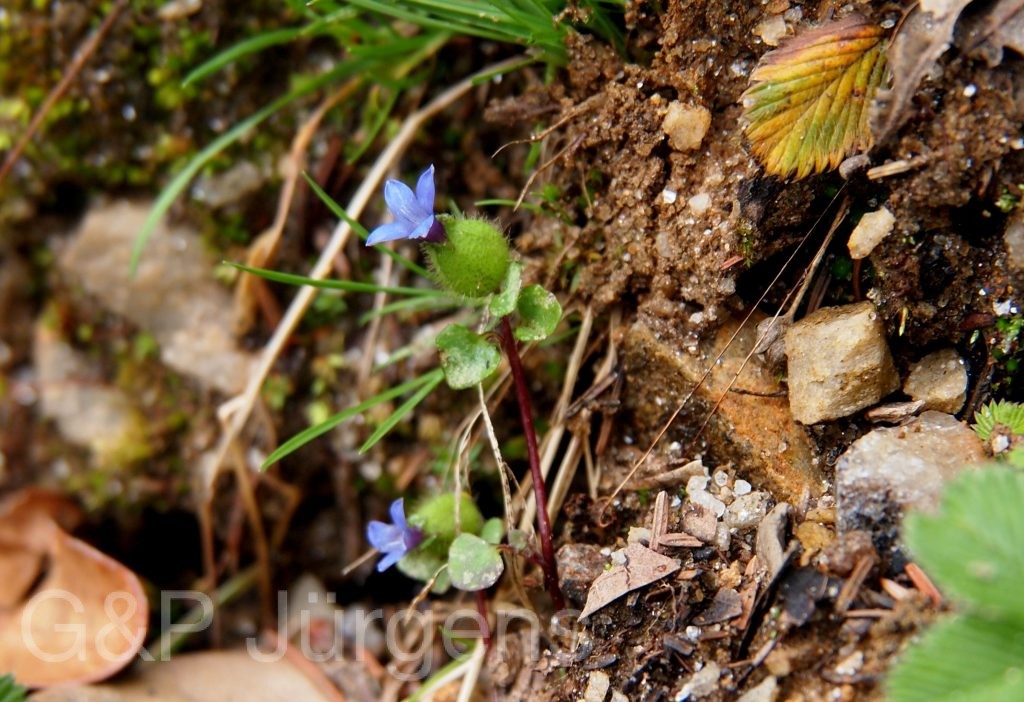
Cyananthus inflatus is an annual herb of the eastern Himalaya and adjacent mountains, recorded by GBIF in some 605 occurrences from China, Nepal, India, Bhutan and Myanmar. It occupies open alpine and subalpine ground, including grassy slopes, screes, disturbed banks and the margins of trails and meadows, broadly between 3000 and 4300 m. The illustrated plant was photographed in Bhutan at the Shele-La at 4000 m in September, flowering late in the season as autumn approaches, when many alpine annuals complete their cycle on cool, well-drained slopes.
The plant is a slender, branching annual with ascending to decumbent stems bearing alternate, small, ovate to spathulate leaves that are entire or slightly toothed and sparsely hairy. The flowers are terminal and solitary on the branch tips, subtended by a leafy involucre. The calyx is conspicuously inflated and tubular, becoming swollen and membranous in fruit, clothed in dark or appressed hairs. The corolla is broadly campanulate, pale to deep blue, five-lobed and bearded within at the throat with a tuft of hairs characteristic of the genus. The fruit is a capsule enclosed by the persistent inflated calyx, splitting to shed numerous small seeds.
Cyananthus (Campanulaceae) is a Sino-Himalayan genus of around twenty species notable for its bearded corolla throat and superior to half-inferior ovary, distinguishing it from the related Codonopsis and Campanula. The epithet inflatus refers to the swollen fruiting calyx, a diagnostic feature within the annual group. GBIF treats the name as accepted. As a wide-ranging, often weedy annual of disturbed alpine ground, it is locally common and of no conservation concern.
Author: Hook.f. & Thomson · Sources: POWO (Kew), GBIF, Flora of China, Flora of Bhutan, Lammers studies of Campanulaceae