
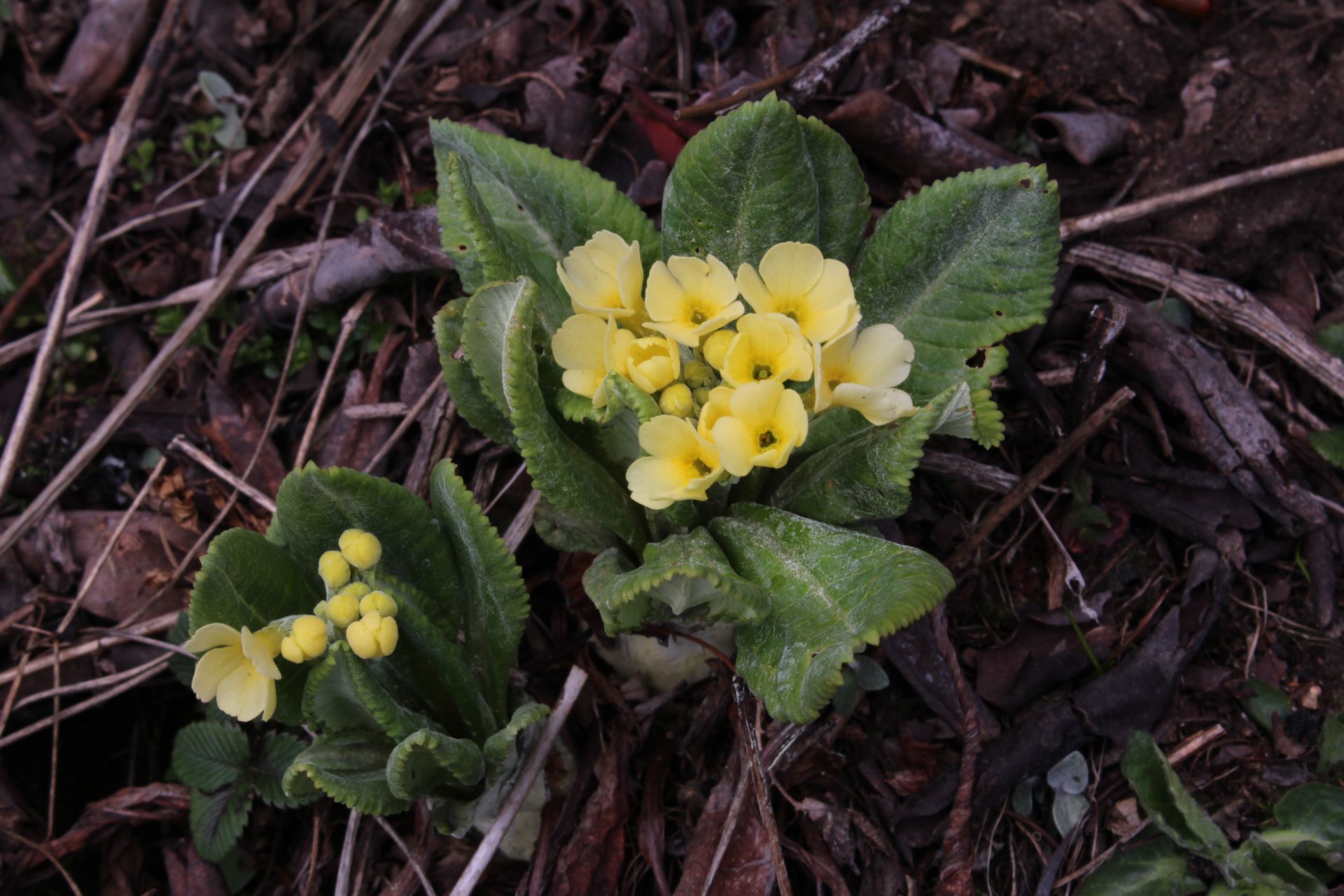
G.Watt
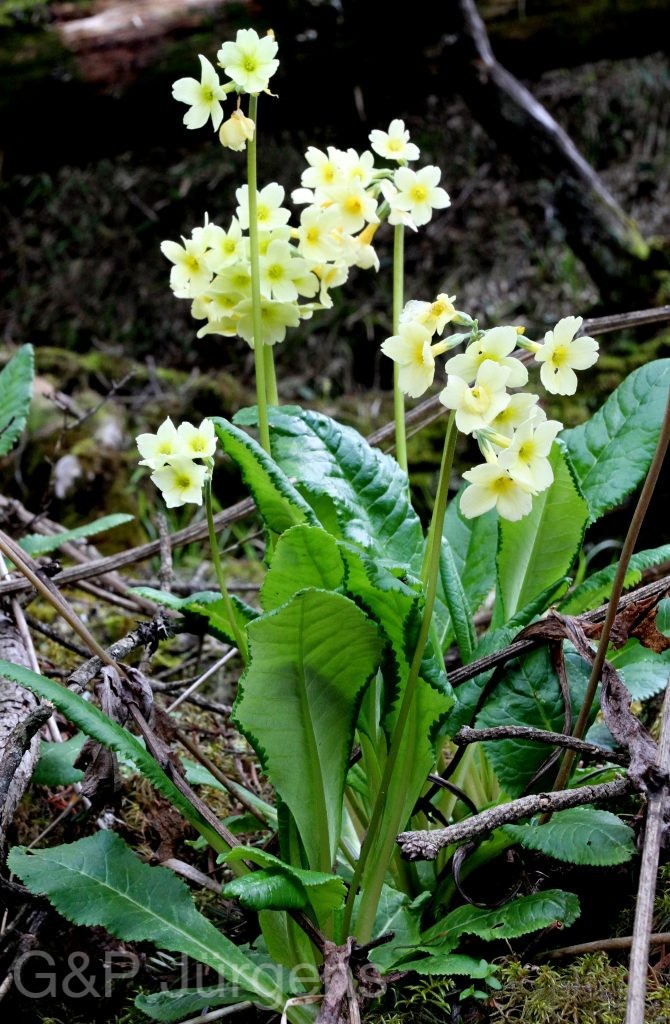
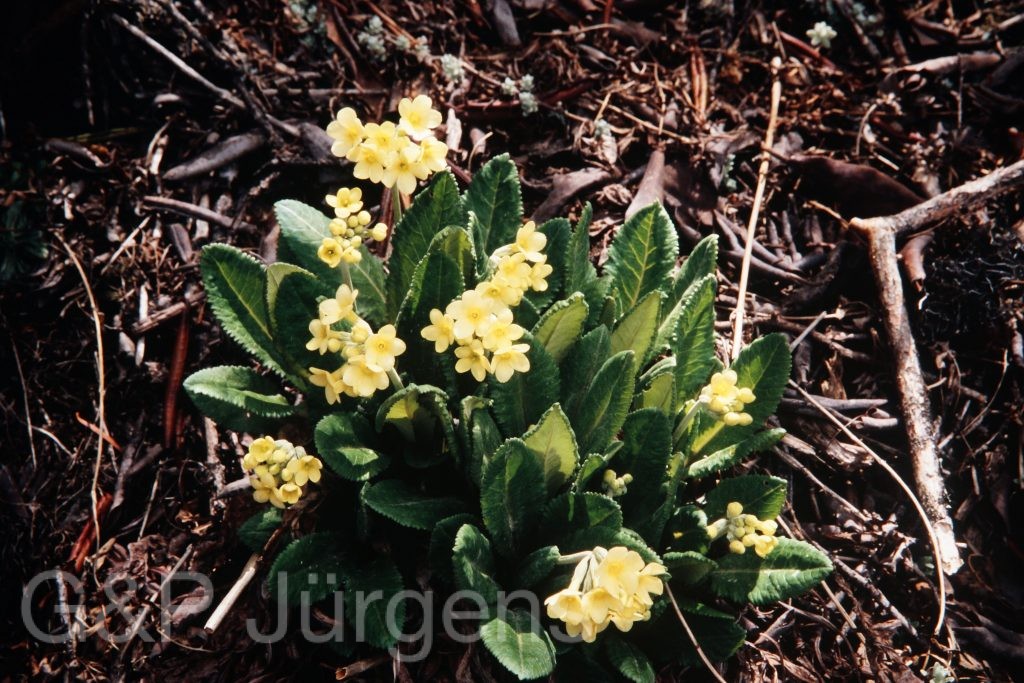
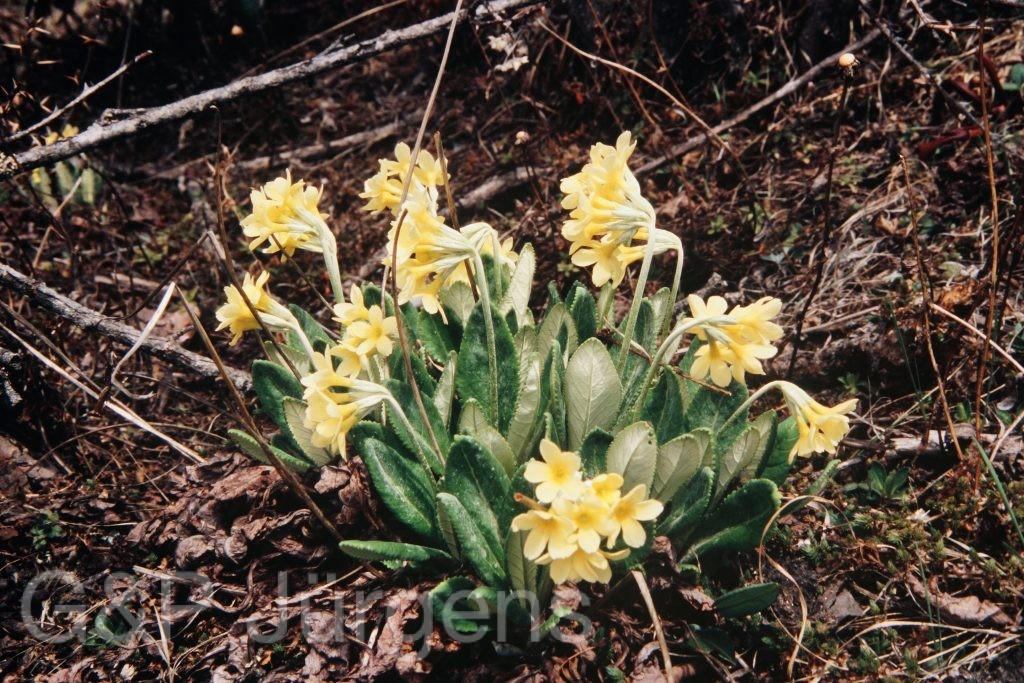
Description
Primula elongata is a high-alpine primrose of the eastern Himalaya, recorded from Bhutan, India (Sikkim), Nepal and southern China, with GBIF holding around 107 occurrences across this range. It inhabits damp alpine turf, open hillsides, streamsides and the margins of rhododendron scrub in the subalpine to alpine zones, typically between about 3500 and 4300 m. The collections illustrated here, from Lada-La in Sikkim at 3800 m in June and from the Chele-La in western Bhutan at 3900 m in April, are characteristic of its preference for cool, moist, snow-fed slopes that flush green soon after snowmelt.
It is a small, herbaceous perennial forming basal rosettes of oblong to spathulate leaves that are gradually narrowed into a winged petiole, with the lamina often finely toothed and bearing a thin covering of farina (mealy powder) on the undersurface. From the rosette arises a slender, erect scape carrying a terminal umbel of several flowers. The corolla is funnel- to salver-shaped, in shades of violet, pink-purple or lilac with a contrasting yellow or whitish eye, and the species is heterostylous (pin and thrum forms). The fruit is a small capsule shorter than or equalling the persistent calyx, releasing numerous angular seeds.
Primula elongata belongs to a complex group of small farinose Himalayan primulas, and its segregation from allied taxa rests on leaf shape, farina distribution and capsule proportions. Restricted to high-elevation pastures, the species is potentially sensitive to changes in snow regime and to heavy grazing pressure, although across its broad eastern-Himalayan range it is not presently considered threatened.
Author: G.Watt · Sources: POWO (Kew), GBIF, Flora of Bhutan, Flora of China, Primula (J. Richards monograph)