
King ex Hook.f.
Description
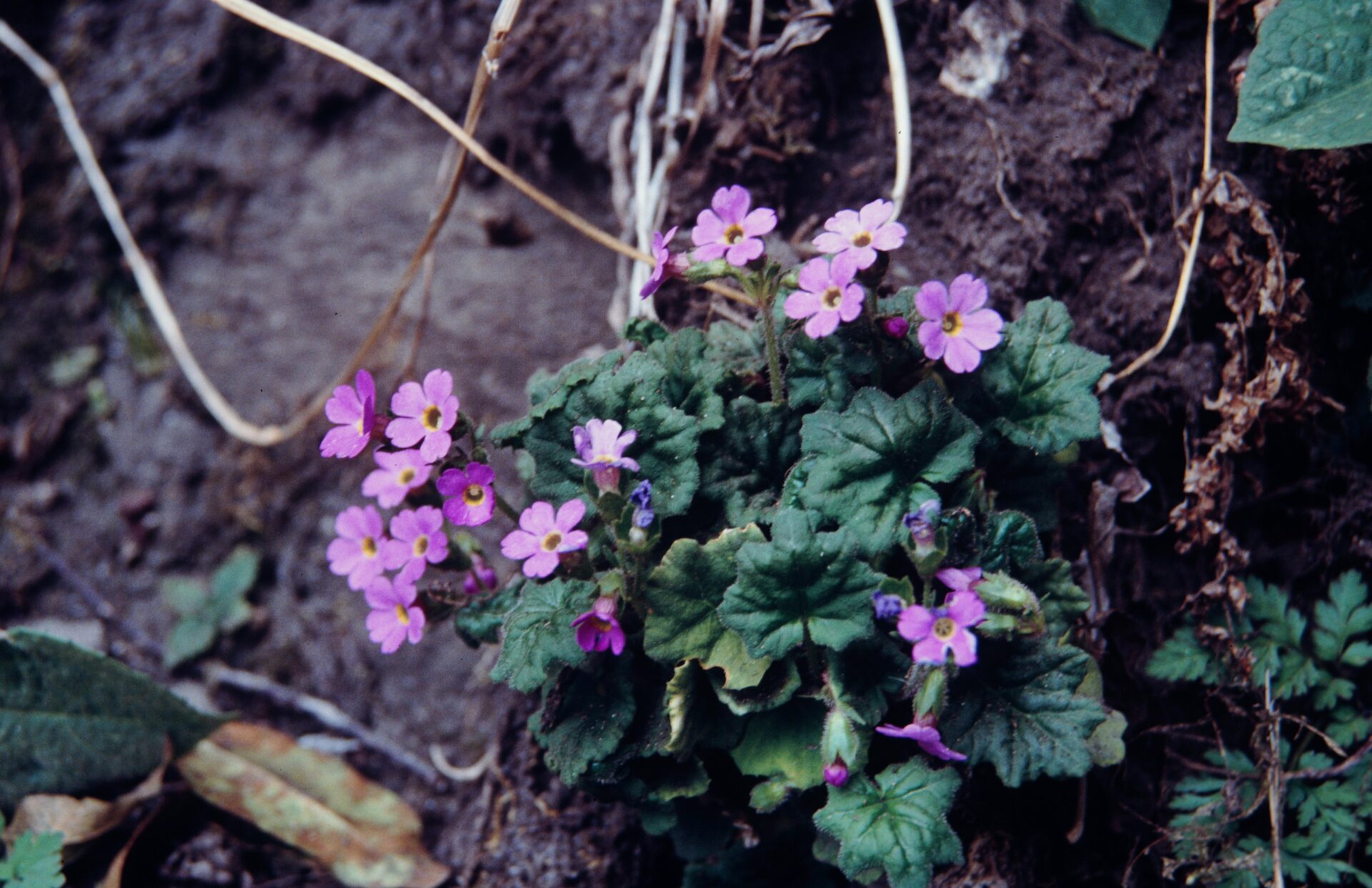
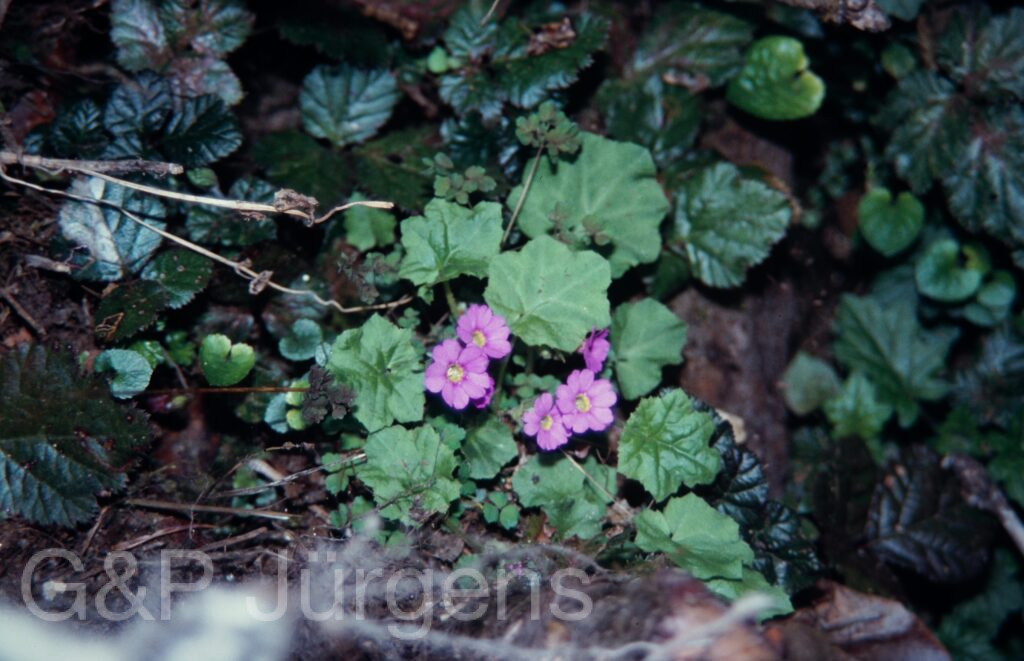
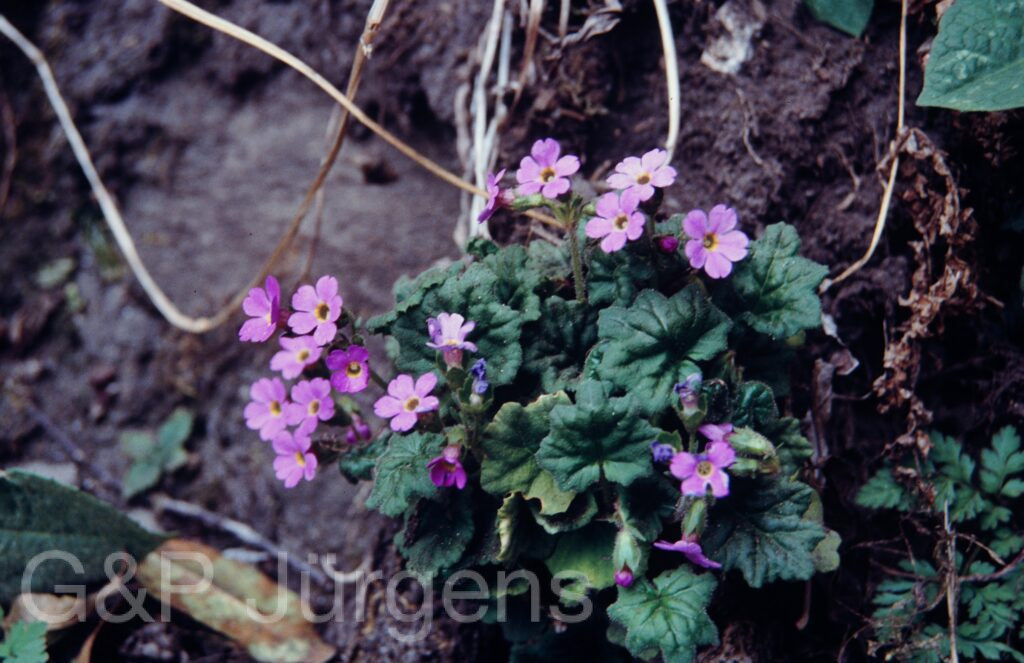
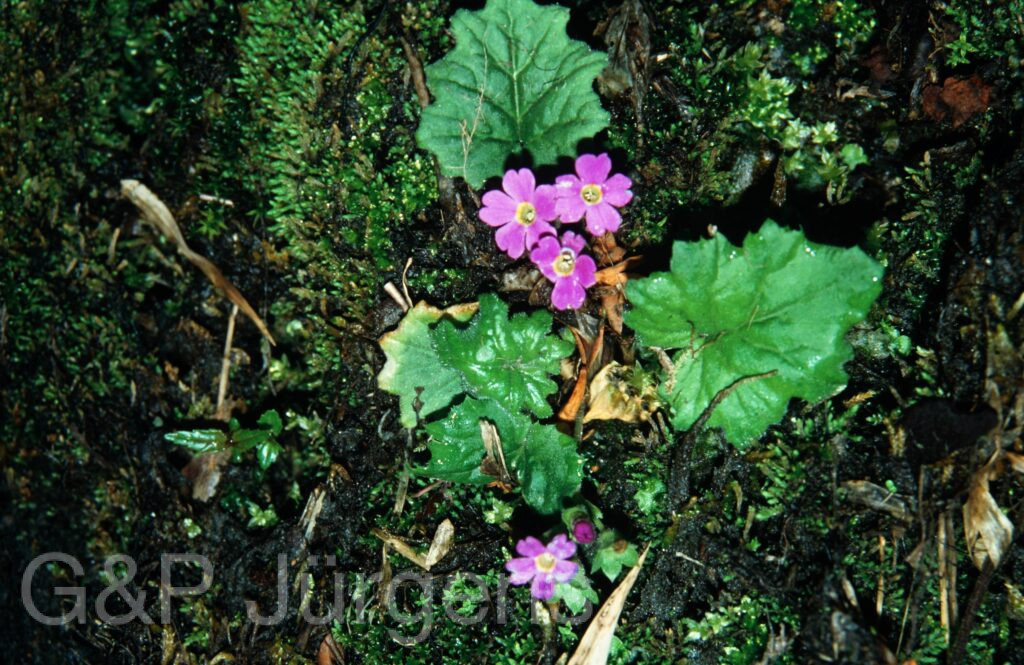
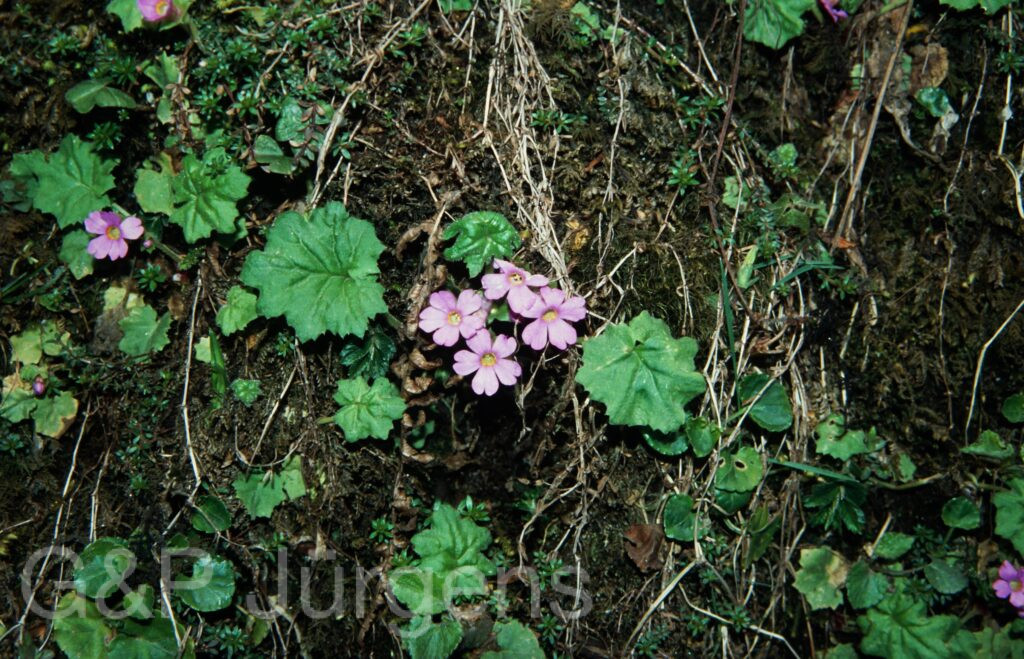
Primula listeri is an eastern Himalayan species distributed through Nepal, northern India, Bhutan, southern China (Xizang, Yunnan) and northern Myanmar, with GBIF documenting around 102 georeferenced records concentrated along the wetter eastern arc of the range. It occupies shaded, humid montane environments between roughly 2000 and 3000 m, growing on mossy banks, in the leaf litter of broad-leaved and mixed forest, and along seeping rock faces. The populations imaged in East Nepal at Mewa Khola (2300 m, April), Suketar (2400 m, March) and Gupka Pokhari (3000 m, April) typify its phenology, with flowering coinciding with the early pre-monsoon period when soils remain moist and cool.
The plant is a small, delicate perennial herb forming a slender rootstock from which arises a rosette of thin-textured leaves. The leaves are petiolate, ovate to oblong with a crenate to dentate margin, and frequently sparsely farinose or efarinose beneath. Flowers are borne on a slender scape in a loose few-flowered umbel, each subtended by narrow bracts; the calyx is tubular and lobed, and the corolla is rotate with a narrow tube and notched, lilac to pale violet limb-lobes, the throat marked by an annulus. As in many sect. Petiolares allies the species is heterostylous, producing pin and thrum flowers. The fruit is a small capsule dehiscing to release numerous minute seeds.
Taxonomically P. listeri belongs to the species-rich Primula sect. Petiolares, a complex assemblage of vernal-flowering, rosette-forming primroses centred on the eastern Himalaya. Its restricted elevational band and dependence on permanently humid forest microhabitats make it sensitive to forest clearance and desiccation, though it is not formally assessed as threatened. Biogeographically it forms part of the rich Sino-Himalayan endemic flora whose diversification is linked to the monsoon-driven moisture gradient of the eastern ranges.
Author: King ex Hook.f. · Sources: POWO (Kew), GBIF, Flora of Bhutan, Flora of China, Annotated Checklist of the Flowering Plants of Nepal, Richards' Primula (monograph)