
Franch.
Description
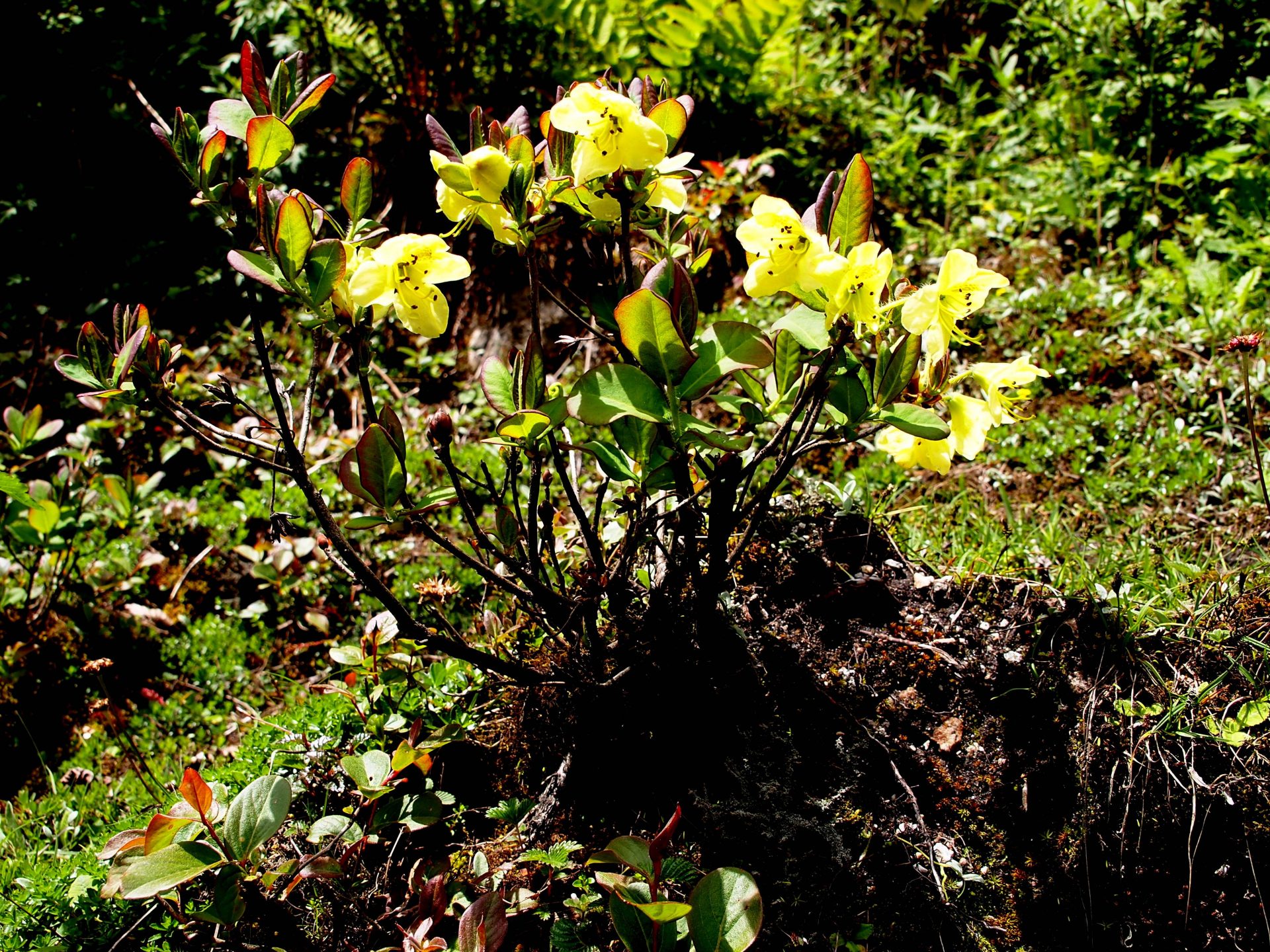
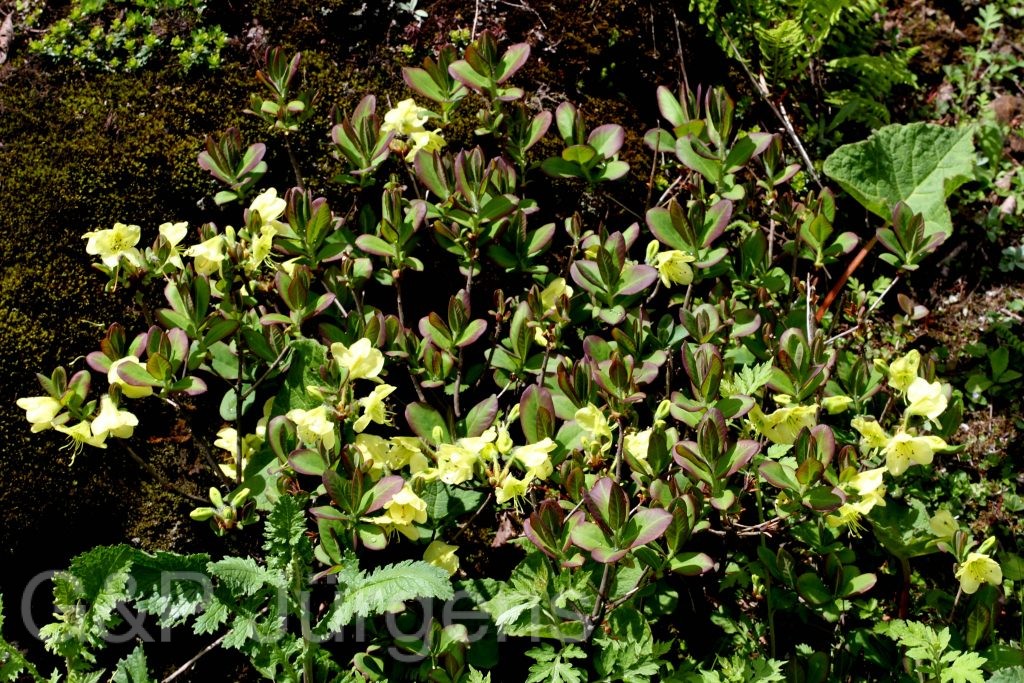
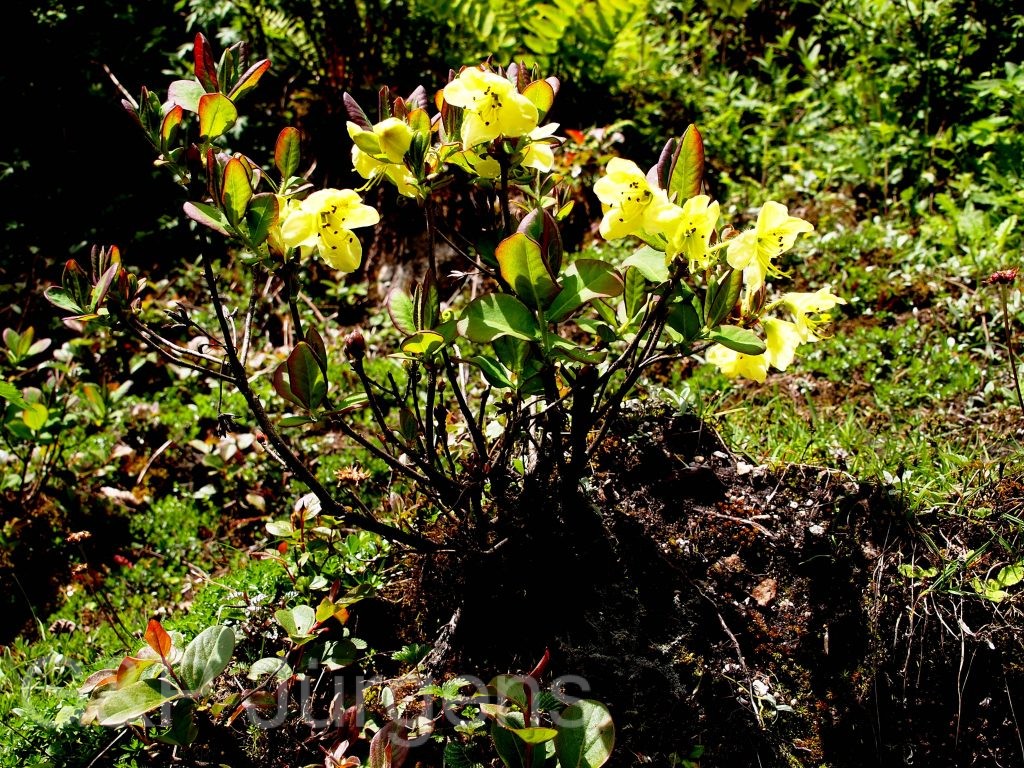
Rhododendron trichocladum is a deciduous, scaly-leaved shrub of the eastern Himalaya and adjacent Sino-Himalayan ranges, distributed across south-western China (notably Yunnan and south-eastern Tibet), northern Myanmar and the Indian Himalaya, with GBIF records (553 occurrences) confirming a centre of abundance in Sikkim, Yunnan and Upper Myanmar. It occupies open hillsides, forest margins, rhododendron thickets and rocky slopes at roughly 2700-4000 m, frequently in cool, humid, moss-rich montane settings. The photographed plant from the Yumthang valley in north Sikkim at about 3500 m in June typifies its preferred sub-alpine zone, where it flowers as the snow recedes alongside dwarf rhododendrons and primulas.
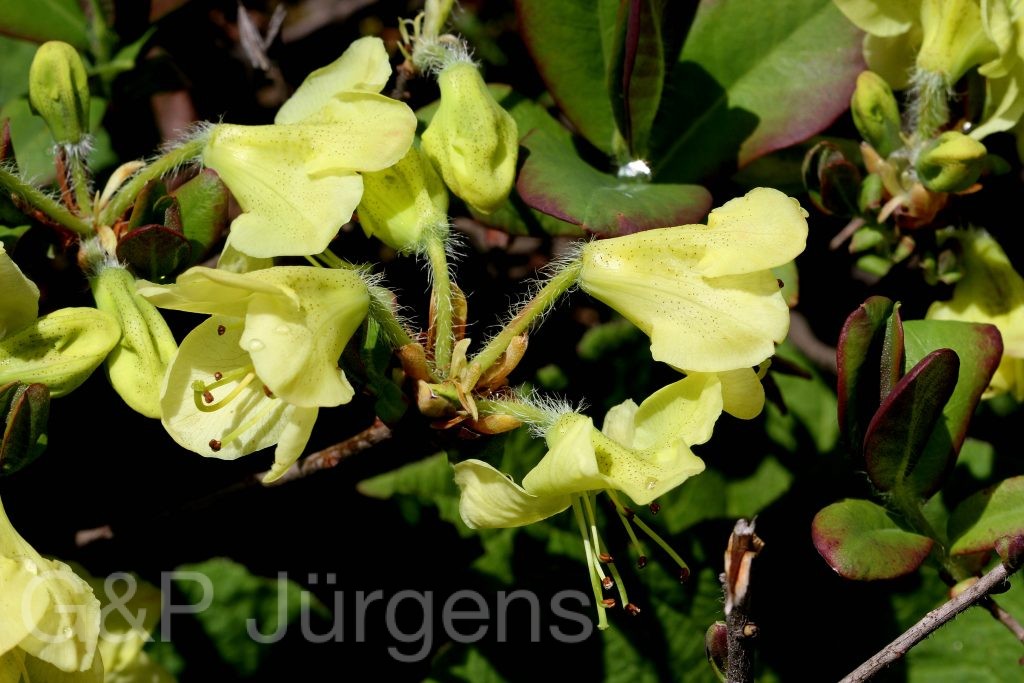
A much-branched shrub usually 0.5-1.5 m tall, with thin, often bristly young shoots bearing scattered scales and setae. The thin, deciduous leaves are obovate to elliptic, bright green, sparsely scaly above and densely lepidote beneath, with ciliate margins and a short petiole. Flowers are borne in small terminal clusters of one to three, opening with or before the leaves; the widely funnel-campanulate corolla is yellow, often greenish-yellow and sometimes faintly spotted, with five lobes and a scaly outer surface. Stamens ten, declinate; the ovary is densely scaly, tapering into a slender style. The fruit is a small, ovoid, scaly capsule dehiscing septicidally to release minute winged seeds.
The species belongs to Rhododendron subsection Trichoclada (subgenus Rhododendron), a small group of deciduous, yellow-flowered, scaly-leaved shrubs characterised by their bristly indumentum. It is a valuable subject for cool temperate woodland gardens and has contributed to horticultural breeding. Though not globally threatened given its broad Sino-Himalayan range, populations are locally dependent on undisturbed sub-alpine scrub, making them sensitive to grazing pressure, fuelwood collection and habitat shifts driven by warming climates.
Author: Franch. · Sources: POWO (Kew), GBIF, Flora of China, Flora of Bhutan, The Genus Rhododendron (Royal Horticultural Society monograph)