
Nutt. ex Hook.
Description
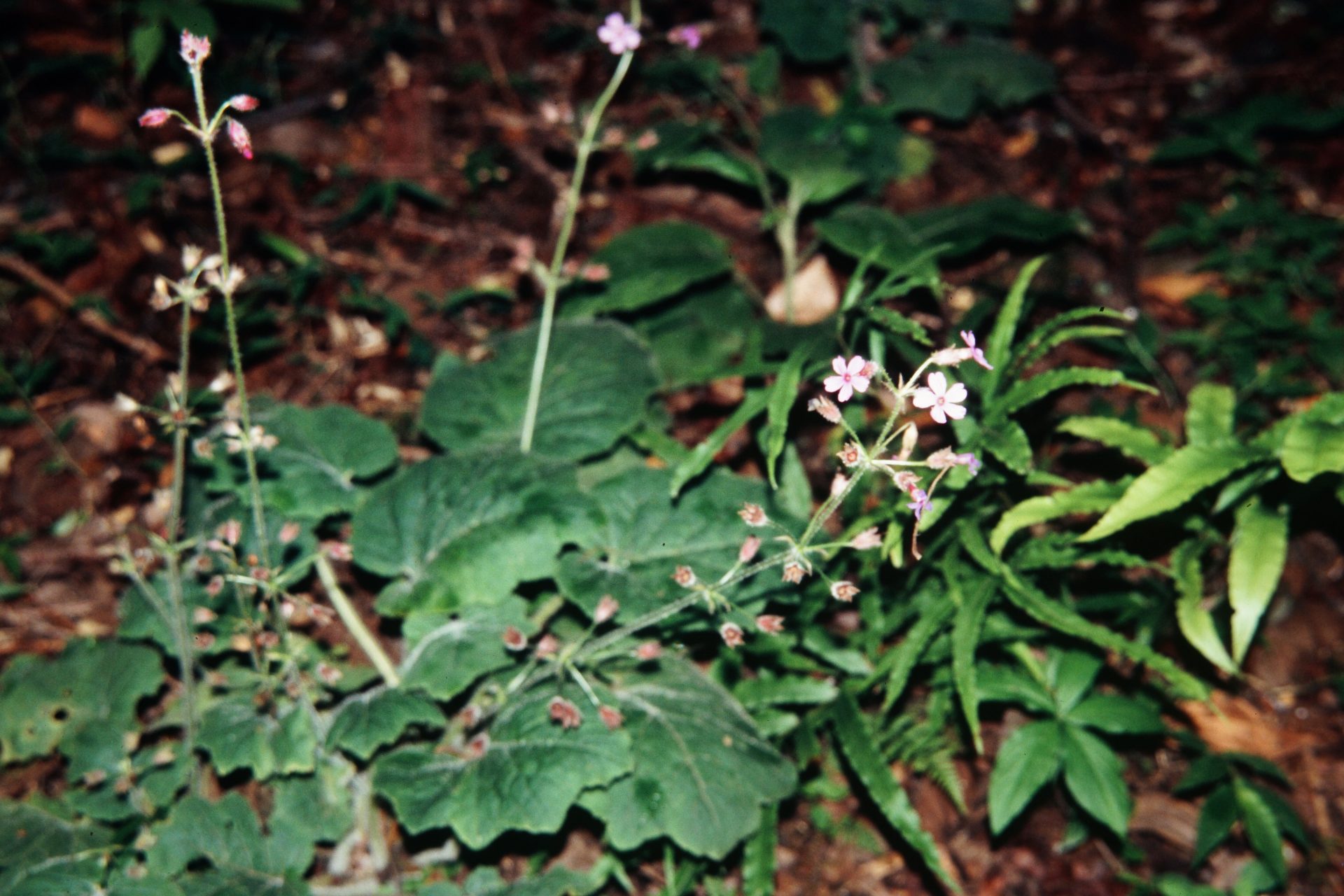
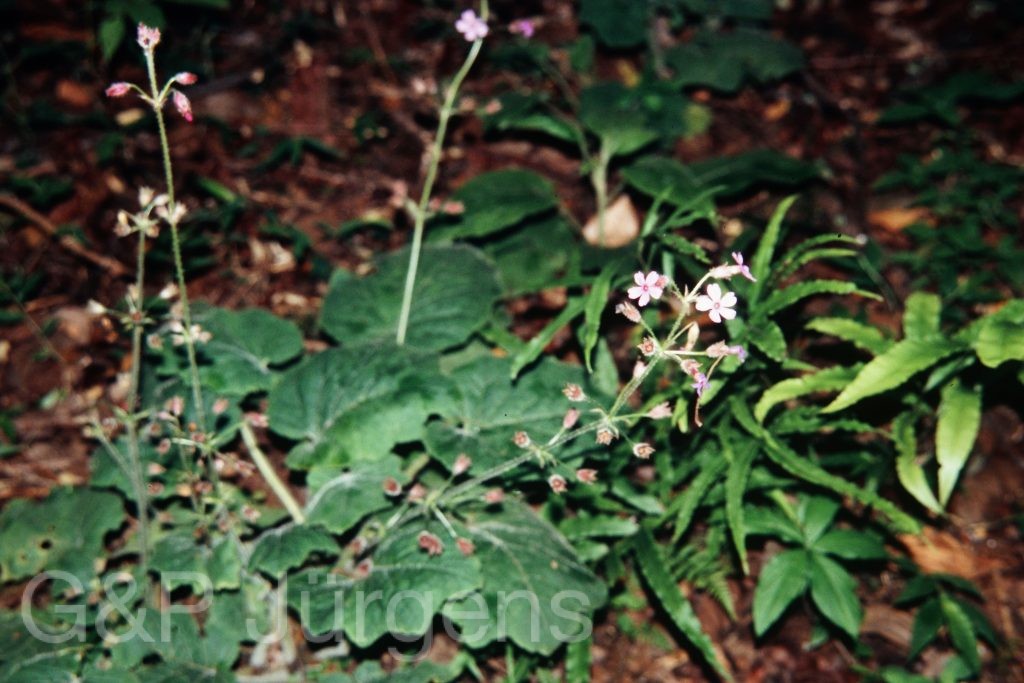
Primula mollis is a softly hairy perennial of the Eastern Himalaya and adjacent Indo-Burmese ranges, with verified occurrences in China, Myanmar, Bhutan and India (additional GBIF records from Belgium, Britain and the Czech Republic reflect its cultivation by alpine enthusiasts). It grows in damp, shaded situations along forest margins, stream banks and moist rocky banks at moderate elevations, typically between about 2000 and 3000 m. The illustrated plant from near Wangdi in central Bhutan at around 2300 m in June shows the species flowering in the early monsoon, when the humid conditions it favours prevail.
The whole plant is conspicuously clothed in soft spreading hairs, the feature memorialised in the epithet mollis. The leaves form a basal rosette and are ovate to oblong, shallowly lobed and toothed, cordate at the base and borne on hairy petioles. From the rosette rises a stout, hairy scape carrying several superposed whorls (a candelabra arrangement) of flowers. Each flower has a tubular calyx and a salver-shaped corolla that is rose-pink to crimson with a darker or yellowish eye, the limb shallowly notched. The fruit is a small capsule enclosed within the persistent calyx and dehiscing to release numerous angular seeds.
Primula mollis is placed in section Cortusoides (Petiolares group of broader treatments), characterised by soft-textured, lobed, hairy leaves and whorled inflorescences. It is a long-cultivated woodland primula, and ecologically contributes to the herb layer of humid montane forest, where it is pollinated by insects attracted to its bright corollas. Across its range it remains locally frequent and is not considered threatened, though it depends on the persistence of moist, lightly shaded montane habitats.
Author: Nutt. ex Hook. · Sources: POWO (Kew), GBIF, Flora of Bhutan, Flora of China, Richards' monograph Primula