
?
Description
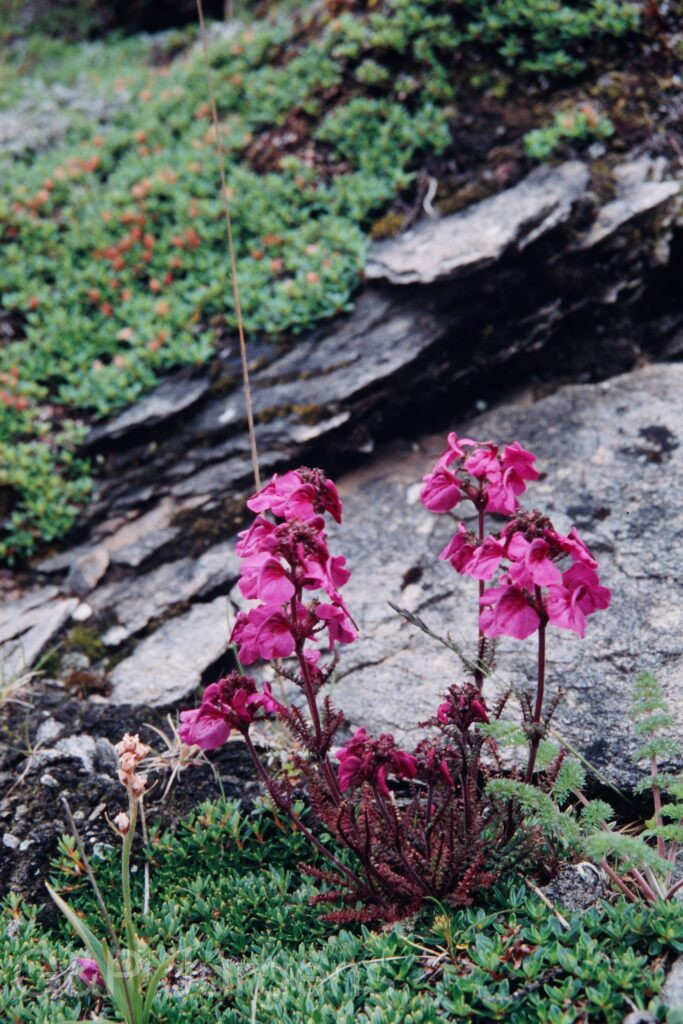
Pedicularis X denotes a Himalayan lousewort of uncertain or hybrid identity (the GBIF return resolves only to Plantae, with the global occurrence figure of over 634 million reflecting that kingdom-level match rather than the taxon itself, so distributional data here are uninformative). On evidence of the genus and the locality, it is a montane to alpine plant of moist meadows, scrub margins and tall-herb communities in the Western Himalaya. The image record from Churta-Khola in West Nepal at 3800 m, in June, places it in the early-summer subalpine-to-alpine zone where Pedicularis is most diverse and conspicuous.
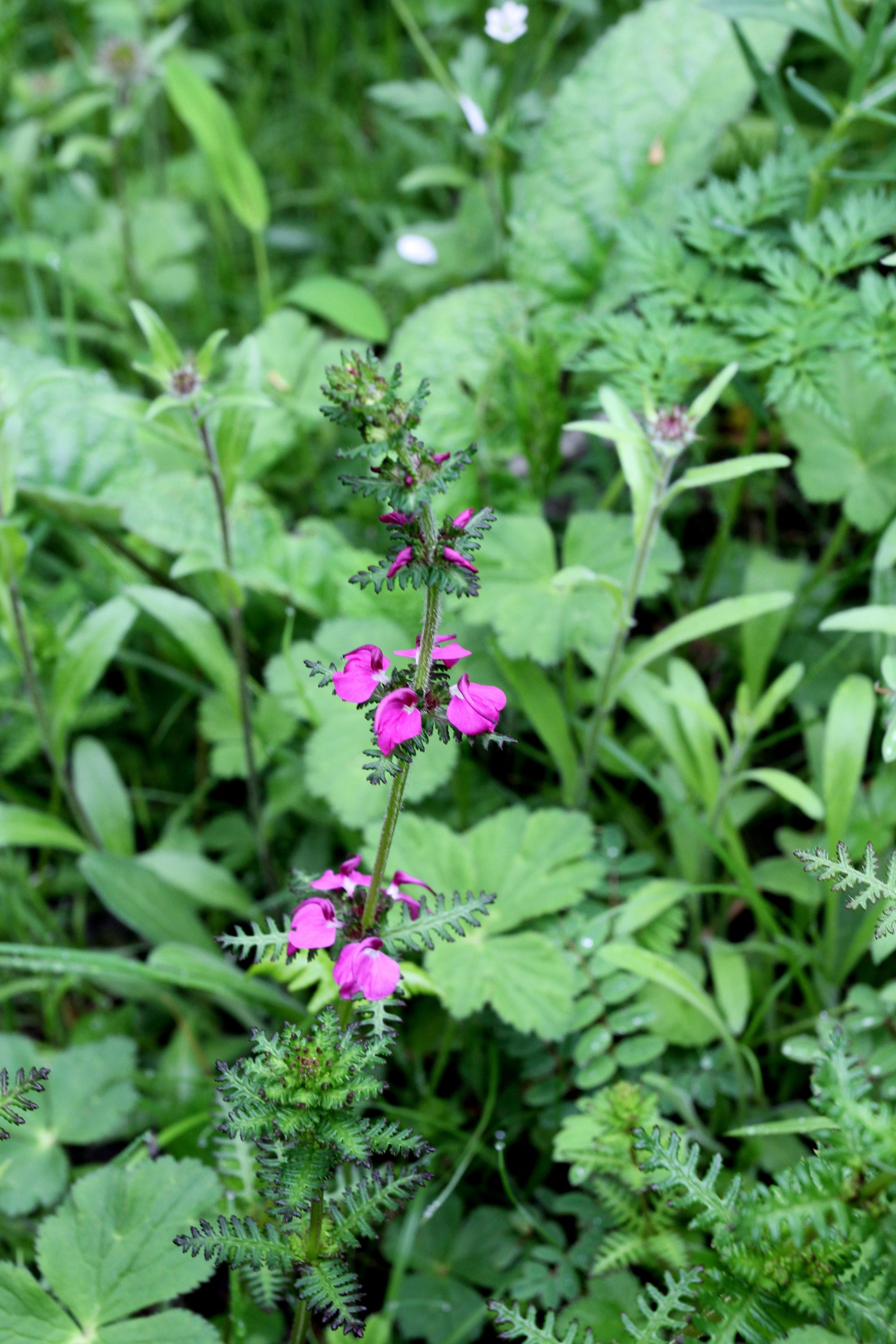
Louseworts are perennial (sometimes annual) herbs with leaves that are typically alternate to whorled and pinnately divided into toothed segments, often fern-like in aspect. The flowers are borne in terminal spikes or racemes and are strongly zygomorphic: the calyx is tubular and toothed, and the bilabiate corolla has an upper lip (galea) frequently produced into a beak or rostrum enclosing the anthers, while the three-lobed lower lip forms a landing platform. Corolla colour ranges from pink and purple to yellow and white. The fruit is a flattened, often asymmetric capsule containing several seeds. Such floral architecture is adapted to pollination by long-tongued bumblebees.
Pedicularis (Orobanchaceae, formerly Scrophulariaceae) is a hemiparasitic genus of extraordinary richness in the Sino-Himalaya, where rapid radiation and frequent hybridisation produce taxonomically difficult complexes, consistent with the provisional designation here. As root hemiparasites the plants form haustorial connections to host roots, influencing meadow community composition. Firm identification requires examining galea form, leaf division and corolla details against regional monographs.
Author: ? · Sources: POWO (Kew), GBIF, Flora of Bhutan, Annotated checklist of the flowering plants of Nepal, Yamazaki revision of Asian Pedicularis