
(D.Don) Ali
Description
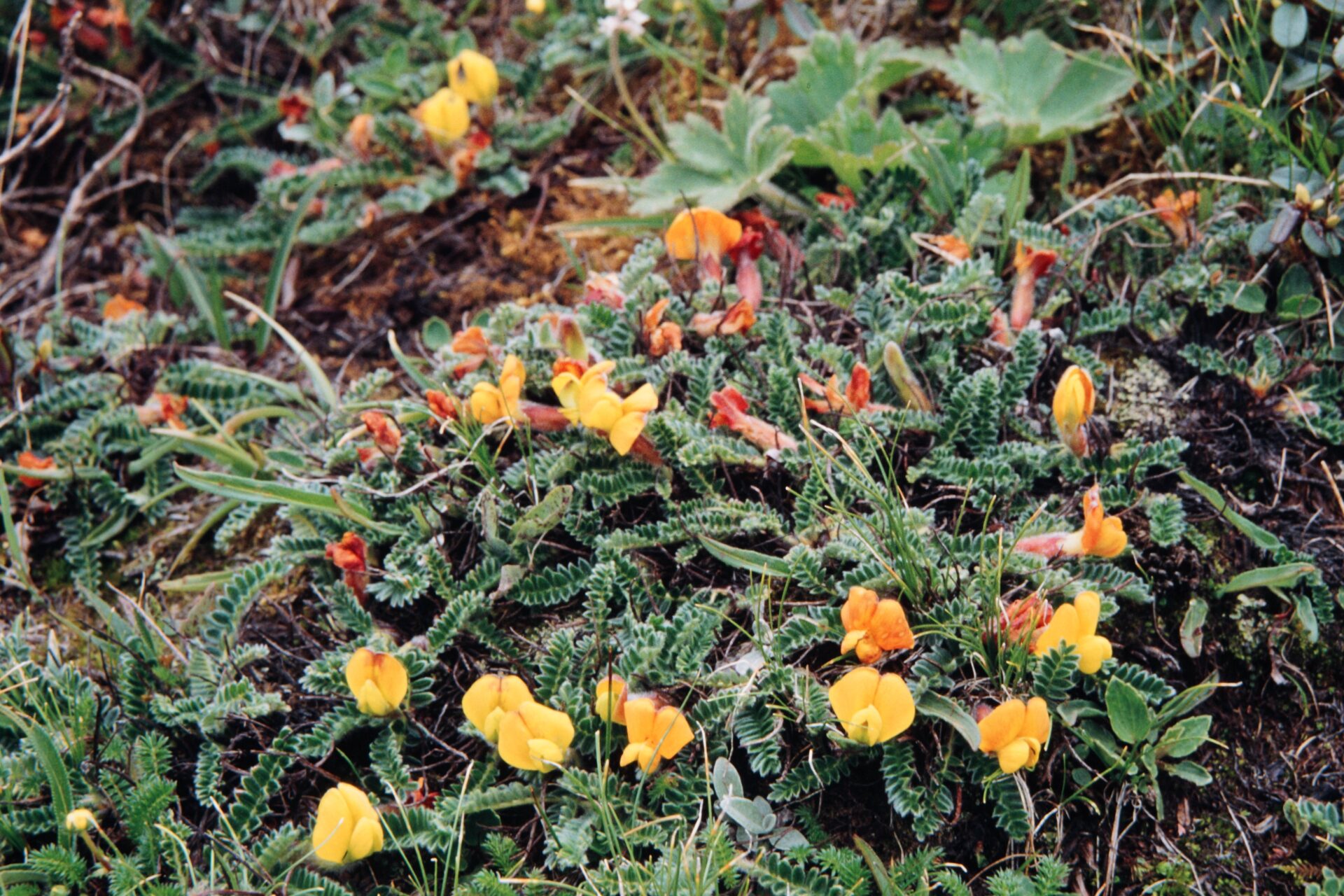
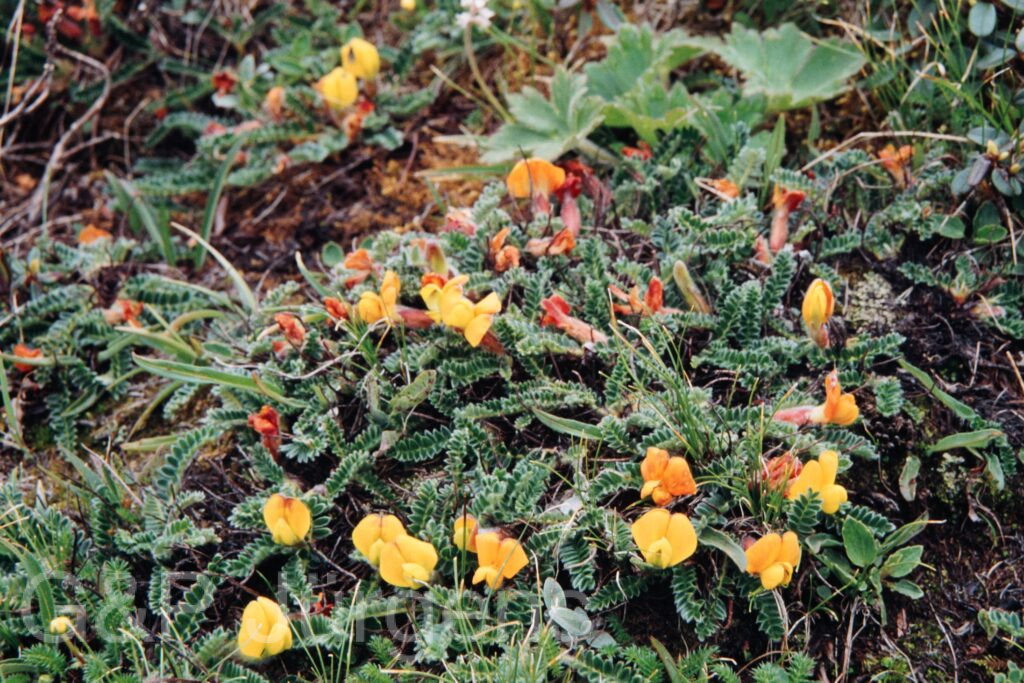
Chesneya nubigena (D.Don) Ali is a prostrate alpine legume of the Himalaya and Hindu Kush, represented by some 318 records concentrated in Nepal, India, Bhutan, Pakistan and adjacent China, with scattered extralimital reports. It is a plant of high open ground: stony alpine slopes, gravelly flats, moraines and the margins of grazed pastures, generally between about 3500 and 4800 m. The individual photographed at Kalmura in West Nepal at 4300 m in June illustrates its occupation of cold, well-drained, often wind-exposed substrates where it grows close-pressed to the ground amid sparse turf.
The species forms a low, mat-forming to shortly tufted perennial from a deep woody rootstock and branched caudex. The leaves are imparipinnate with several pairs of small, oblong to obovate leaflets, often somewhat pubescent and frequently spine-tipped on persistent rachides. The flowers are large relative to the plant and borne singly or few together on short axillary peduncles; the papilionaceous corolla is yellow to reddish or purple-tinged, the standard broad and the keel obtuse. The calyx is tubular and obliquely toothed, and the fruit is an oblong, sessile to shortly stipitate, more or less inflated legume, hairy and several-seeded.
Chesneya is a small genus of central and high Asia closely allied to Astragalus and Gueldenstaedtia, and C. nubigena has been treated under various combinations reflecting its taxonomic history. Its cushion-like habit, deep roots and silky indumentum are classic adaptations to the cold, arid, high-radiation conditions of the inner Himalayan ranges, where it also fixes atmospheric nitrogen. Widespread if local, it is not regarded as threatened, though heavy grazing pressure in alpine pastures can locally reduce populations.
Author: (D.Don) Ali · Sources: POWO (Kew), GBIF, Flora of China, Flora of Pakistan, Flora of Nepal, revision of Chesneya and allied Astragaleae