
(Wight & Arn.) Benth.
Description
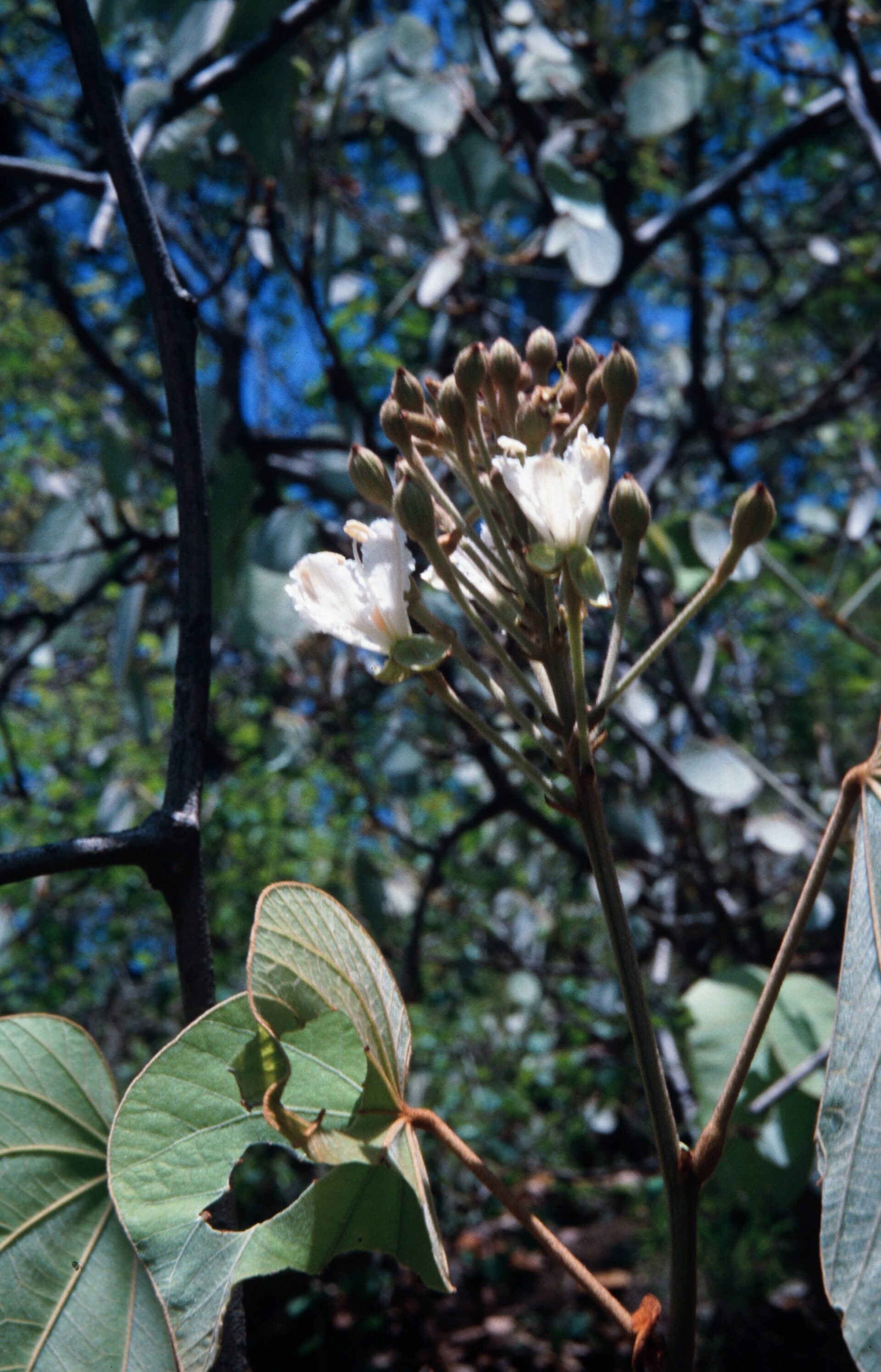
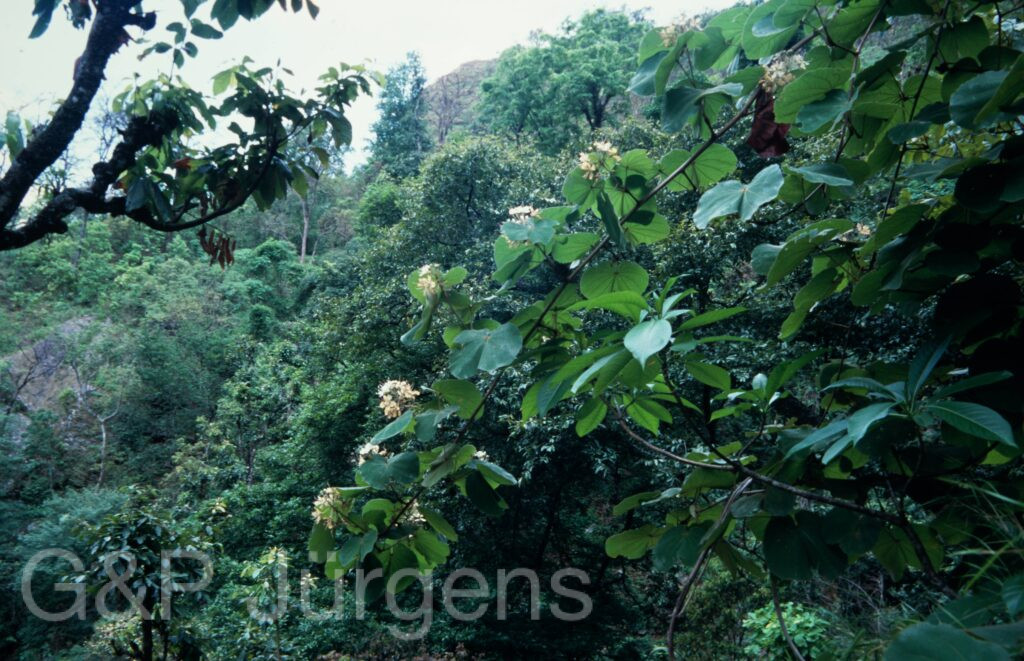
Phanera vahlii (formerly placed in Bauhinia) is a massive woody climber of the Indian subcontinent and Indo-Burmese region, native to India, Nepal, Bhutan, Bangladesh, Myanmar, Laos, Vietnam and China, with over 400 georeferenced records and many further occurrences reflecting cultivation and naturalisation elsewhere. It is a liana of subtropical forests, riverine thickets and forest edges. The Nepalese populations documented from the Sabha Khola in the east at about 2000 m and from Labubhesi in Gorkha at about 1200 m, both flowering in May, span its broad altitudinal tolerance from foothill valleys into temperate forest.
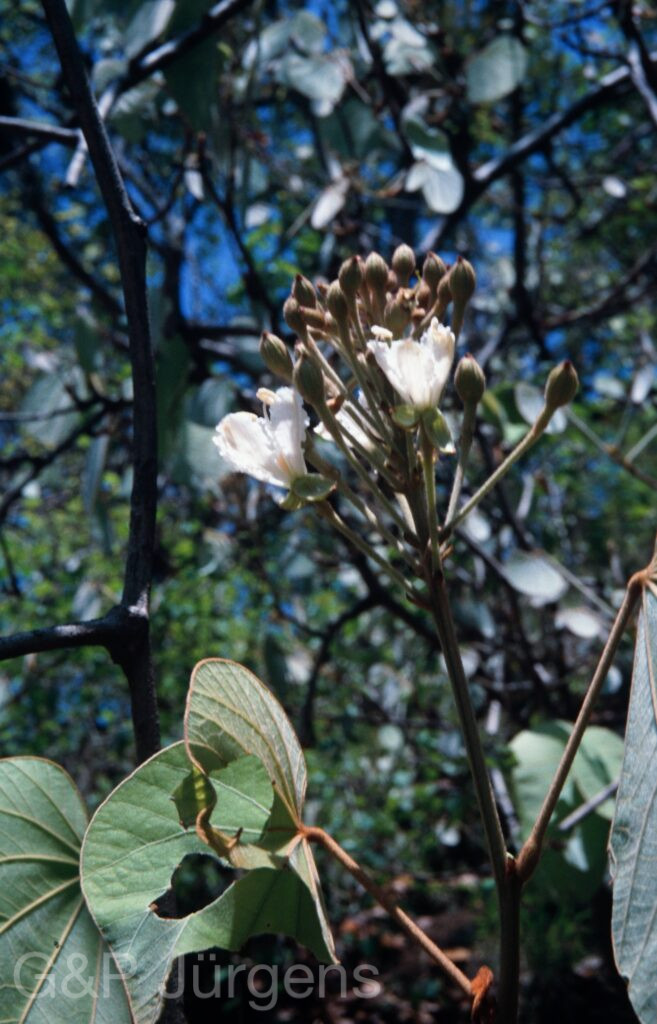
The plant is a gigantic, high-climbing leguminous vine ascending by paired, coiled tendrils, with stems and young parts clothed in dense ferruginous tomentum. The leaves are large, broadly orbicular and conspicuously bilobed at the apex, deeply notched between two rounded lobes in the manner characteristic of the Bauhinia alliance, the lower surface rusty-pubescent. The flowers are borne in large terminal panicles; each has a campanulate calyx and five cream to yellowish-white, clawed petals, with fertile stamens and reduced staminodes. The fruit is a large, woody, oblong pod densely covered with brown velvety hairs and containing several flattened seeds.
The segregation of Phanera from Bauhinia, based on tendrillate climbing habit, stamen number and pollen characters, is now widely followed though some authorities retain a broadly circumscribed Bauhinia. The species is economically important: its tough fibre yields cordage and its very large leaves are used as plates and for wrapping. Widespread and frequently exploited, it is not considered threatened.
Author: (Wight & Arn.) Benth. · Sources: POWO (Kew), GBIF, Flora of Nepal, Flora of British India, Flora of China, Wunderlin's revision of Bauhinia and Phanera