
(Lindl.) Rehder
Description
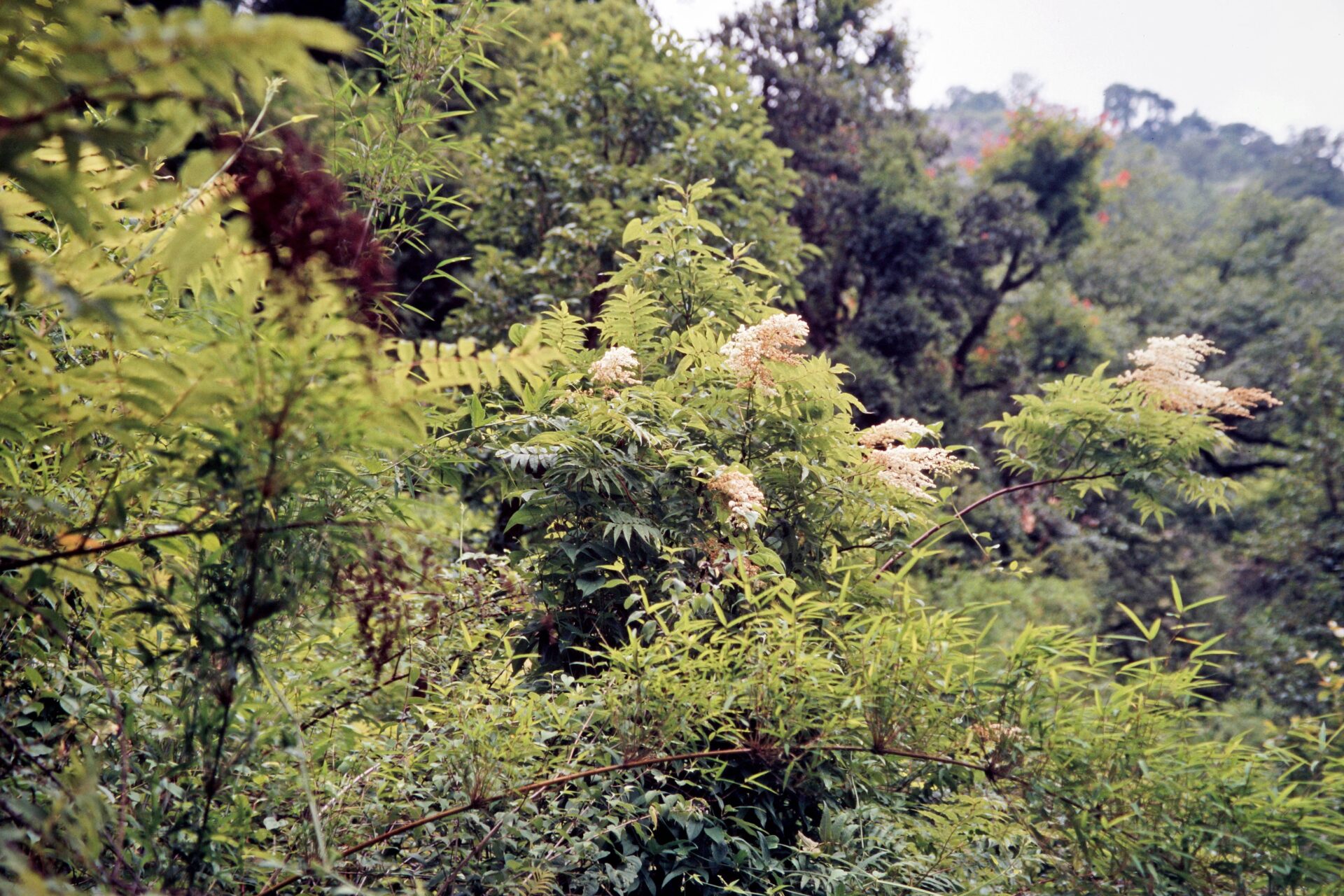
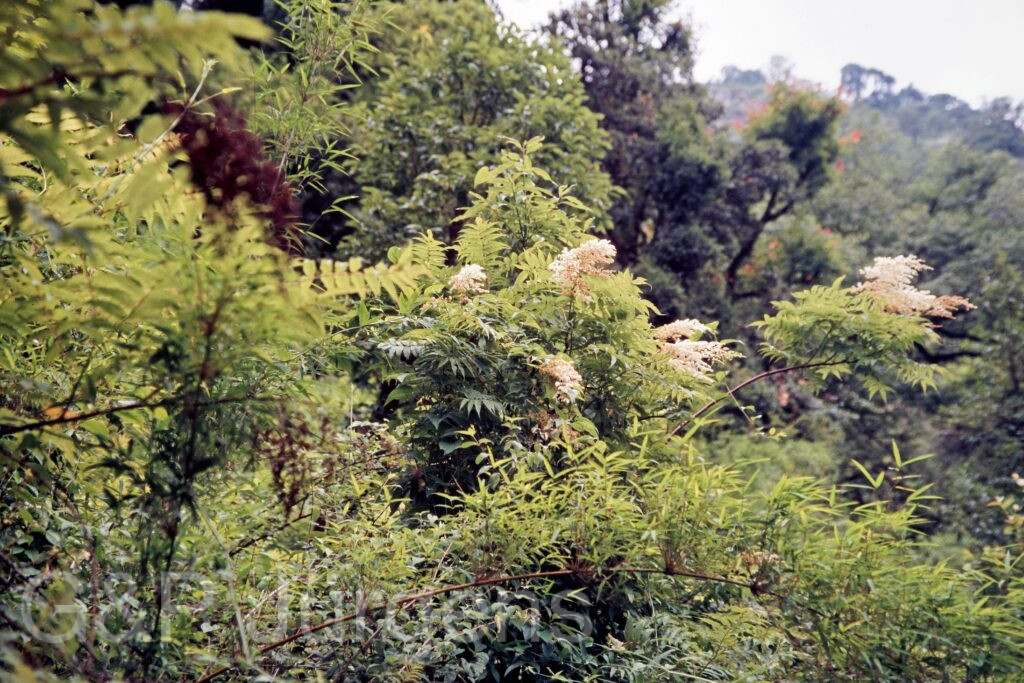
Sorbaria tomentosa is a deciduous shrub distributed along the temperate Himalaya from Afghanistan and Pakistan eastward through northern India and Nepal into south-western China, with the GBIF record (730 occurrences) further documenting naturalised and cultivated populations across Europe and North America. It favours moist, well-drained slopes, stream banks, forest margins and open thickets, generally between about 1200 and 3000 m. The plant photographed at Bebra in the Garhwal Himalaya at 1400 m in June represents the lower montane part of its native range, where it flowers in early summer in disturbed, sunny situations.
The species forms an erect, multi-stemmed shrub 1-3 m tall, with arching branches and stems that are tomentose when young, becoming glabrescent. The leaves are imparipinnate, comprising numerous lanceolate, doubly serrate leaflets that are densely greyish- to whitish-tomentose beneath, giving the foliage a soft, felted texture. The flowers are small and white, borne in large, dense, terminal pyramidal panicles; each has five sepals and five petals, with numerous exserted stamens conspicuously longer than the petals and a gynoecium of five carpels. The fruit is a small follicle, the carpels dehiscing to release minute seeds.
The genus Sorbaria (Spiraeoideae) is distinguished within Rosaceae by its compound leaves and apocarpous follicular fruits, features uniting it with Spiraea relatives. Sorbaria tomentosa is widely grown as an ornamental for its feathery foliage and showy inflorescences, which accounts for its broad extralimital occurrence. Within its native montane habitat it is a pioneer of forest edges and landslip scars, contributing to early successional vegetation and soil stabilisation.
Author: (Lindl.) Rehder · Sources: POWO (Kew), GBIF, Flora of China Vol. 9, Flora of Bhutan Vol. 2, Flora of Nepal, Flora of Pakistan, Robertson's monograph of Rosaceae genera