
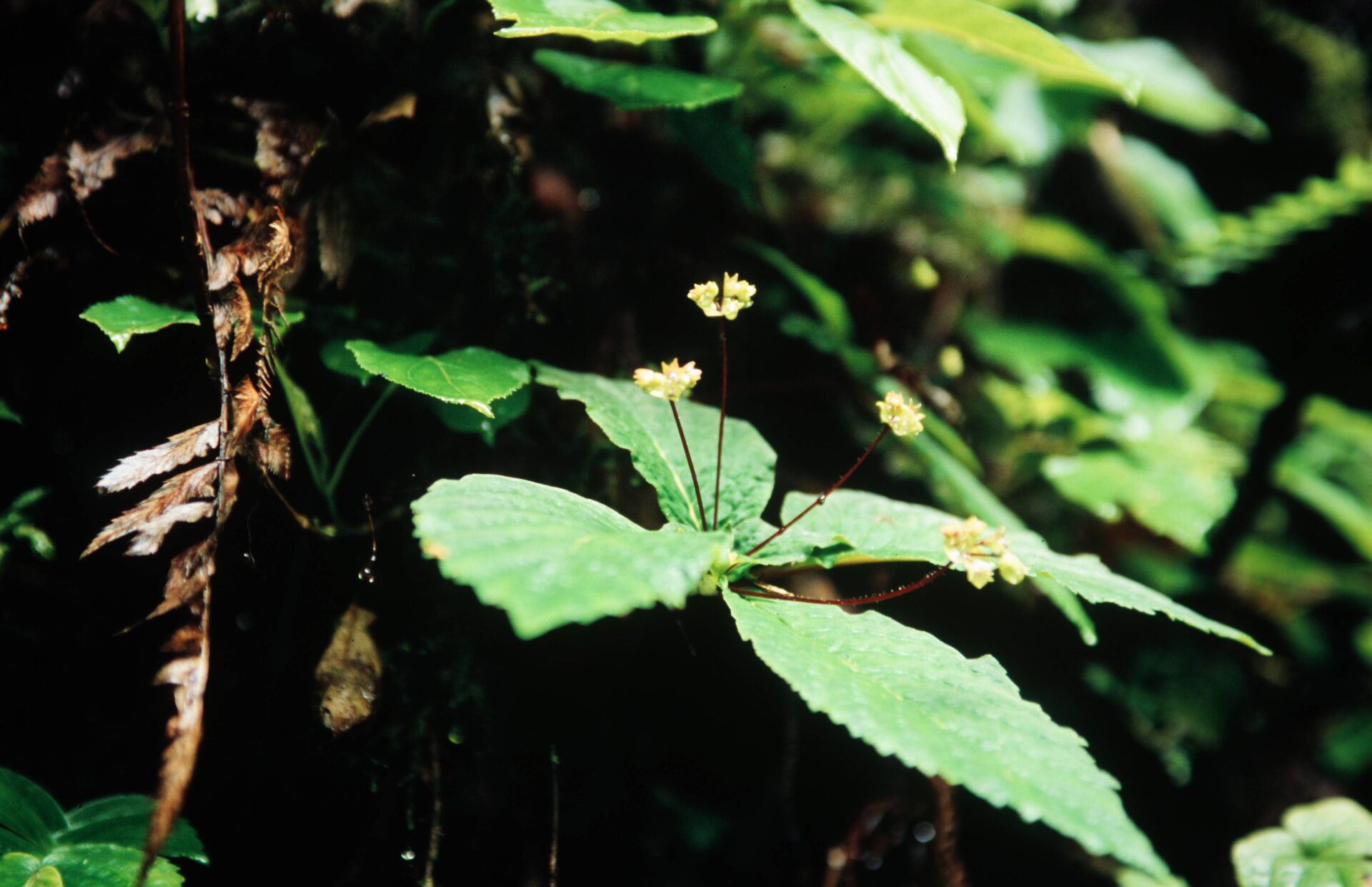
Wall.
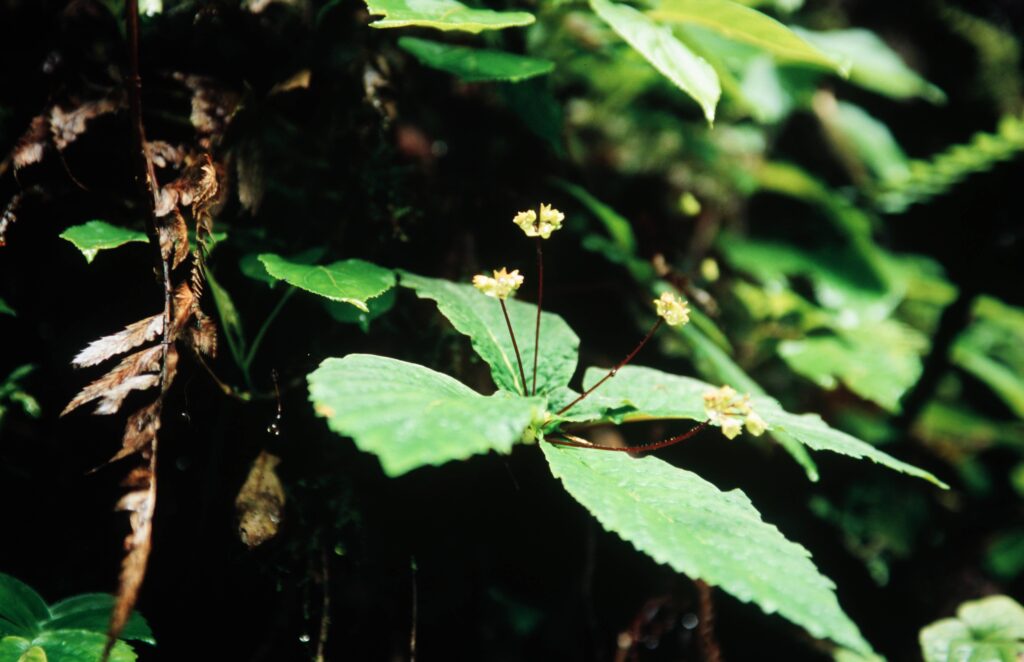
Description
Didymocarpus oblongus is a relatively uncommon gesneriad endemic to the eastern Himalaya, recorded from Nepal, northeast India (Sikkim, Darjeeling, Assam), Bhutan, and adjacent parts of southern China (Xizang, Yunnan). It inhabits shaded, damp rock faces, mossy cliff ledges, and steep earth banks in montane broadleaved and mixed forests, typically at elevations between 1,800 and 3,000 m. The species has been documented from the Tolung area of West Bengal at approximately 2,450 m, where it grows in the moist understorey of temperate forests during the spring season.
The plant is a perennial herb with a short, erect stem 5–15 cm tall, arising from a fleshy rootstock. Leaves are arranged in an opposite, often crowded rosette-like cluster near the stem apex; they are oblanceolate to oblong, 5–15 cm long and 2–5 cm wide, with a crenate to serrate margin, the upper surface dark green and sparsely pilose, the lower surface paler and more densely pubescent. The inflorescence is a lax cyme of 2–6 flowers borne on a slender peduncle 5–10 cm long. The calyx is tubular, five-lobed. The corolla is tubular-funnelform, 2–3 cm long, typically pale purple to lavender with darker markings in the throat. Stamens are two, with the filaments inserted at mid-tube; the anthers are coherent face to face. The fruit is a slender, elongate capsule 2–4 cm long, dehiscing loculicidally.
Didymocarpus is a genus of approximately 100 species centred in mainland Asia, with the Himalayan region representing a significant centre of diversity. D. oblongus is distinguished from allied species by its oblong leaf shape, relatively long peduncles, and high-elevation habitat preference. With only 88 occurrence records in GBIF and a restricted distribution along the eastern Himalayan arc, the species warrants conservation attention, particularly as its cliff-face and forest-understorey habitats are sensitive to deforestation and landslide disturbance.
Author: Wall. · Sources: POWO (Kew), GBIF, Flora of Bhutan Vol. 2, Flora of China Vol. 18, Möller & Clark: Gesneriaceae classification (2013)