
Prain
Description
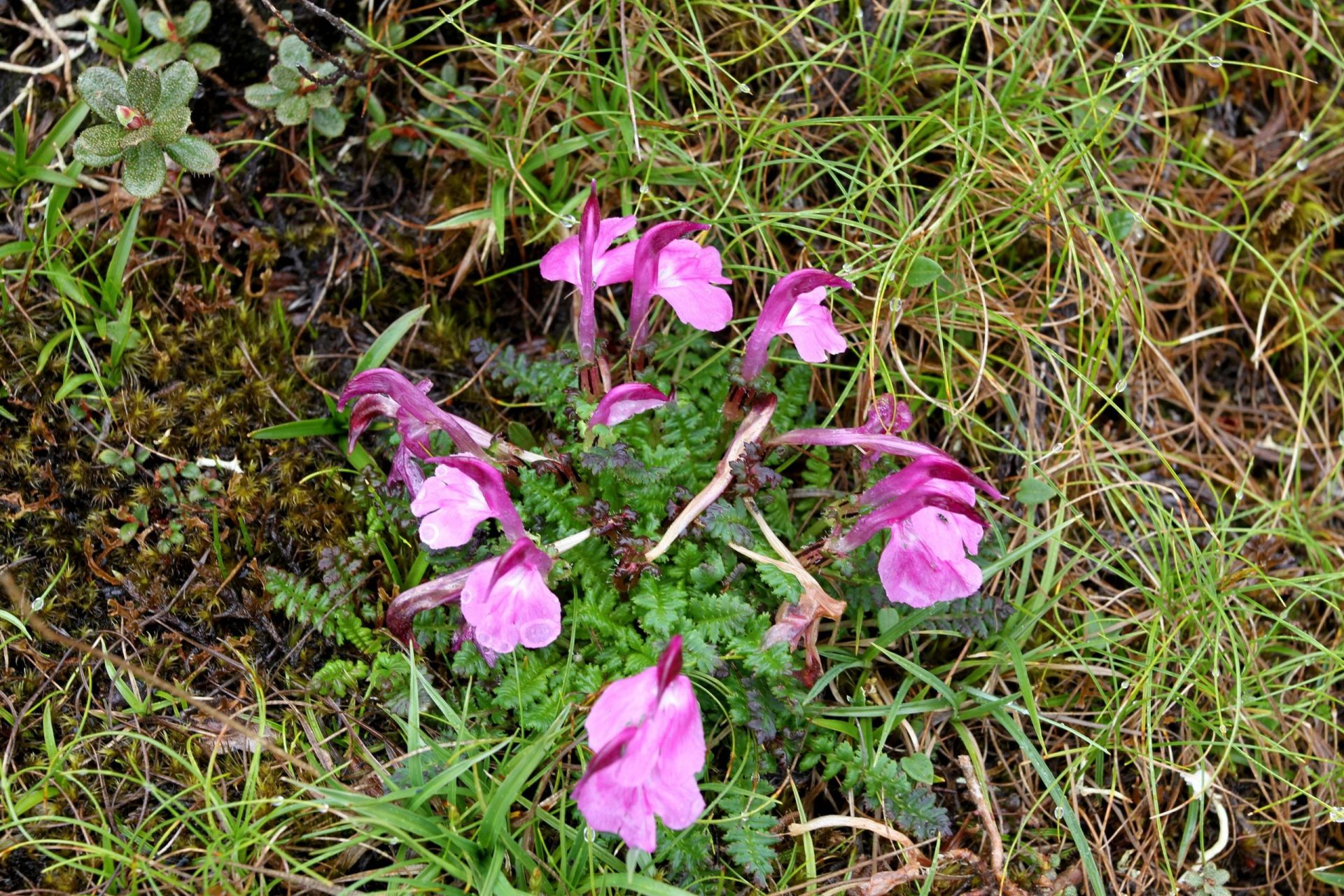
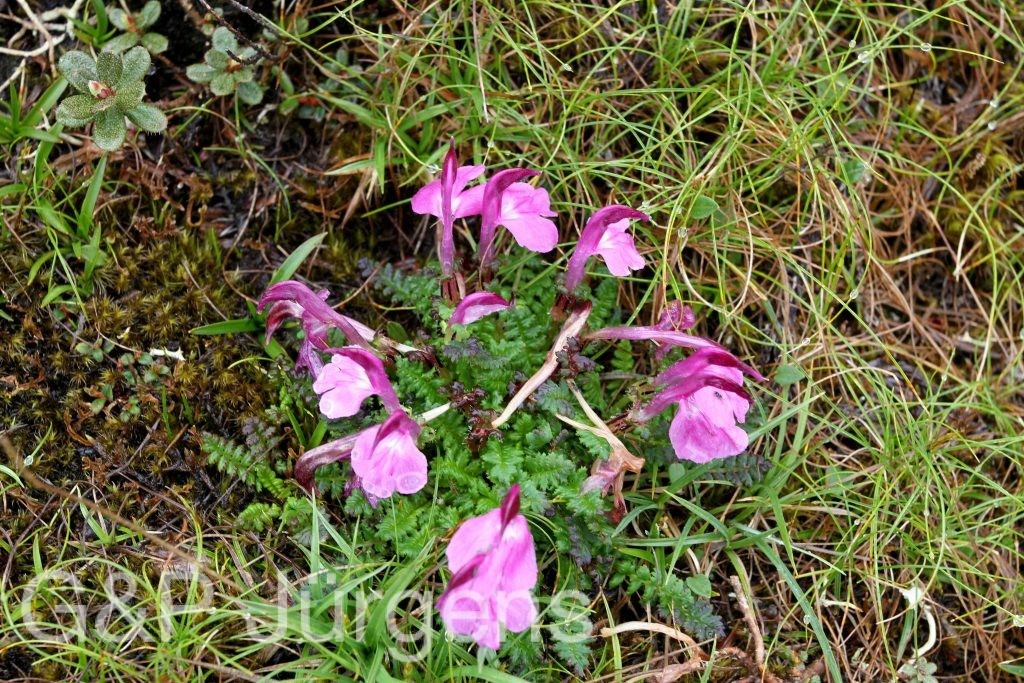
Pedicularis regeliana is a high-alpine lousewort of the Himalaya, recorded from Nepal, India, Bhutan and China, with about 72 GBIF occurrences reflecting a restricted high-elevation range. It grows in alpine meadows, moist grassy slopes, marshy turf and streamsides near the upper limit of vegetation, generally around 4000 to 4800 m. The plant photographed along the Ludlow-Sherriff Trail near Dem-Tso in Bhutan at about 4500 m in June illustrates its occurrence in damp alpine grassland and lake margins, flowering in early summer when the high pastures green after snowmelt.
The species is a perennial herb arising from a short rootstock, with erect or ascending stems and leaves that are pinnatisect to pinnatipartite, the segments narrow and toothed, in basal and cauline arrangements. The flowers are borne in a terminal spike or raceme, each subtended by a leafy bract; the strongly zygomorphic corolla is two-lipped, with the upper lip (galea) hooded and often beaked and the lower lip three-lobed and spreading. The four didynamous stamens lie within the galea, and the fruit is a flattened capsule releasing several seeds.
Pedicularis is an exceptionally species-rich genus that, like other former Scrophulariaceae now placed in Orobanchaceae, comprises hemiparasites drawing water and nutrients from the roots of neighbouring plants while retaining green, photosynthetic foliage. The genus reaches extraordinary diversity in the Sino-Himalaya, where the varied galea shapes are tied to specialisation for bumblebee pollination. As a high-altitude endemic of limited range, P. regeliana is an alpine specialist sensitive to disturbance of montane meadows, though it has not been formally evaluated for threat status.
Author: Prain · Sources: POWO (Kew), GBIF, Flora of China, Flora of Bhutan, Annotated Checklist of the Flowering Plants of Nepal, Prain's account of Indian Pedicularis