
Maxim
Description
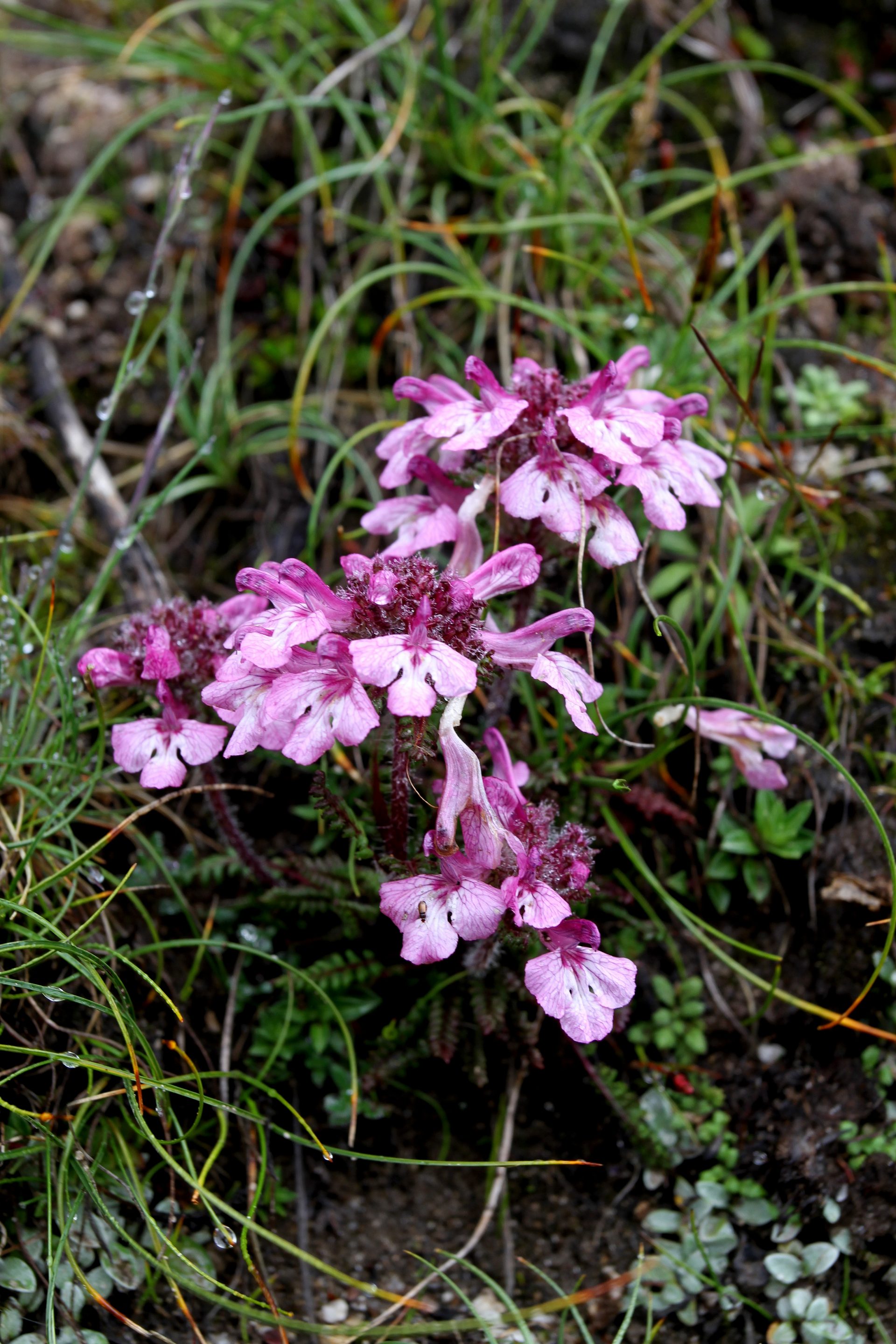
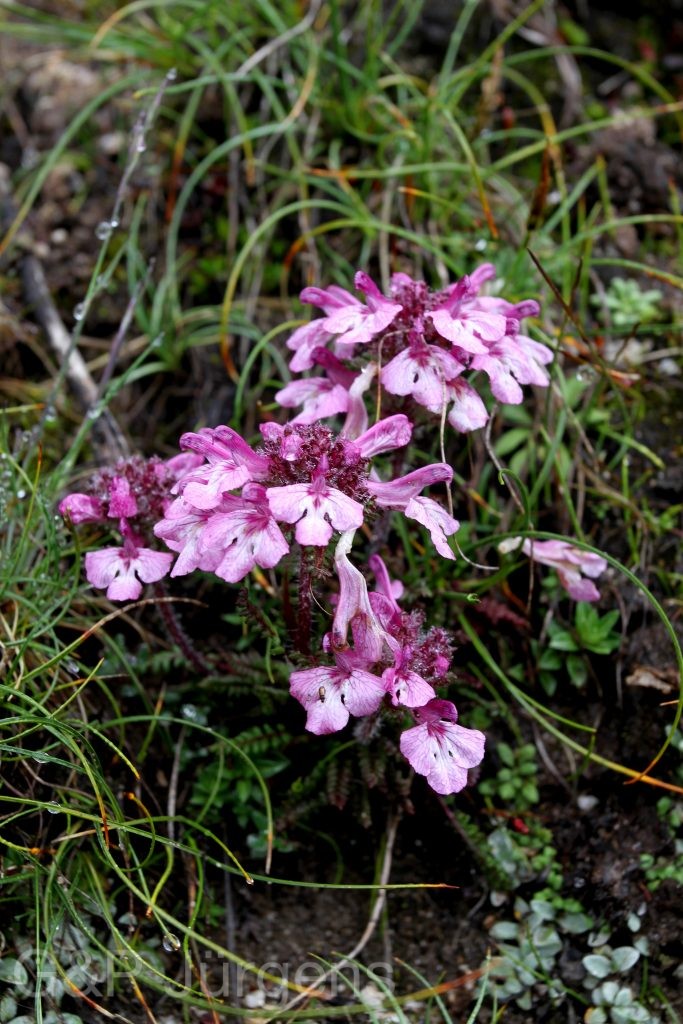
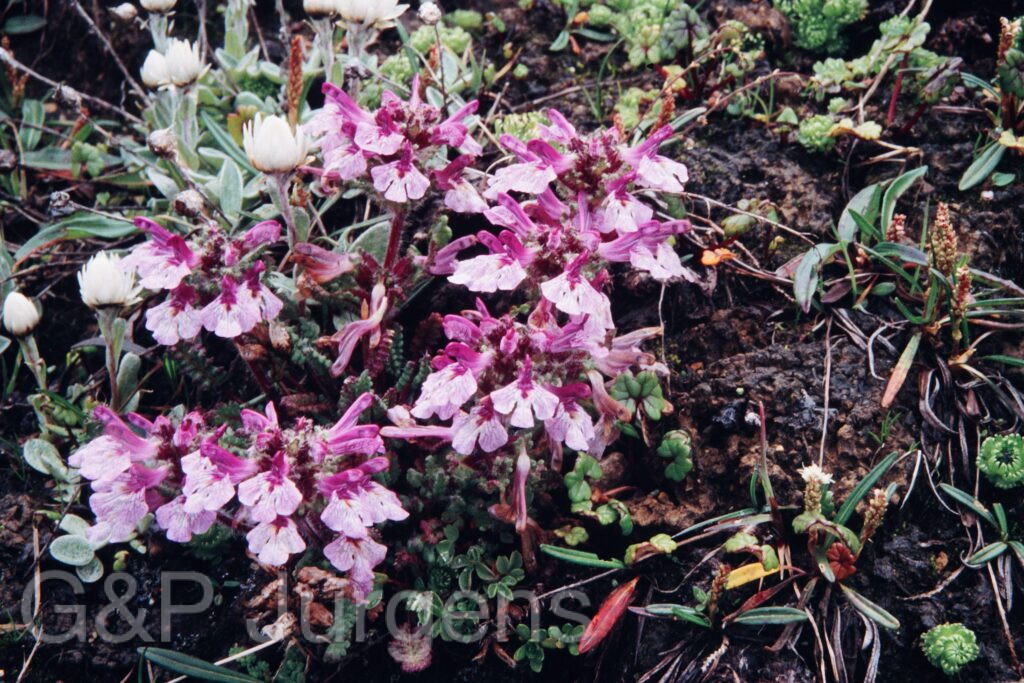
Pedicularis roylei is a Himalayan lousewort distributed from China and Pakistan eastward through Nepal, India and Bhutan, with more than 570 GBIF occurrences. It is a plant of moist alpine meadow, marshy turf and the margins of glacial pools and streamlets, characteristically growing at high elevation between about 3800 and 4800 m. The population photographed near Dem-Tso on the Ludlow-Sherriff Trail in Bhutan at 4600 m, flowering in June, with additional records in Nepal, illustrates its affinity for damp, short alpine swards near the snow line.
Like other Pedicularis it is a hemiparasitic perennial herb that attaches to the roots of neighbouring plants. It forms low tufts with a short rootstock, the stems few and ascending. The leaves are mostly basal and clustered, pinnatipartite to pinnatisect with toothed lobes, the cauline leaves fewer. The flowers are borne in a dense terminal head or short spike; the bilabiate corolla is pink to reddish-purple, with a galeate upper lip (galea) that is beakless or shortly hooded and a spreading, three-lobed lower lip. The fruit is an oblique, laterally compressed capsule containing few seeds.
Pedicularis reaches extraordinary diversity in the Sino-Himalaya, where root hemiparasitism and specialised pollination by long-tongued bumblebees have driven rapid speciation and floral diversification. P. roylei, described by Maximowicz, is widespread and not threatened, but as a parasite tied to particular alpine meadow hosts and pollinators it is a sensitive component of high-altitude grassland ecosystems.
Author: Maxim · Sources: POWO (Kew), GBIF, Flora of Bhutan, Flora of China, Prain account of Indo-Himalayan Pedicularis