
(Spreng.) Hara
Description
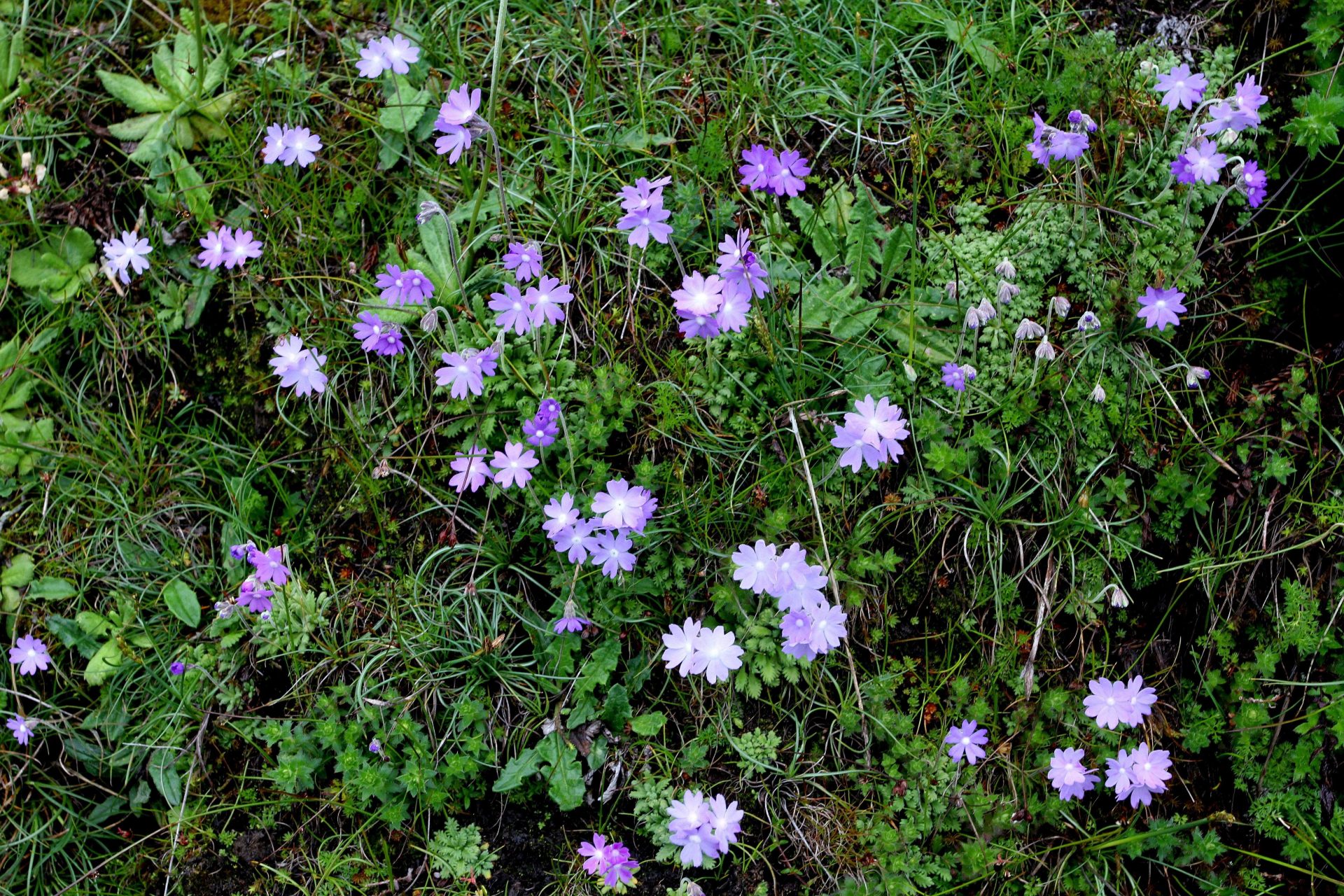
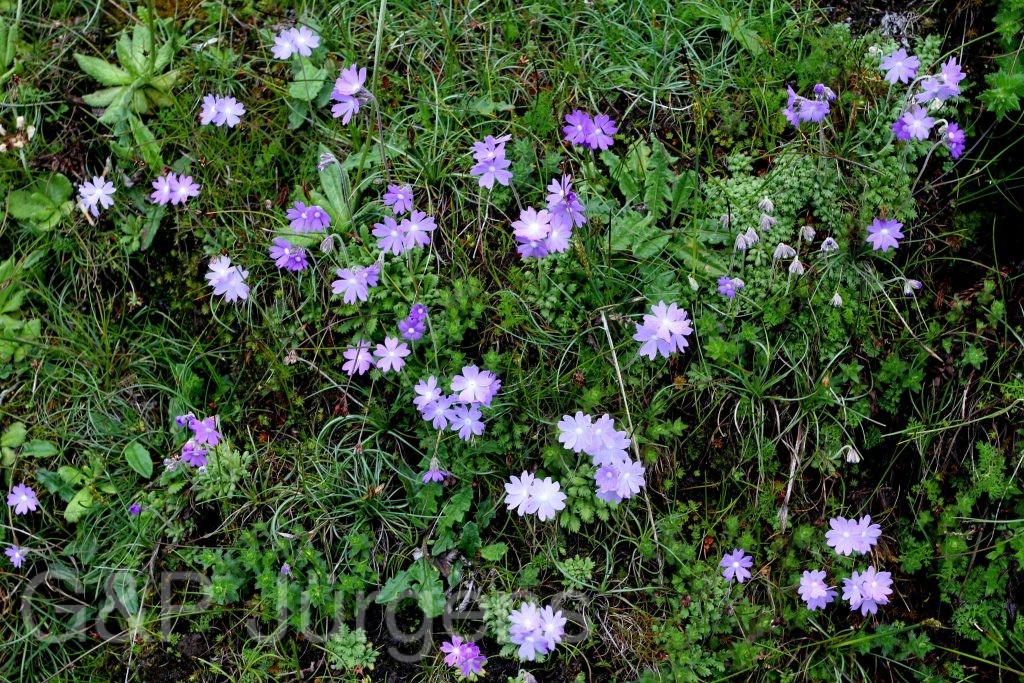
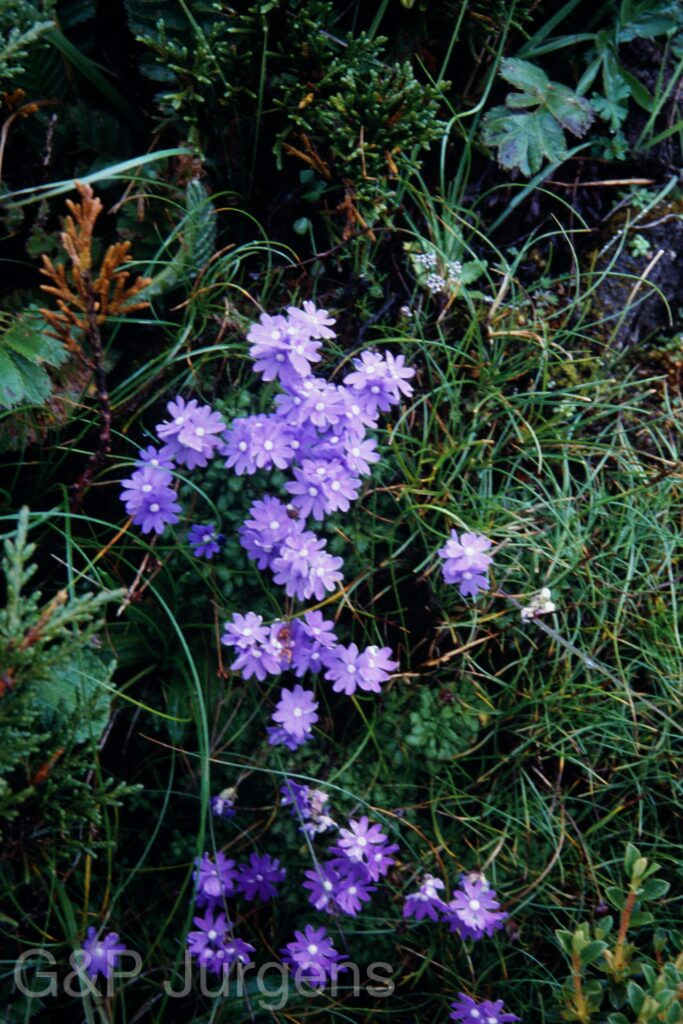
Primula primulina is a dwarf alpine primrose of the Himalayan high country, distributed through Nepal, northern India, Bhutan and southern China, with several hundred georeferenced occurrences recorded in GBIF. It is a cushion- or mat-forming species of the upper alpine and nival zones, growing on open stony slopes, moist alpine turf, rock ledges and the margins of high-elevation tarns kept moist by late snowmelt. The material from the Ludlow-Sherriff Trail at Shashuna-Dem-Tso in Bhutan (about 3900 m, June) and from Saniti Lake in Sikkim (4200 m, August) reflects its association with glacial lake basins and its summer flowering across the monsoon months.
P. primulina is a diminutive, densely tufted perennial forming low rosettes or compact cushions from a slender branching rootstock. The leaves are small, oblanceolate to spathulate, often densely crowded, with an entire or finely toothed margin and frequently bearing farina, the rosettes sometimes marcescent at the base. The flowers are borne singly or few together on very short scapes scarcely exceeding the foliage, giving an almost sessile appearance. The corolla is salverform with a slender tube and spreading, notched lobes, typically rose-purple to pink with a paler or yellowish eye; the calyx is tubular and lobed. The fruit is a small capsule enclosed by or barely exceeding the persistent calyx.
The species is placed in Primula section Minutissimae, the group of minute, cushion-forming Sino-Himalayan primroses to which P. primulina lends its name as a characteristic member. Long-established synonymy reflects its complex nomenclatural history under several earlier basionyms. As a specialist of high-altitude snowbed and lakeshore microhabitats, it is closely tied to persistent snow cover and is therefore among the alpine taxa most likely to be affected by warming-driven contraction of suitable habitat, though it currently carries no formal conservation assessment.
Author: (Spreng.) Hara · Sources: POWO (Kew), GBIF, Flora of Bhutan, Flora of China, The Genus Primula (Richards)