
Prain
Description
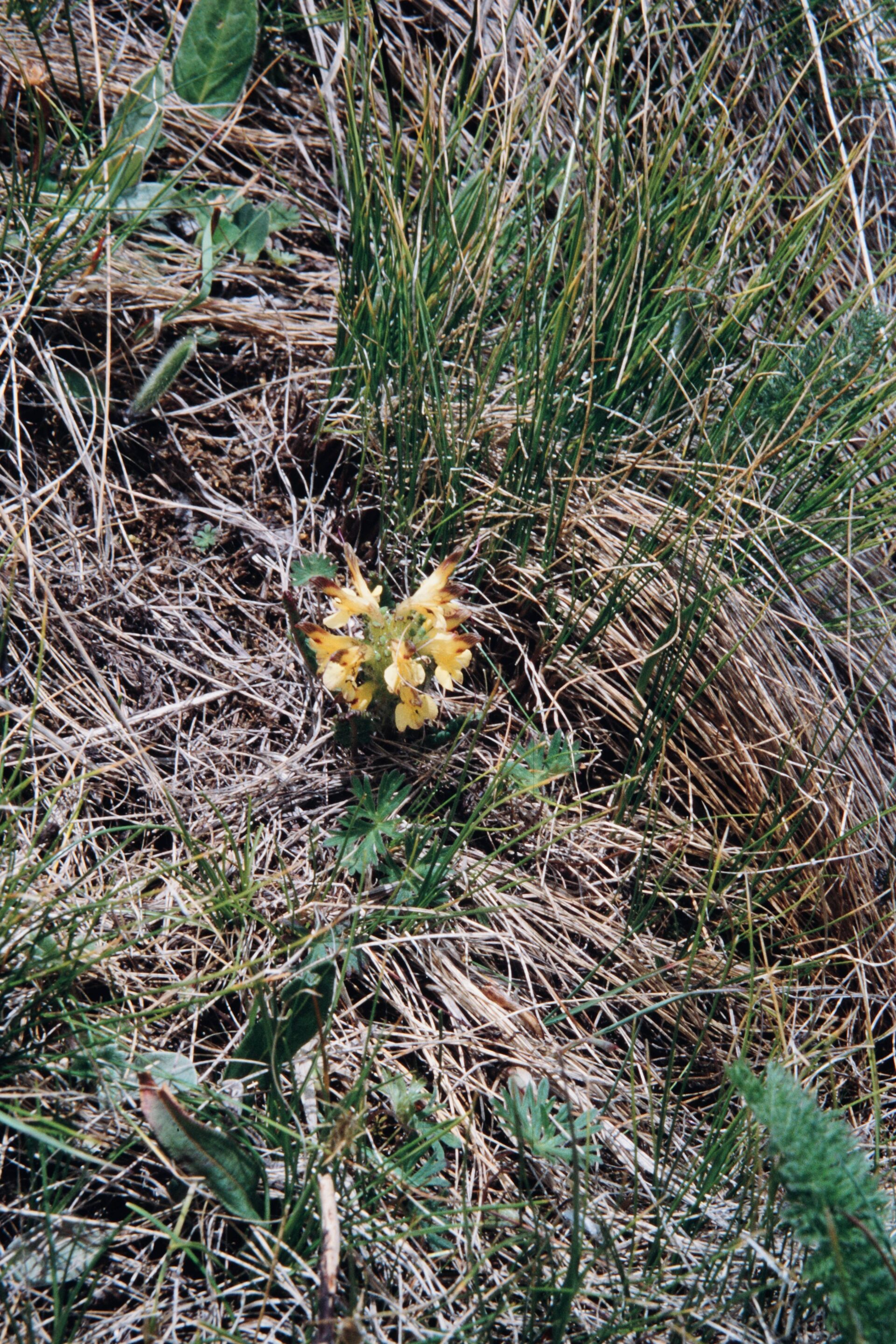
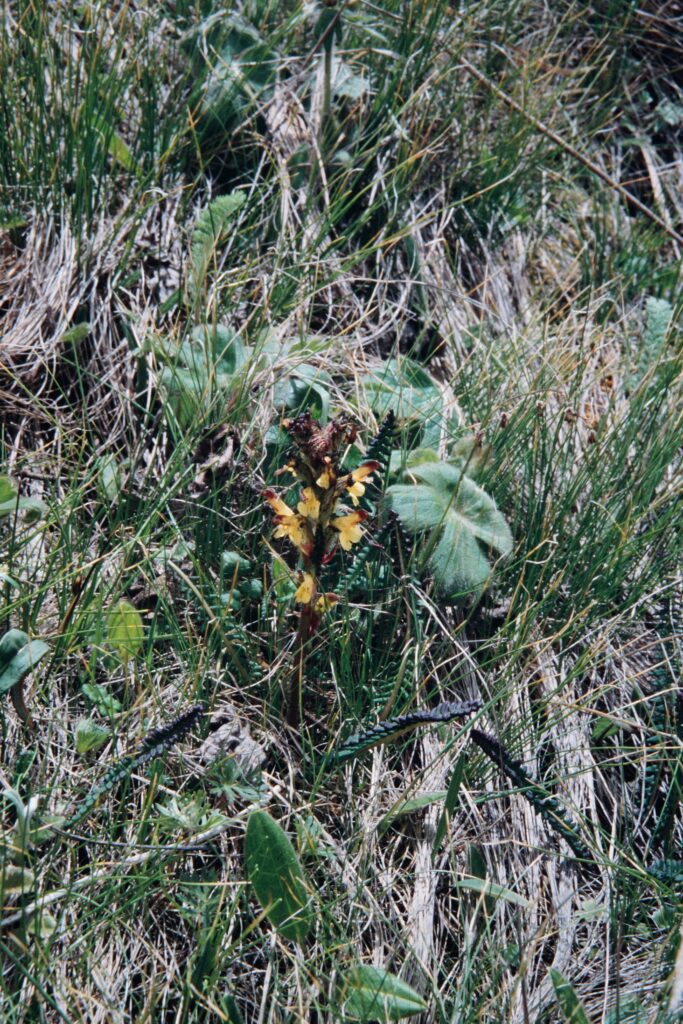
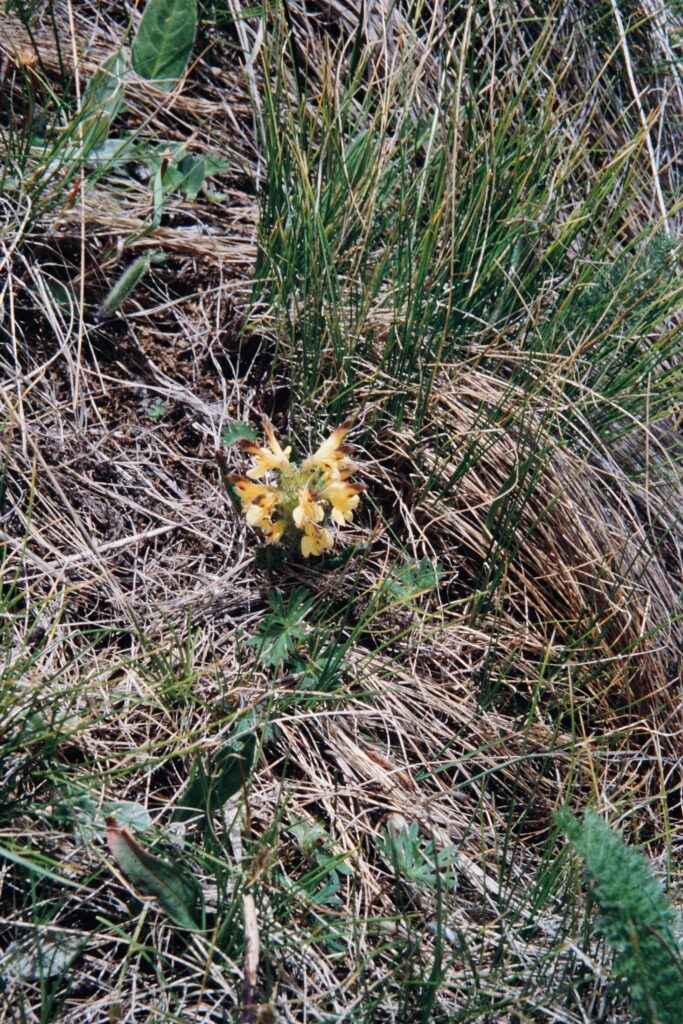
Pedicularis oederi var. heteroglossa is a hemiparasitic perennial herb of the family Orobanchaceae, belonging to one of the largest and most diversified genera of the alpine flora of the Sino-Himalayan region. The variety is distributed across the high mountains of central and eastern Asia, with GBIF records concentrated in China, Nepal, India and Bhutan and extending to Japan; this circum-Himalayan to East Asian range reflects the wide ecological amplitude of the typical species. It is a plant of open alpine meadows, moist grassy slopes, screes and the margins of snow-fed flushes, generally between 3,000 and 4,500 m. The collection illustrated here from Bhulbhule in Nepal at about 3,400 m in June represents a characteristic subalpine to alpine habitat where the plant flowers as the snow recedes.
It forms a low, tufted rosette herb arising from a short rootstock, the stems usually solitary and rarely exceeding 15–25 cm. The leaves are mostly basal, oblong-lanceolate in outline and deeply pinnatisect, the segments themselves toothed or pinnatifid, giving a finely divided, fern-like appearance. The inflorescence is a dense, terminal spike of zygomorphic flowers subtended by leafy bracts. The corolla is bilabiate and typically yellow, the galea (upper lip) helmet-shaped and often marked with red or purple toward the apex, the lower lip three-lobed; the diagnostic feature of var. heteroglossa lies in the form and coloration of the galea and beak. The fruit is a flattened, ovoid capsule containing several seeds.
As a root hemiparasite, the species draws water and nutrients from neighbouring graminoids and forbs via haustoria, while retaining functional chlorophyll. Pedicularis is taxonomically notoriously complex, with the P. oederi aggregate showing strong infraspecific variation that has generated numerous varieties such as this one. The genus is also of ecological interest for its specialised pollination by long-tongued bumblebees. Though not currently considered threatened, high-altitude Pedicularis populations are sensitive to grazing pressure and climate-driven shifts in the alpine snowline.
Author: Prain · Sources: POWO (Kew), GBIF, Flora of China Vol. 18, Flora of Nepal, Flora of Bhutan Vol. 2, Yamazaki: Taxonomic Revision of Pedicularis