
Wall.

Description
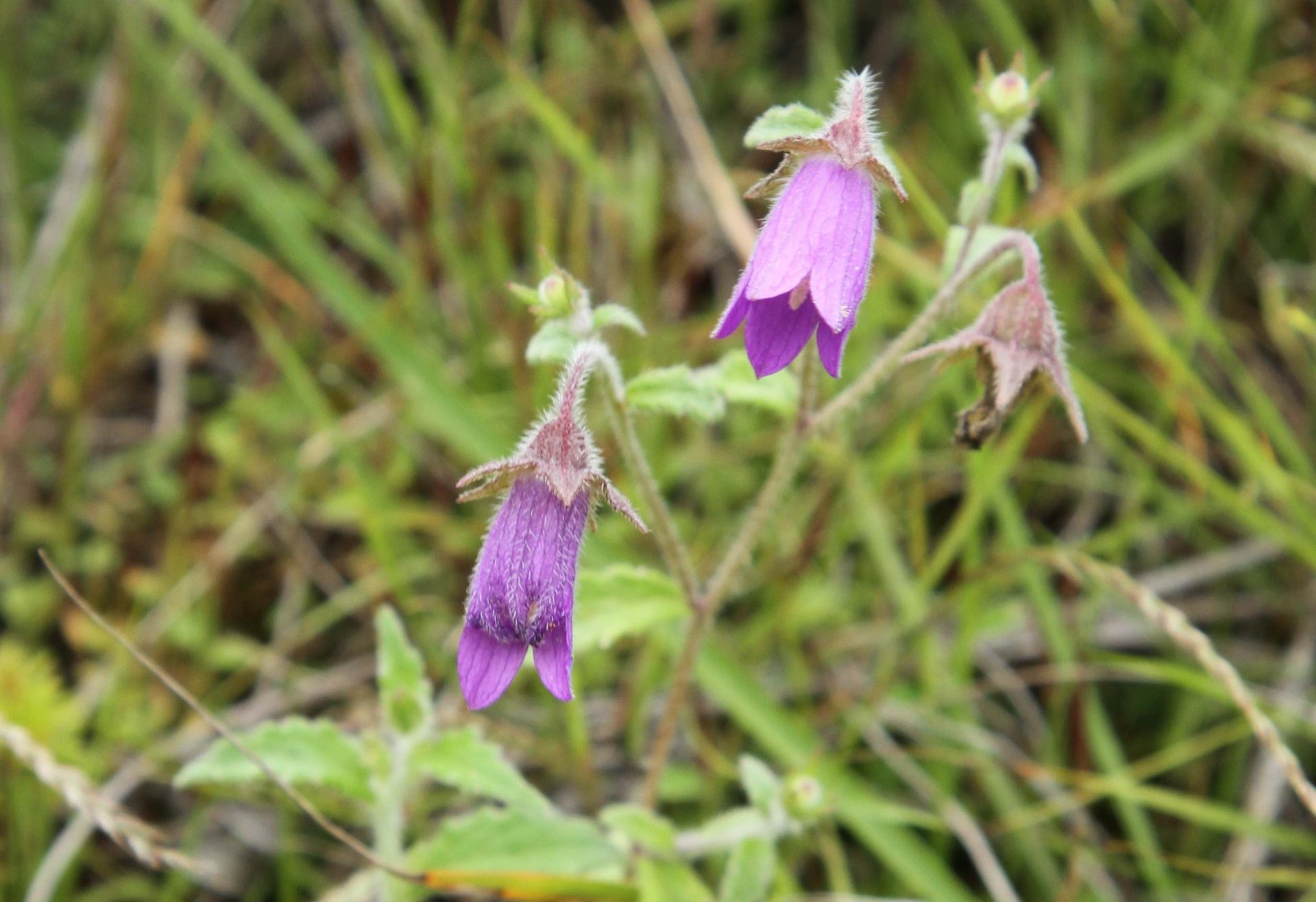
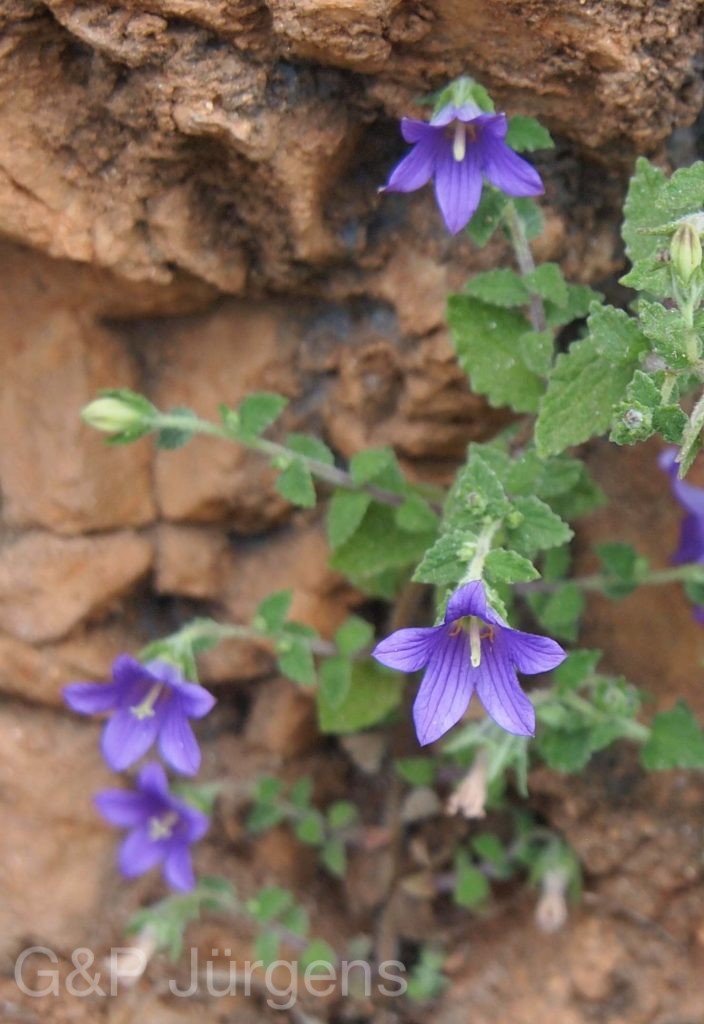
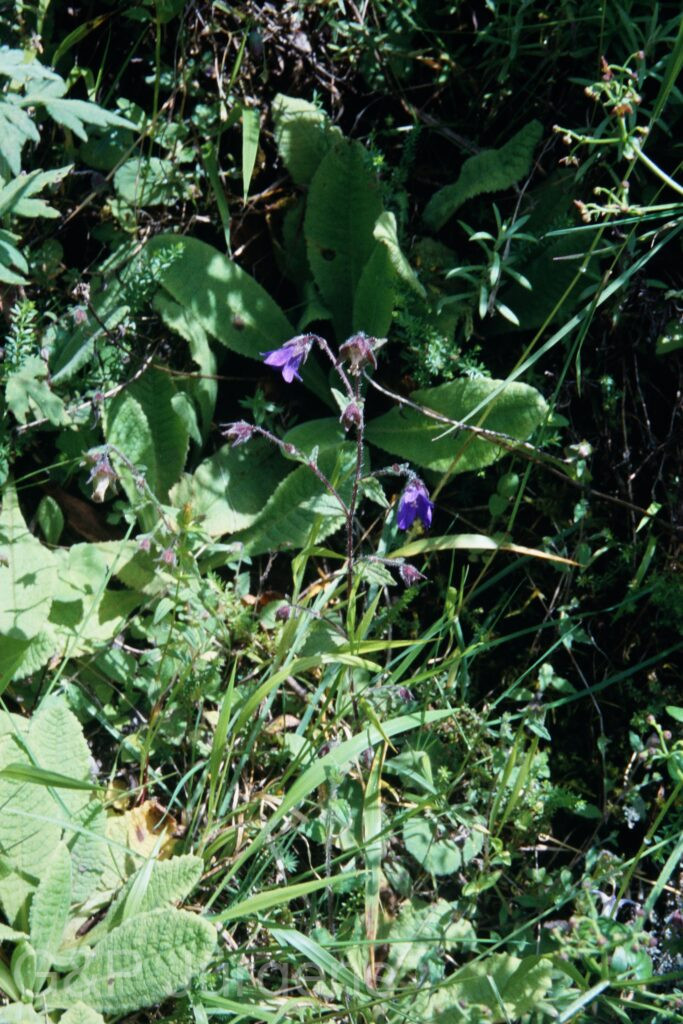
Campanula pallida is a widespread Asian bellflower with an extensive GBIF record (over 68,000 occurrences) centred on China, India, Nepal, Pakistan, Bhutan and Afghanistan, with numerous further reports across the broader range from Myanmar and Thailand to scattered cultivated and recorded localities elsewhere. It is a plant of open, well-drained ground, frequenting grassy slopes, rocky banks, terrace margins, roadside cuttings and forest clearings in the temperate and subalpine zones, broadly between about 1500 and 3500 m. The plants illustrated from the Haa valley in Bhutan at 3300 m in September and the Tista valley in Sikkim at 3300 m in August reflect its long summer-to-autumn flowering across the eastern Himalaya.
The species is a perennial herb with slender, ascending to decumbent stems bearing scattered hairs and clear latex. The leaves are alternate, ovate to oblong-lanceolate, with a crenate to serrate margin, the lower leaves petiolate and the upper sessile. The flowers are nodding, borne singly or in a loose few-flowered inflorescence; the corolla is broadly campanulate, five-lobed and pale blue to lilac or sometimes whitish, with reflexed appendages between the calyx lobes. The five stamens have dilated filament bases, and the inferior ovary matures into a nodding capsule that dehisces by basal pores to shed numerous small seeds.
Campanula is a large and taxonomically difficult genus, and C. pallida belongs to a complex of variable Himalayan bellflowers in which flower size and indumentum vary geographically. The pendulous, protandrous flowers are pollinated principally by bees, and the pore-dehiscent capsule disperses seed by wind shaking. The species is abundant, ecologically tolerant and frequently associated with semi-disturbed ground, and it is of no conservation concern.
Author: Wall. · Sources: POWO (Kew), GBIF, Flora of China, Flora of Bhutan, Flora of Pakistan, Revision of the Asiatic Campanula (Kolakovsky)