
(Blume) Regel
Description
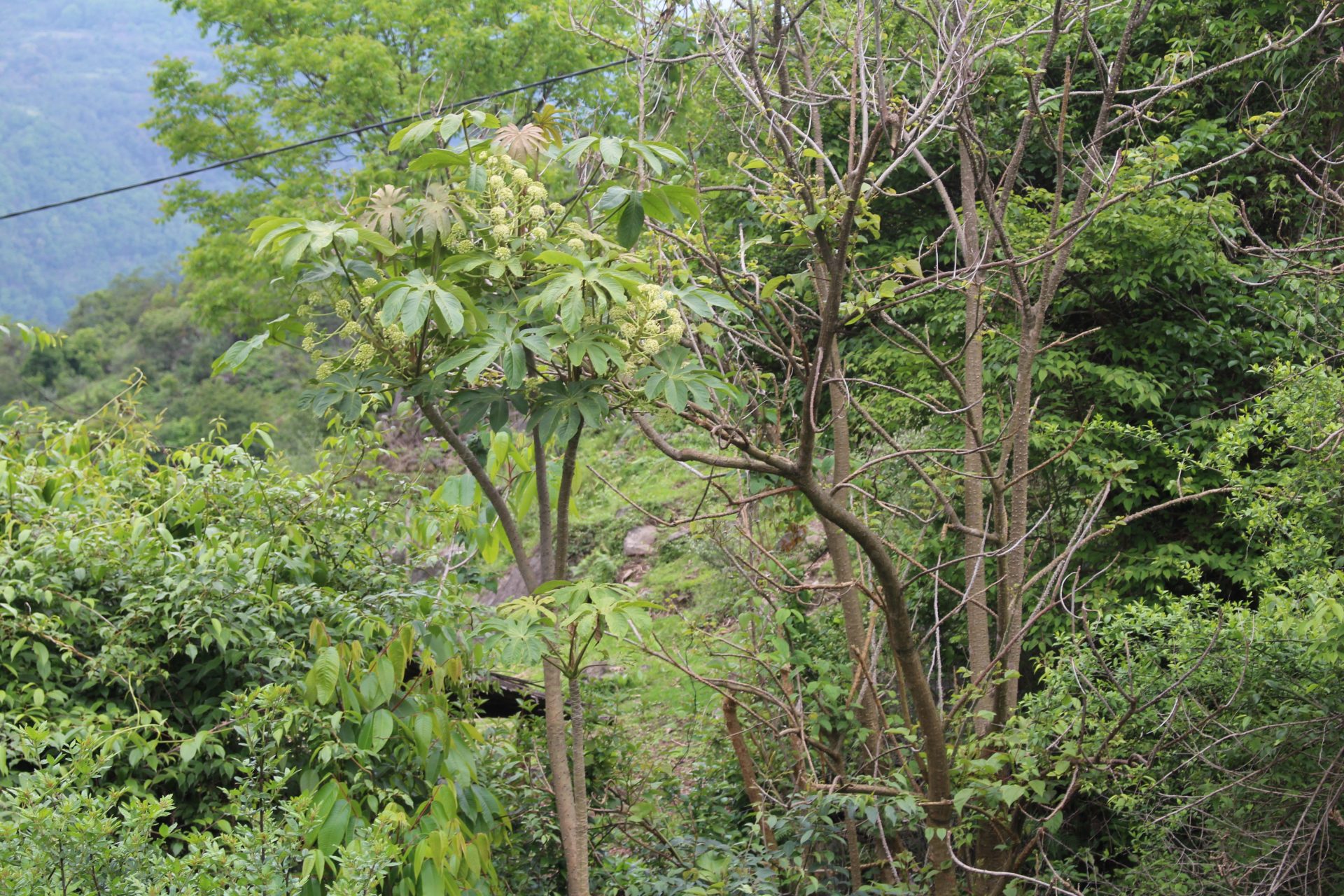
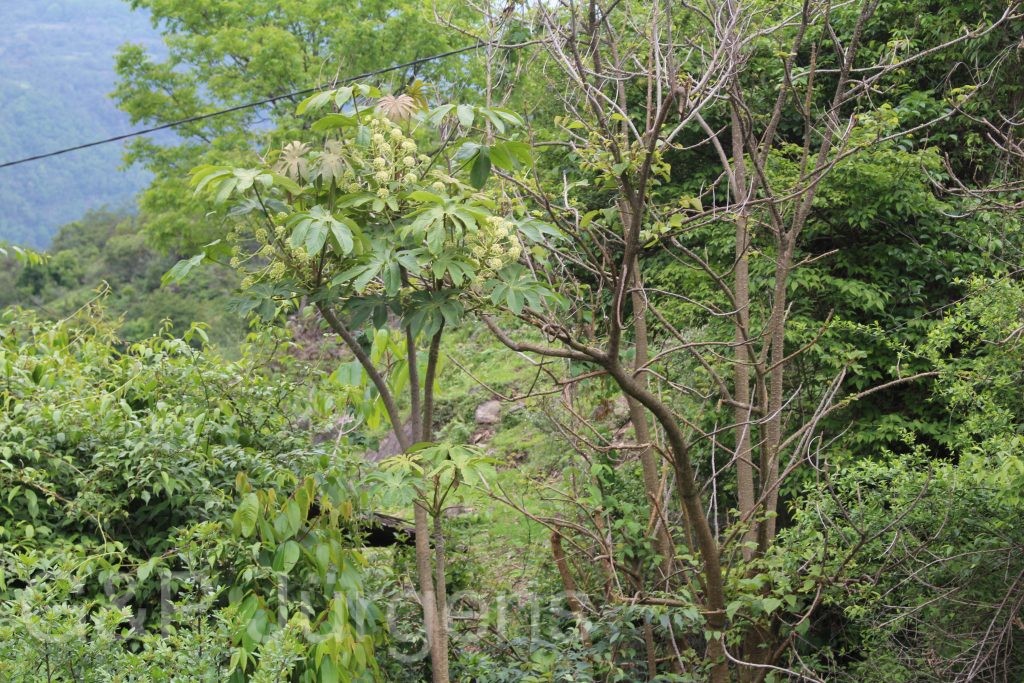
Brassaiopsis glomerulata is a small tree or large shrub of the eastern Himalaya and Southeast Asia, distributed from India, Nepal and Bhutan through Myanmar, Thailand, Laos, Vietnam, Cambodia, Malaysia and Indonesia into southern China; its c. 954 georeferenced records make it the most widespread member of its genus. It inhabits evergreen broadleaf forest, secondary woodland, ravines and forest margins, generally between 1000 and 2400 m. The plant photographed at Trashyangtse in eastern Bhutan at 2150 m in May grows in the humid subtropical to warm-temperate forest belt where it occupies the understorey and disturbed forest gaps along streams.
It is an evergreen, sparsely branched tree to c. 8-10 m, the young stems and petioles often armed with short prickles. The leaves are large and palmately compound or deeply palmately lobed, long-petioled, with serrate, acuminate leaflets, clustered toward the branch tips in typical araliaceous fashion. The inflorescence is a large terminal panicle of numerous small umbels, the flowers densely aggregated into globose clusters (hence "glomerulata"). The flowers are small, greenish to whitish, with five petals and five stamens and an inferior ovary crowned by a short style. The fruit is a small, globose, fleshy purple-black drupe containing flattened seeds.
Described originally in Hedera by Blume and transferred to Brassaiopsis by Regel, the species belongs to the Araliaceae, the ivy and ginseng family. Its small drupes are dispersed by frugivorous birds, while the open umbels are visited by generalist insects. The leaves and bark feature in regional ethnomedicine. Widespread and adaptable to disturbed habitats, B. glomerulata is not considered threatened across its broad range.
Author: (Blume) Regel · Sources: POWO (Kew), GBIF, Flora of Bhutan, Flora of China, Flora of Thailand, Lowry & Wen's studies of Asian Araliaceae