
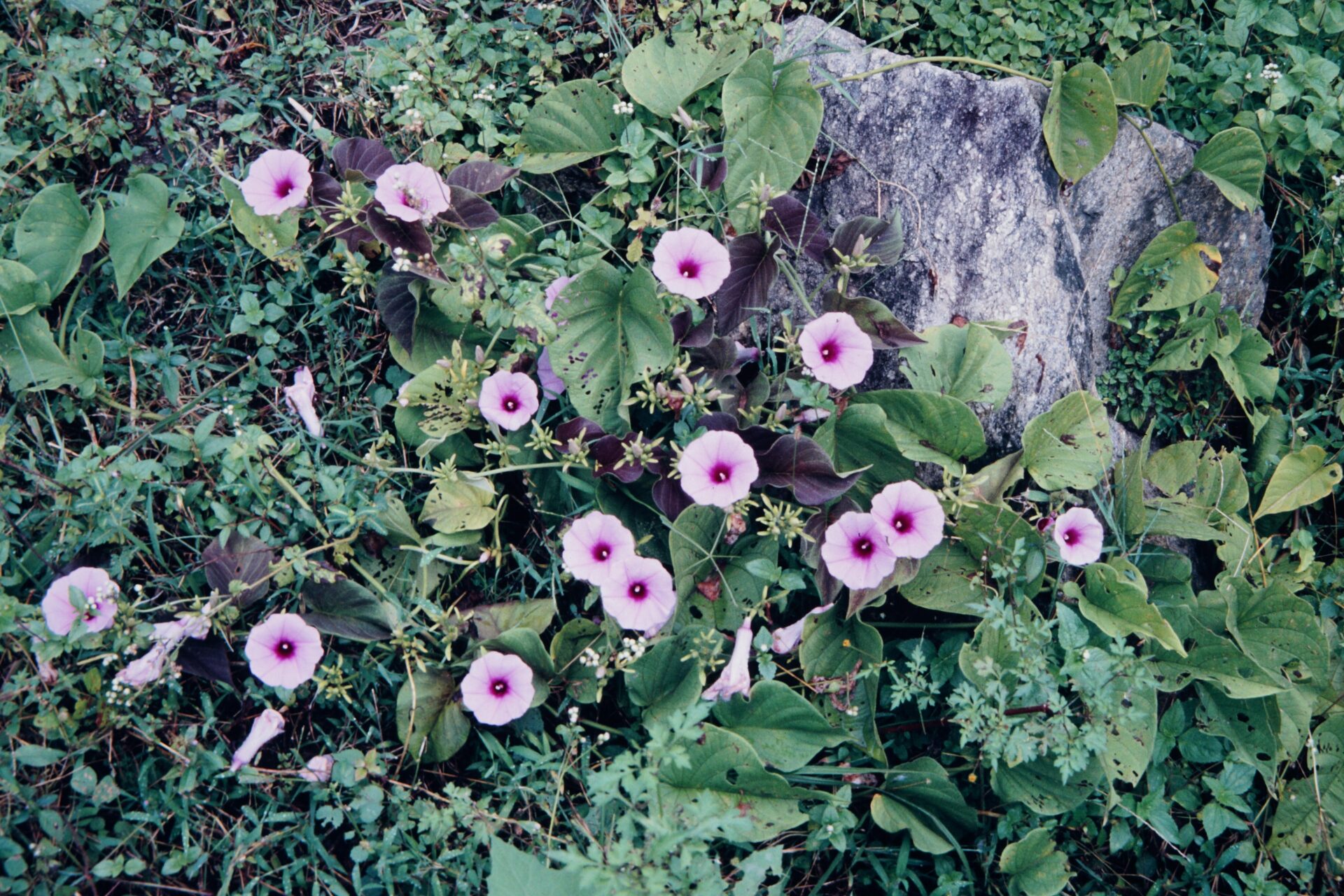
(L.) Lam.
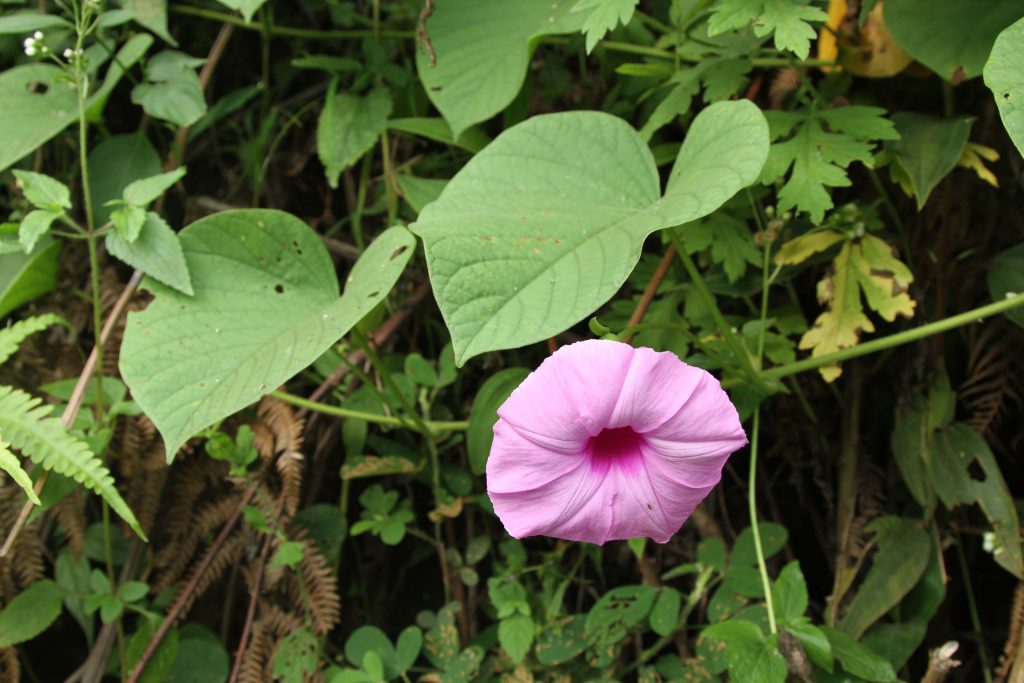
Description
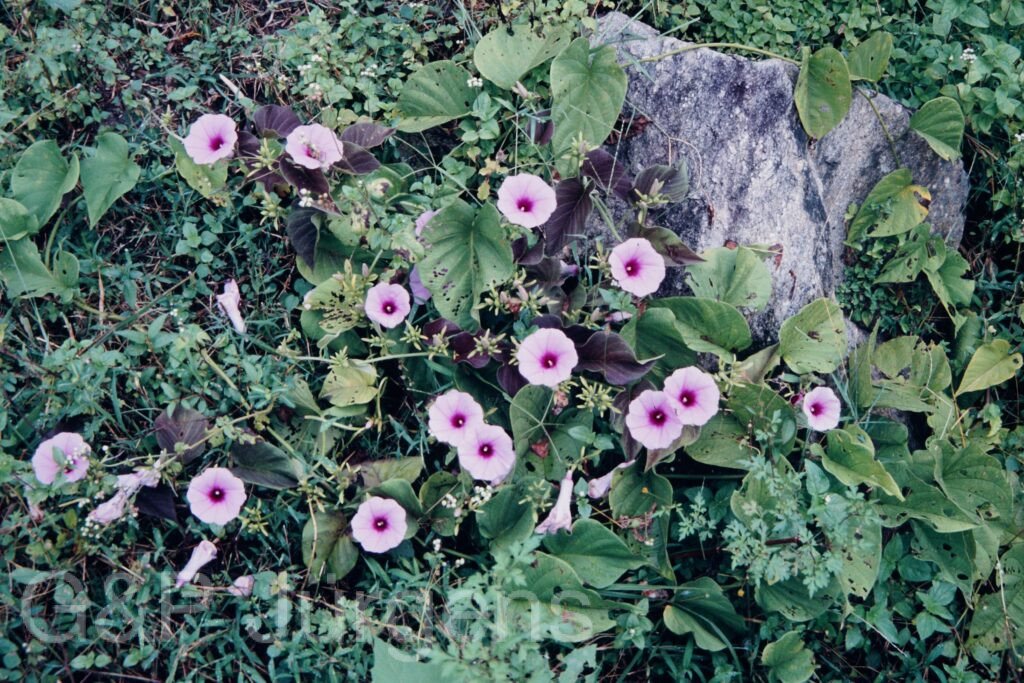
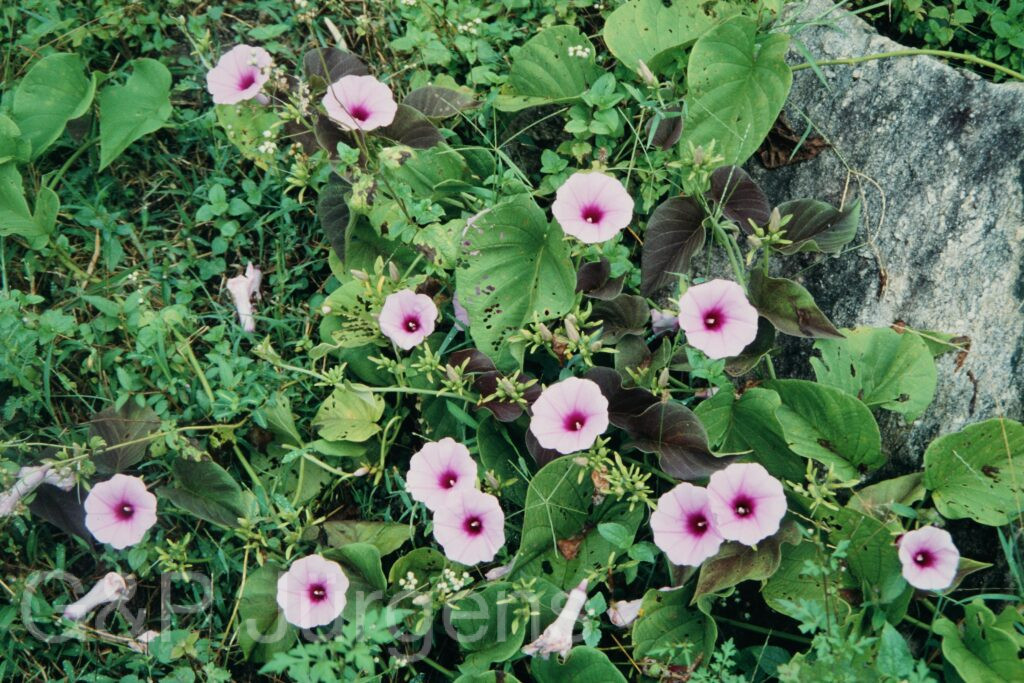
Ipomoea batatas, the sweet potato, is a cultigen of Neotropical origin now grown and naturalised throughout the tropics and warm-temperate world; GBIF records 38,679 occurrences spanning the Americas (Peru, Mexico, Brazil, the United States, Colombia, Ecuador and others) through to Asia and Oceania, including Thailand, Taiwan, the Philippines, Indonesia, China and Papua New Guinea. In the Himalaya it is a cultivated and escaped plant of village margins, terraced fields and warm valley bottoms. The illustrated material comes from Bhutan, Zhemgang, at about 1850 m in October, and from Nepal along the Darondi Khola at around 670 m, reflecting the sub-tropical farmed elevations where it is grown.
The plant is a perennial herbaceous vine with prostrate or twining stems that root at the nodes and arise from swollen, edible storage roots (tubers) of variable colour. Leaves are alternate, petiolate and highly variable, from broadly ovate-cordate to deeply palmately lobed, with an entire or sinuate margin. Flowers are borne in few-flowered axillary cymes; the corolla is funnelform and infundibuliform, lavender to pink-purple with a darker throat, subtended by a small calyx of unequal sepals. The five stamens are unequal and included, the ovary superior; the fruit is a small capsule, though many cultivars set seed poorly.
The sweet potato is a hexaploid of long domestication, its wild progenitors lying in Central America, and it ranks among the world's most important root crops. POWO and GBIF accept the name. Its trans-Pacific presence in pre-Columbian Oceania remains a celebrated biogeographic puzzle bearing on early human dispersal.
Author: (L.) Lam. · Sources: POWO (Kew), GBIF, Flora of China, Flora of Bhutan, Annotated Checklist of the Flowering Plants of Nepal, World Checklist of Convolvulaceae (Ipomoea monograph)