
Spring.
Description
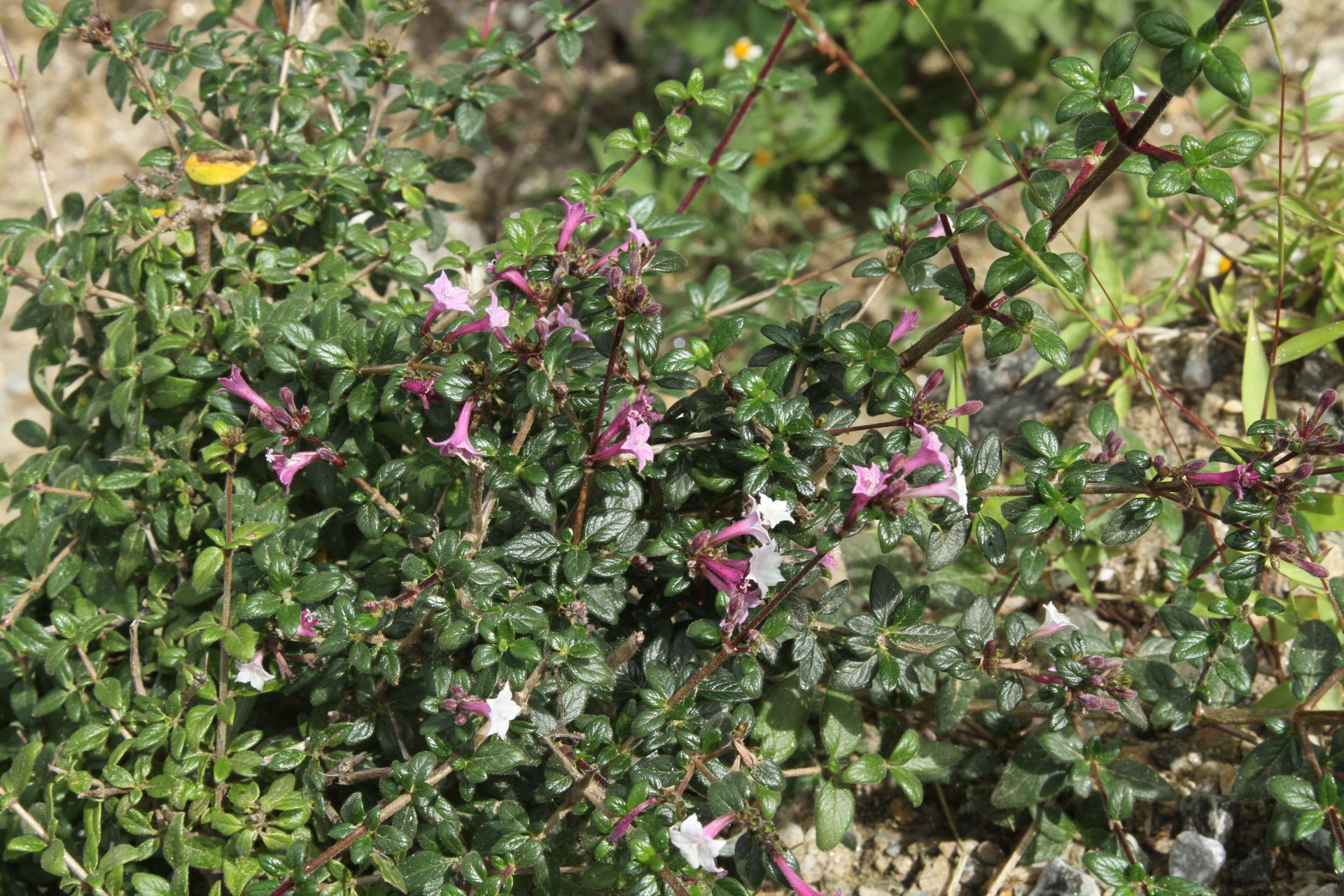
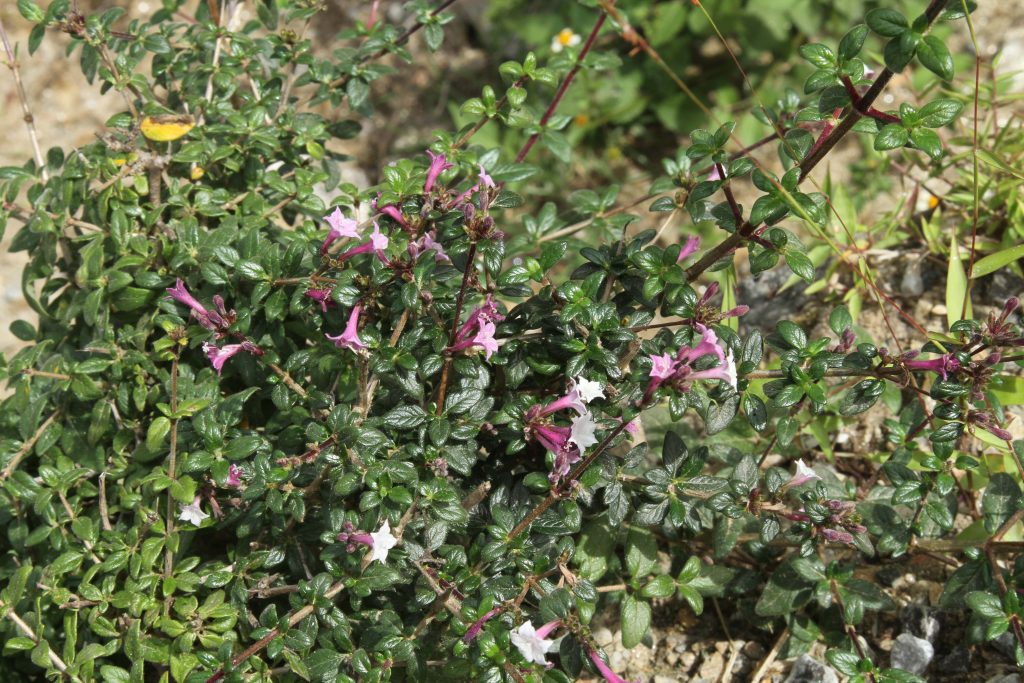
Leptodermis ludlowii is a narrowly distributed Eastern Himalayan shrub, known from only about 26 georeferenced records confined to China (CN), Bhutan (BT) and India (IN). It is a plant of warm-temperate montane valleys, occupying open hillsides, dry scrub, rocky slopes and forest margins at middle elevations. The plant photographed along the Paro-Chu in western Bhutan at about 2400 m in September is characteristic of these sunny, well-drained inner-valley habitats, where the species flowers into the late monsoon. Its very restricted range and small number of collections mark it out as a regional endemic of the Eastern Himalaya.
It is a small, much-branched deciduous shrub with slender, often pubescent twigs. The leaves are opposite, small, ovate to elliptic, entire, and subtended by characteristic interpetiolar stipules with a membranous base and bristle-like awns, typical of the genus. The flowers are borne in small axillary or terminal clusters; each has a narrowly funnel-shaped, five-lobed corolla, usually white to pale pink or lilac, with the lobes spreading at the mouth. The slender corolla tube and the membranous, often persistent calyx are diagnostic of Leptodermis. The fruit is a small, dry capsule splitting into valves to release the seeds, which are enclosed in a thin, membranous testa from which the genus takes its name.
Leptodermis (Rubiaceae, tribe Paederieae) is an Asian genus centred on the Sino-Himalayan region, with many narrowly distributed, locally endemic species adapted to dry montane scrub. L. ludlowii, commemorating the collector Frank Ludlow, is one such restricted Eastern Himalayan endemic. Its very limited known range and scant collection record make it of conservation interest, although it has not been formally assessed; the integrity of mid-elevation valley scrub is important to its persistence.
Author: Spring. · Sources: POWO (Kew), GBIF, Flora of Bhutan, Flora of China, Robbrecht and Deb taxonomic studies of Asian Rubiaceae (Leptodermis)