
Roth
Description
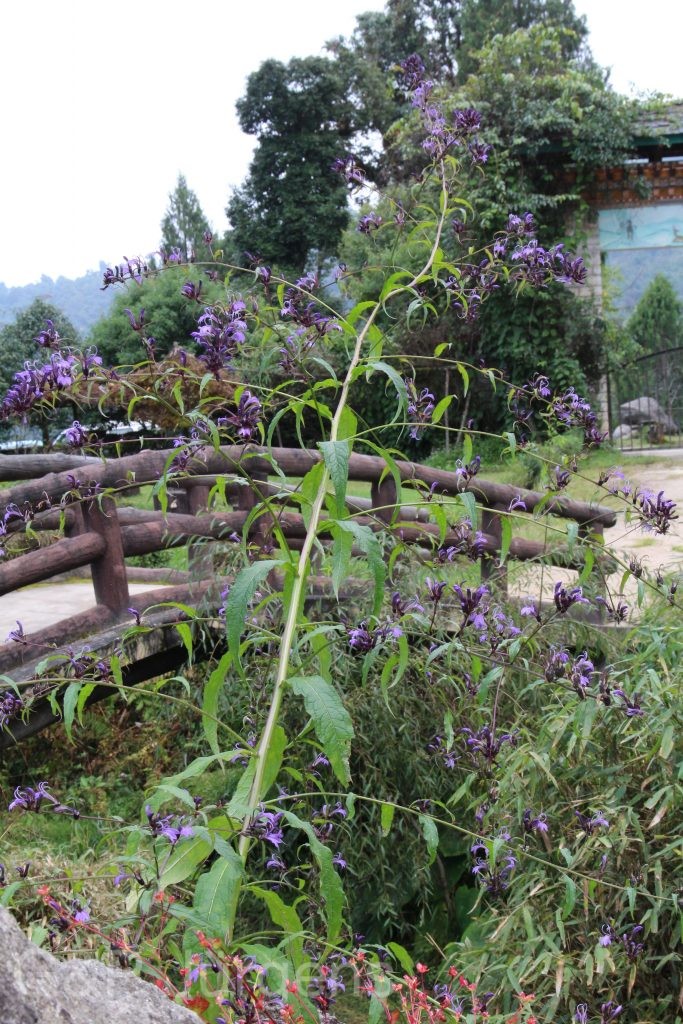
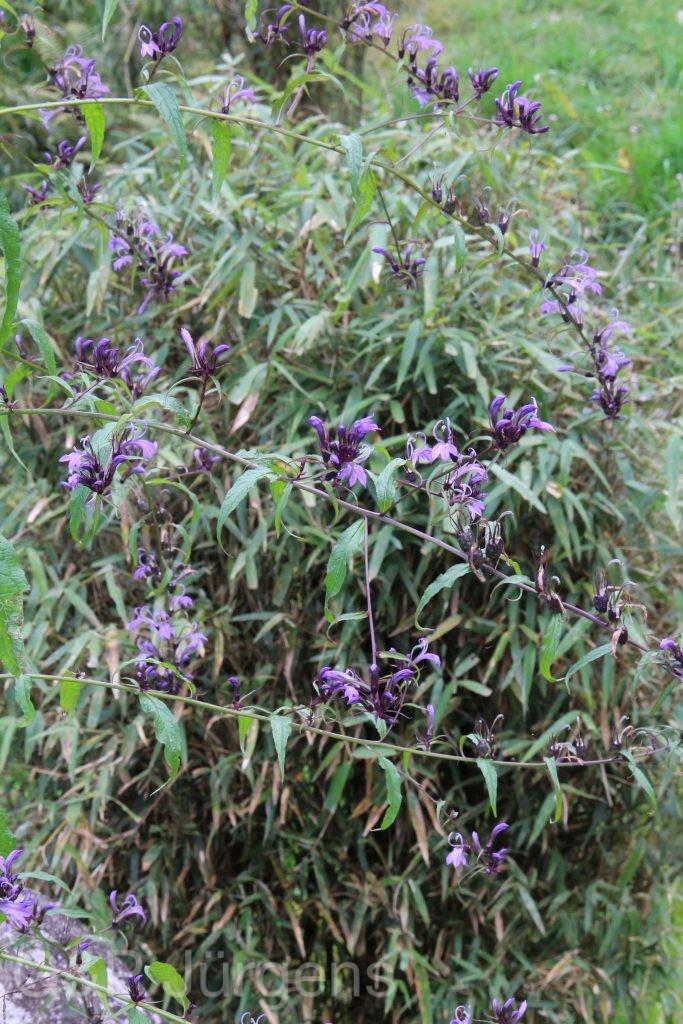
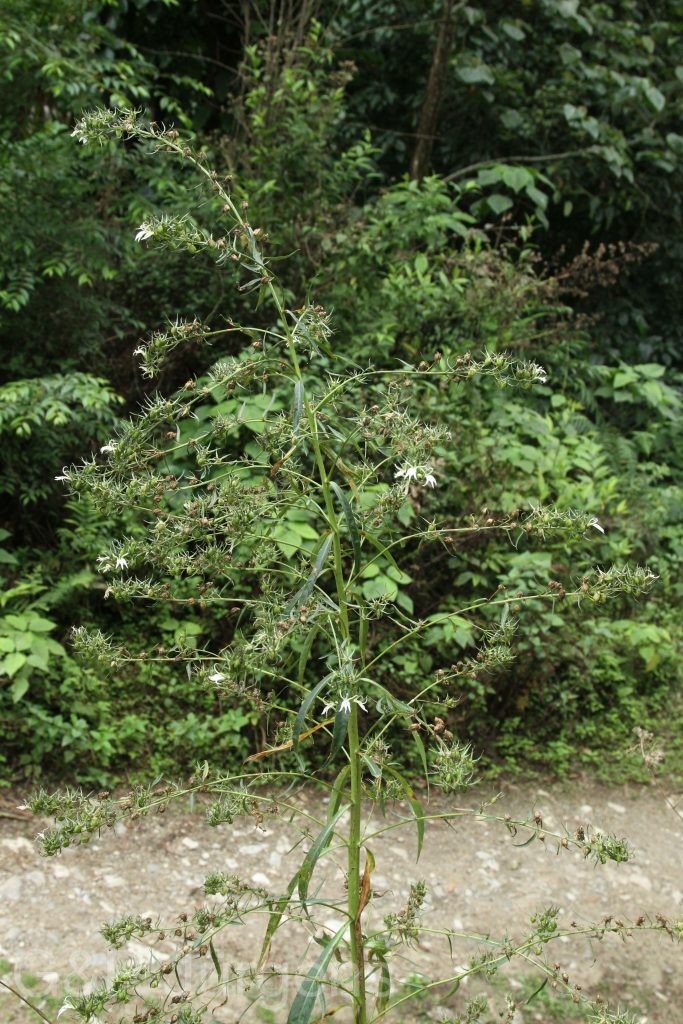
Lobelia nicotianifolia is a robust, wide-ranging lobelia of the Indian subcontinent and tropical Asia, documented from India, China, Sri Lanka, Nepal, the Philippines, Thailand, Myanmar, Indonesia, Bangladesh, Vietnam, Bhutan, Laos, Malaysia and Taiwan, with around 763 occurrences making it one of the better-collected species in this set; New World records reflect cultivation or error. It occupies a wide altitudinal span, from warm foothill farmland to cool montane forest margins, favouring open, disturbed, moist ground along roadsides, clearings and field edges. The Bhutanese collections illustrate this breadth, ranging from a farm at Trithangebe at about 800 m in May to the Dochu-La between roughly 2700 and 3000 m flowering in September and October.
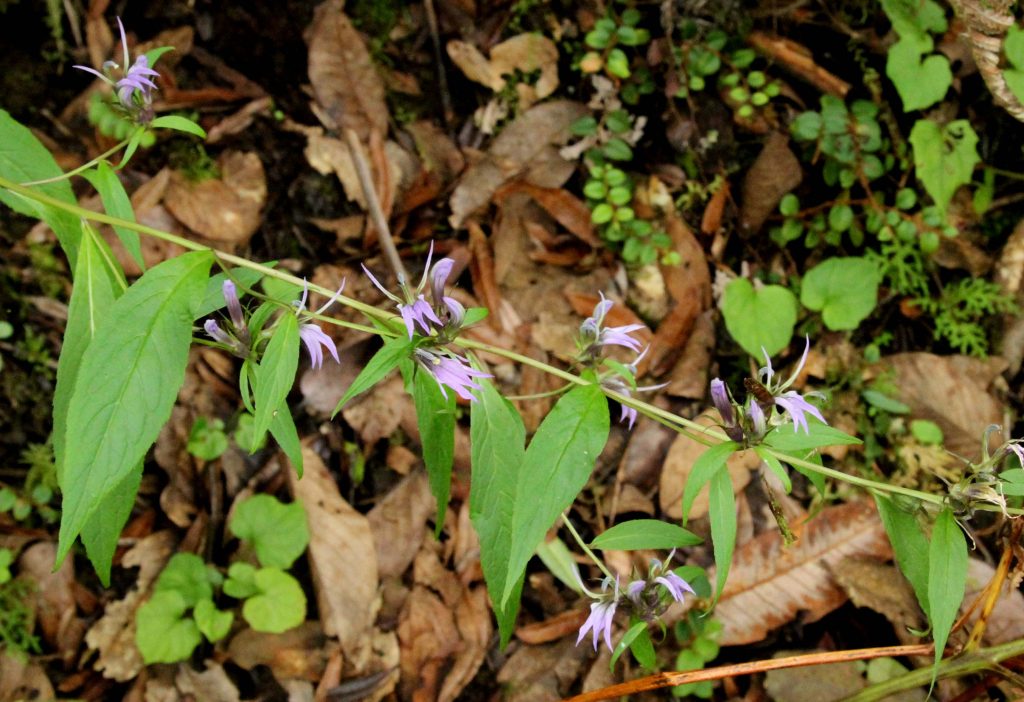
It is a tall, stout biennial or short-lived perennial herb, sometimes exceeding two metres, with an erect, little-branched stem exuding acrid milky latex when cut. The leaves are large, alternate, lanceolate to elliptic, finely toothed and tobacco-like in size and texture, hence the epithet nicotianifolia, the lower ones forming a substantial basal array. The flowers are borne in a long, dense terminal raceme; each is zygomorphic with a tubular, two-lipped corolla, typically pale greenish-white to bluish, split nearly to the base, the upper lip of two narrow lobes and the lower of three, the stamens connate into a staminal tube around the style. The fruit is a many-seeded capsule dehiscing at the apex.
Within Campanulaceae, Lobelia is a large genus distinguished by strongly bilabiate flowers and syngenesious anthers, and tall species such as this are notable for their imposing single-stemmed inflorescences and their pyridine alkaloids related to lobeline, giving them a long history of medicinal and folk use. The acrid latex deters herbivores, and the protandrous flowers favour outcrossing by insect visitors. Common and adaptable across a vast range, the species is of no conservation concern and behaves as a colonist of disturbed, anthropogenic habitats.
Author: Roth · Sources: POWO (Kew), GBIF, Flora of Bhutan, Flora of China, Flora of British India, Lammers's monographic studies of Lobelia (Campanulaceae)