
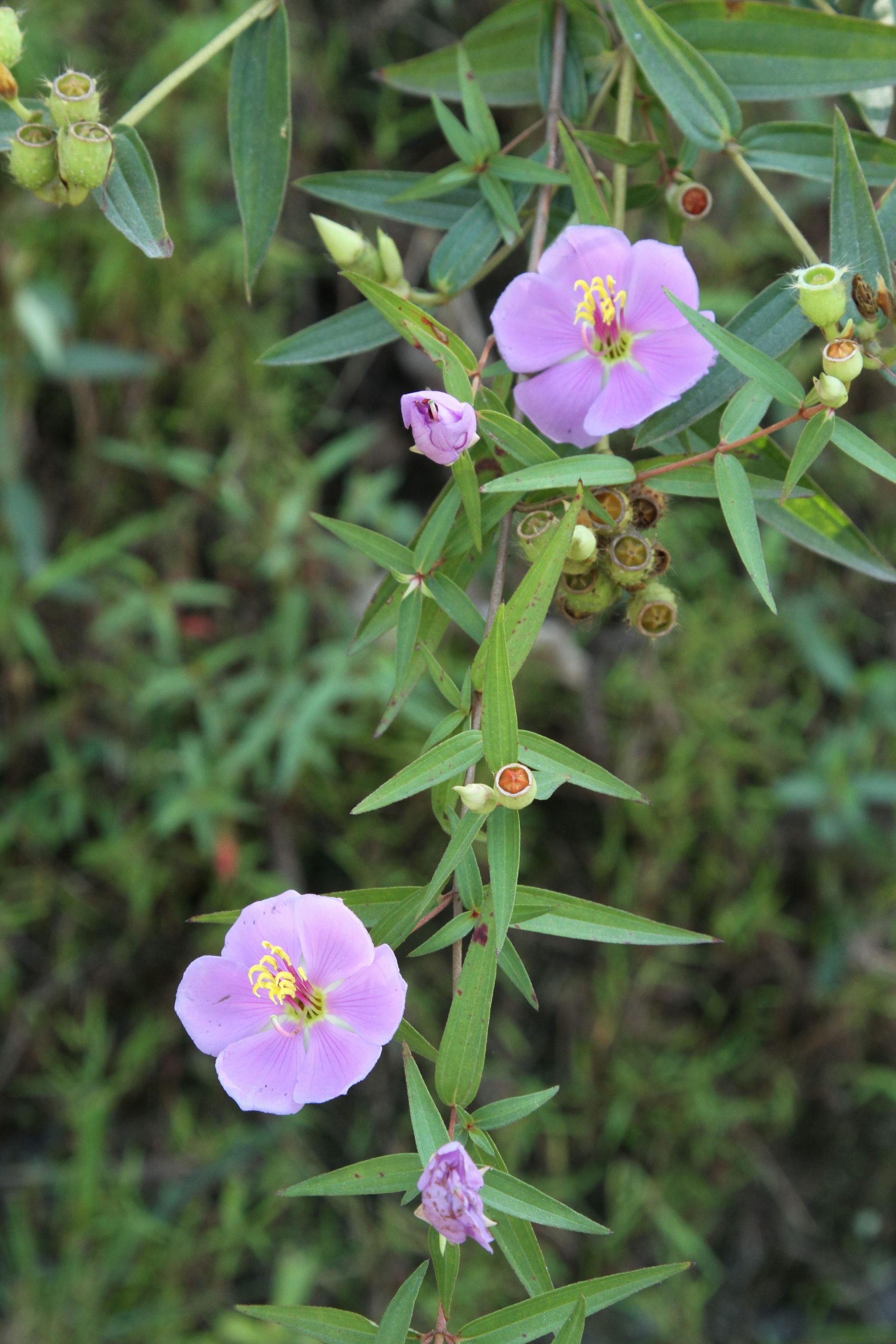
Wall.
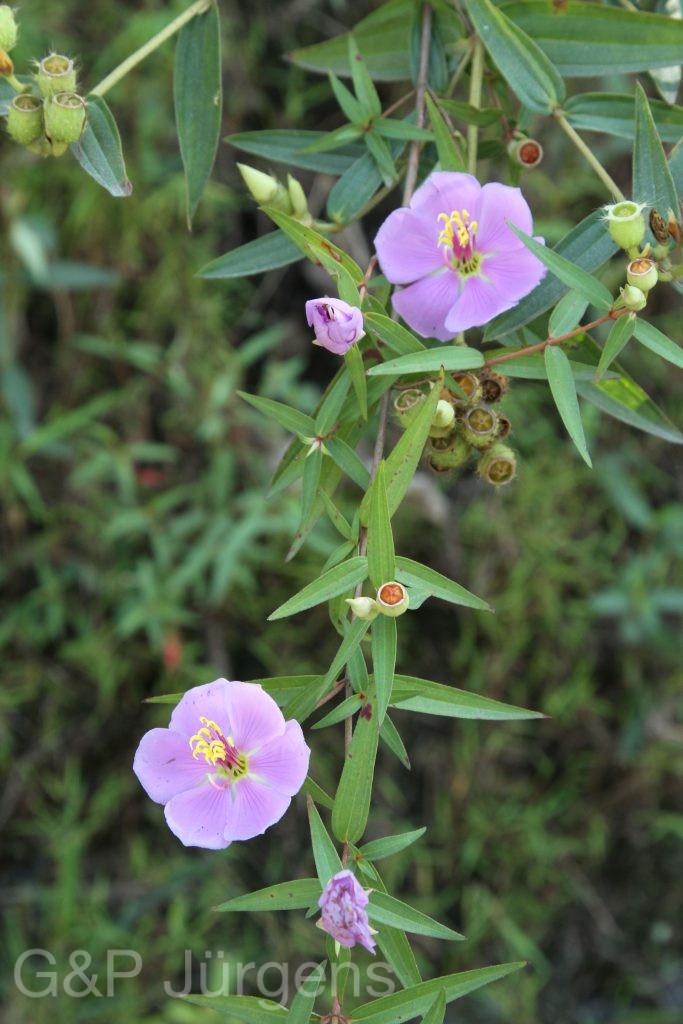
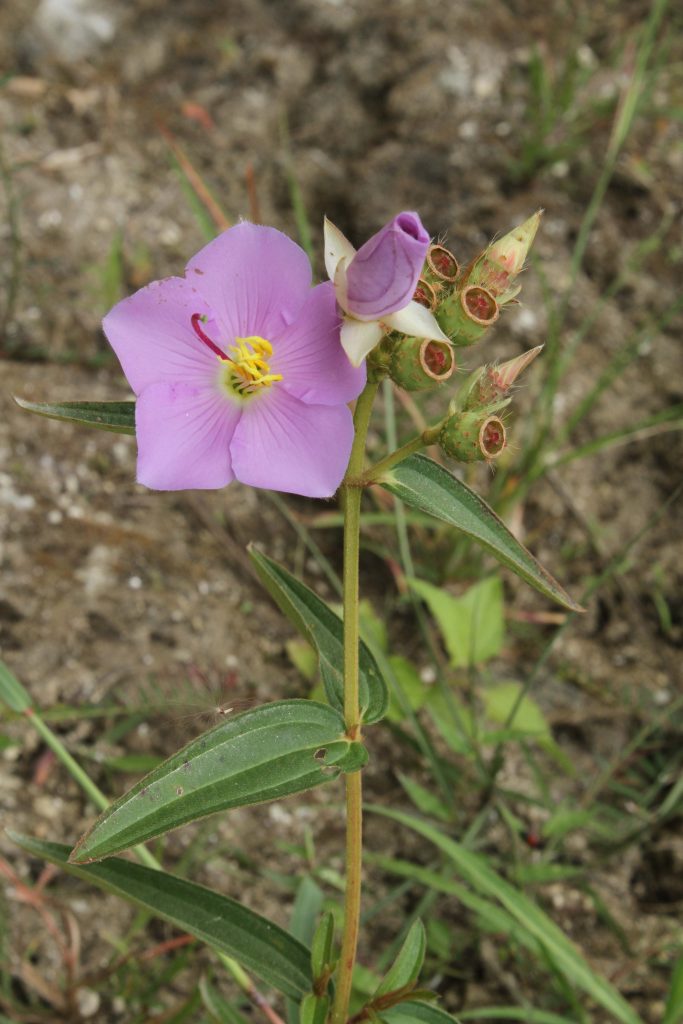
Description
Osbeckia nutans Wall. is a subshrubby herb of the eastern Himalaya and adjoining Southeast Asia, recorded by GBIF (71 occurrences) from India, Nepal, Bhutan, Myanmar and Vietnam. It is a plant of open hillsides, grassy banks, forest clearings and roadside scrub in the subtropical to lower temperate zone, flowering chiefly in the autumn months. The cited Bhutanese material, gathered near Wangdue Phodrang at 1700 m in October and at 2700 m in September, illustrates its tolerance of a fairly wide altitudinal span on the warm, humid southern slopes where it colonises disturbed and seasonally moist ground.
The plant is an erect to ascending perennial with quadrangular, often setose stems bearing opposite, sessile to subsessile leaves. The leaf blades are lanceolate to ovate-lanceolate with the characteristic melastomataceous three-to-five strongly arcuate longitudinal nerves, and the surfaces are clothed in stiff appressed bristles. As the epithet nutans implies, the flowers or buds are inclined to nodding; the showy pink to purplish blooms have four petals, a setose, urceolate hypanthium, and the typical Melastomataceae androecium of geniculate stamens with elongate, beaked anthers opening by terminal pores. The fruit is a setose, urceolate capsule enclosed in the persistent hypanthium.
Osbeckia is a palaeotropical genus of around 50 species centred on tropical Asia, distinguished from the related Melastoma by its smaller, dry, pore-opening capsules. Its poricidal anthers are adapted to buzz-pollination by bees. Several Osbeckia species have ethnomedicinal uses in the region. Osbeckia nutans is locally frequent and not regarded as threatened, persisting well in open and lightly disturbed habitats.
Author: Wall. · Sources: POWO (Kew), GBIF, Flora of Bhutan, Flora of China, Melastomataceae of the Indian Subcontinent, Hansen monograph on Osbeckia