
Klatt
Description
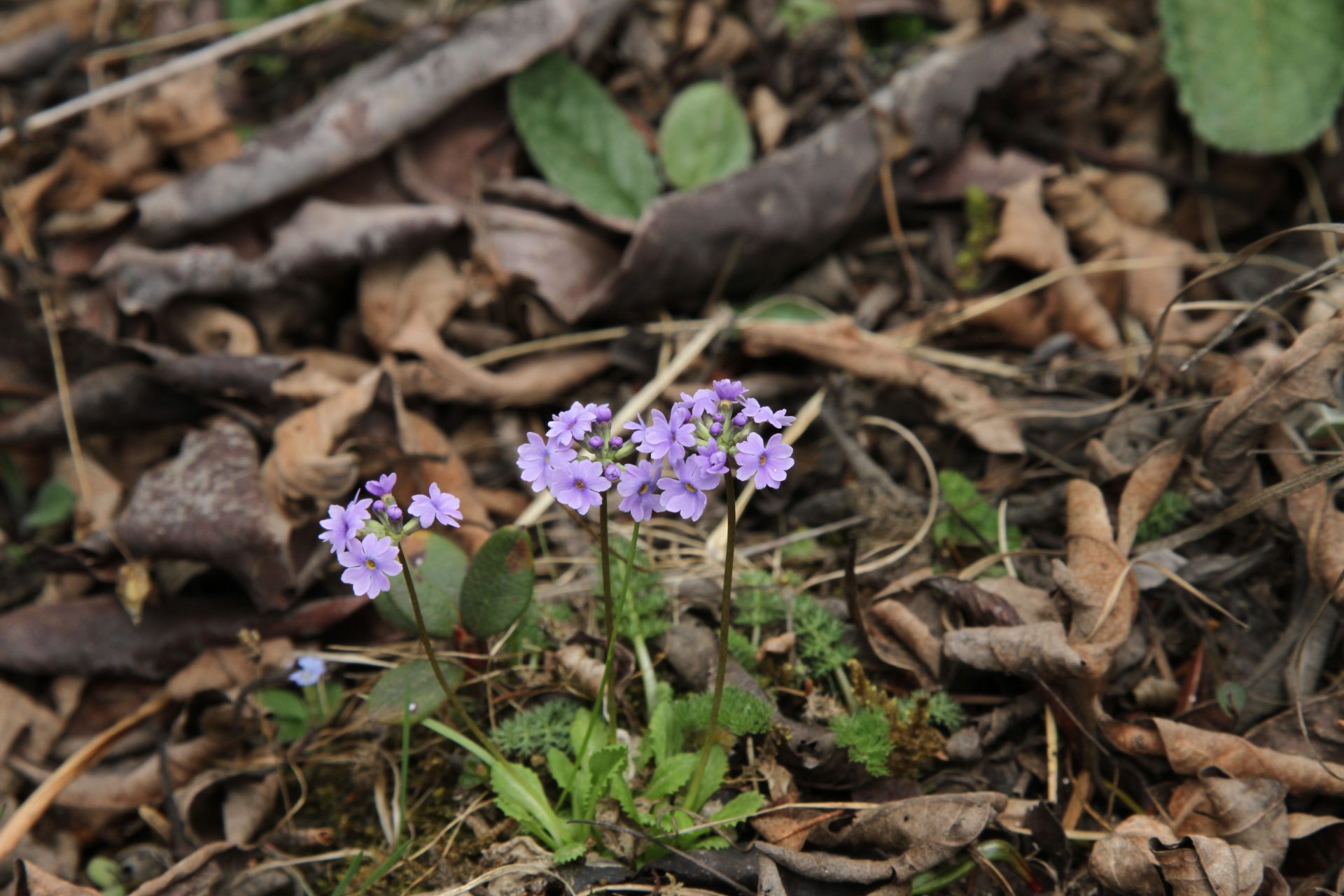
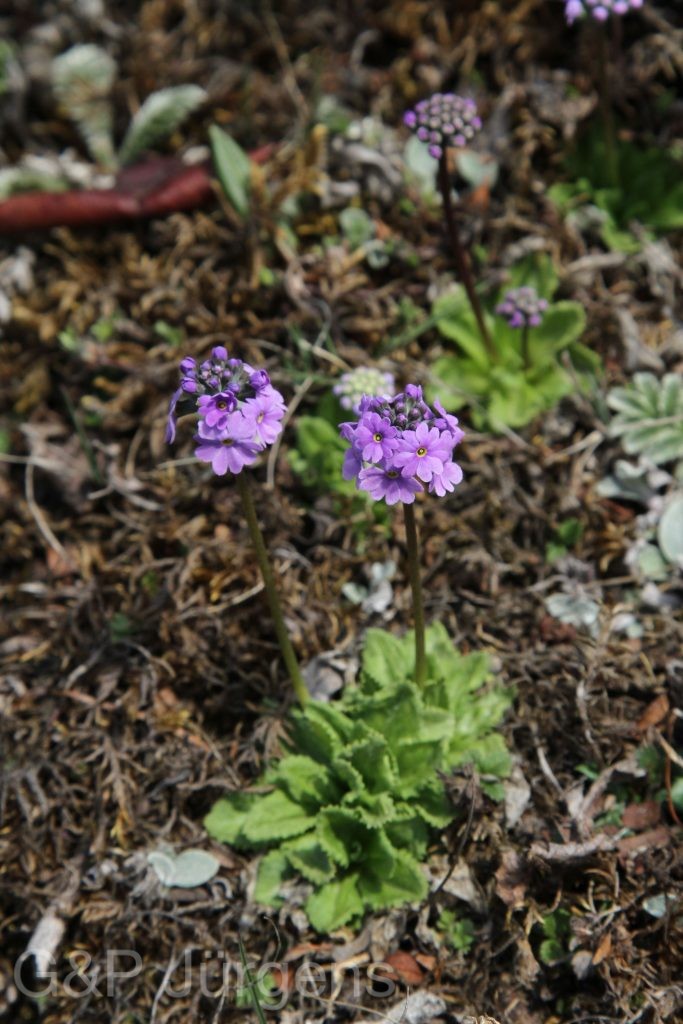
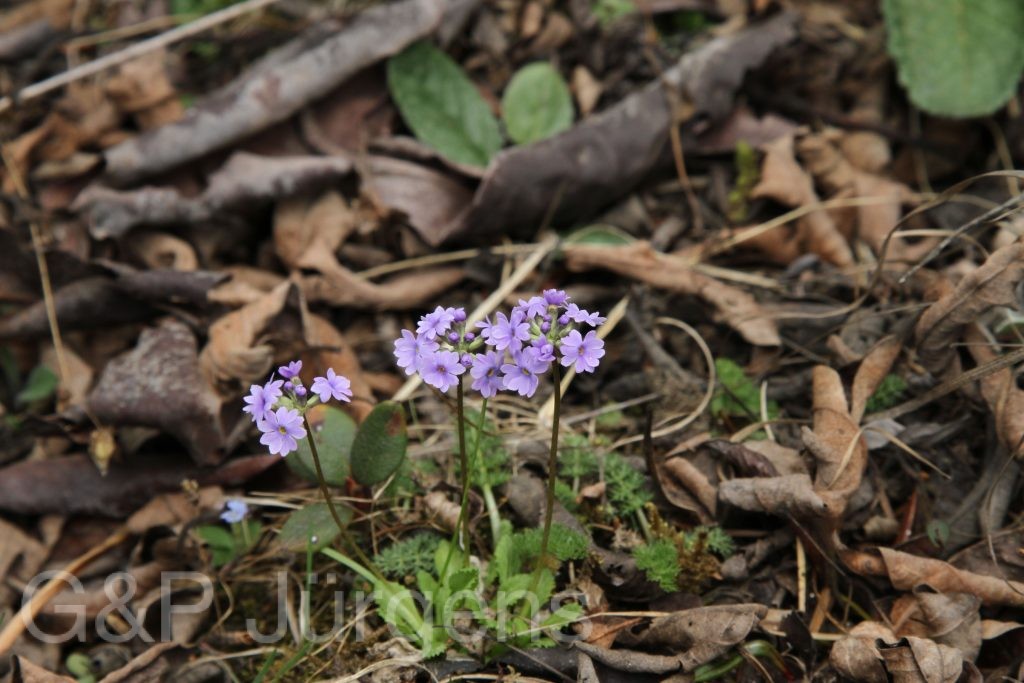
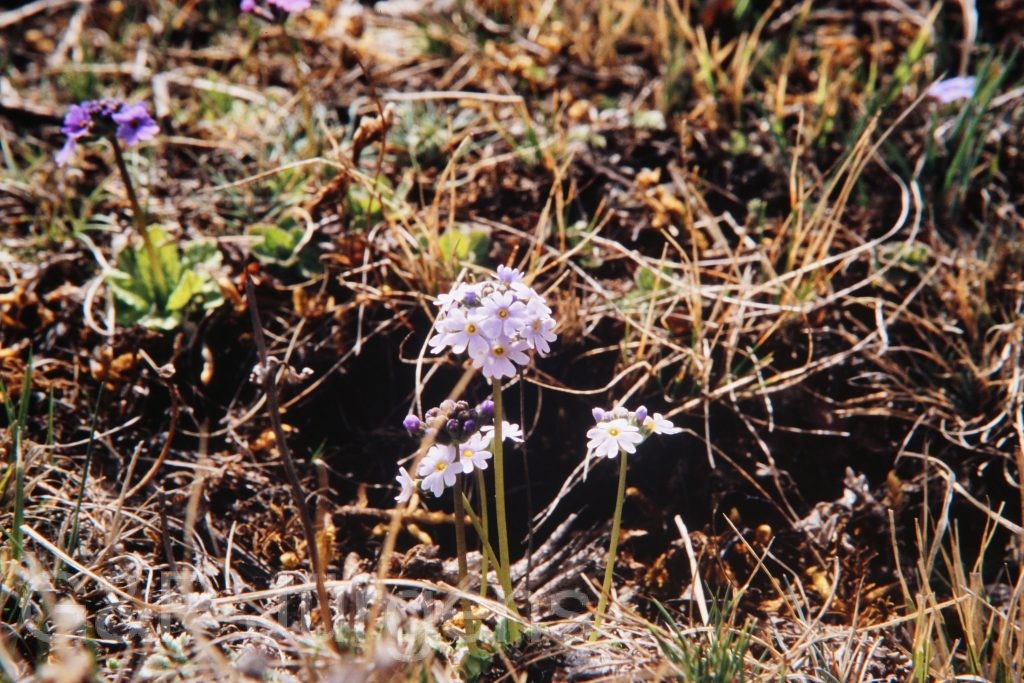
Primula glabra is a dwarf alpine primrose of the eastern Himalaya, distributed through China (south-eastern Tibet), Nepal, India, Bhutan and Myanmar, with GBIF logging 196 occurrences across this Sino-Himalayan zone. It is a plant of high alpine turf, moist meadows, rocky slopes, snowmelt flushes and damp gravelly ground above the treeline, broadly between 3800 and 4500 m. The photographed plants from the Chele-La pass in western Bhutan, at 3950-4000 m flowering in May and June, exemplify its preference for cold, open, snow-influenced alpine sites where it blooms among rocks and short turf as the snow melts in early summer.
The species is a small, glabrous (hence the epithet), tufted perennial herb, lacking the farinose (mealy) coating found in many alpine primulas. The leaves form a basal rosette and are oblanceolate to spathulate, entire to finely toothed, narrowing into an indistinct petiole. Flowers are borne in a compact terminal umbel atop a short scape, or sometimes nearly sessile among the leaves. Each flower has a tubular calyx and a salverform corolla, typically pink to purplish or violet with a contrasting paler or yellowish eye, the limb spreading into five notched lobes. The species is heterostylous, producing pin and thrum flowers. The fruit is a small capsule dehiscing to release numerous minute seeds.
Described by Klatt, the species belongs to the vast genus Primula, within the alpine sections (allied to section Minutissimae or related dwarf cushion groups) that radiated extensively across the high Sino-Himalaya. Its heterostylous breeding system promotes outcrossing by long-tongued alpine insects. As a specialist of high, snow-fed alpine habitats it is potentially vulnerable to climatic warming and upslope habitat compression, though its broad regional range currently buffers it; it remains formally unassessed.
Author: Klatt · Sources: POWO (Kew), GBIF, Flora of China, Flora of Bhutan, The Genus Primula in Cultivation and the Wild (Richards)