
D. Don
Description
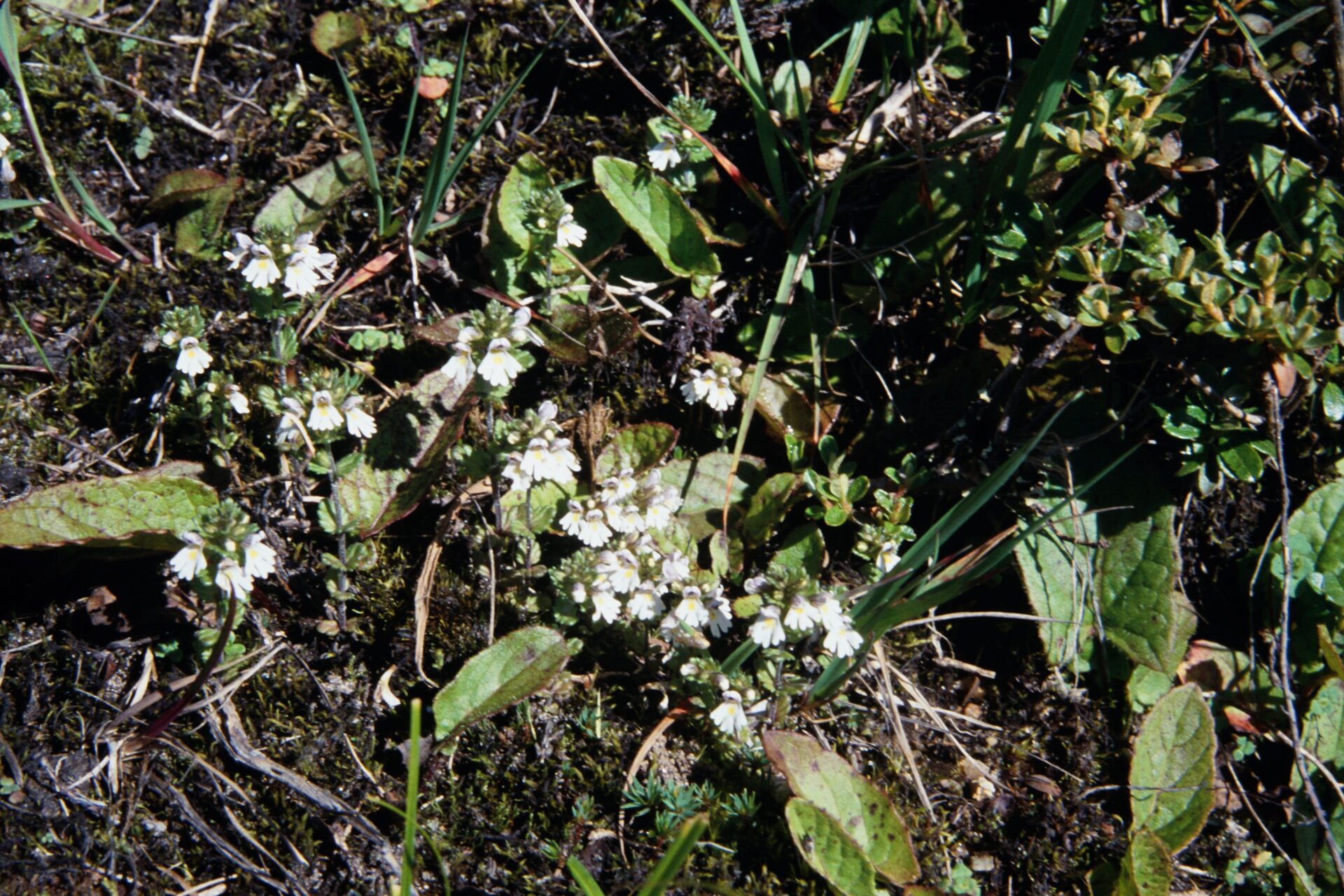
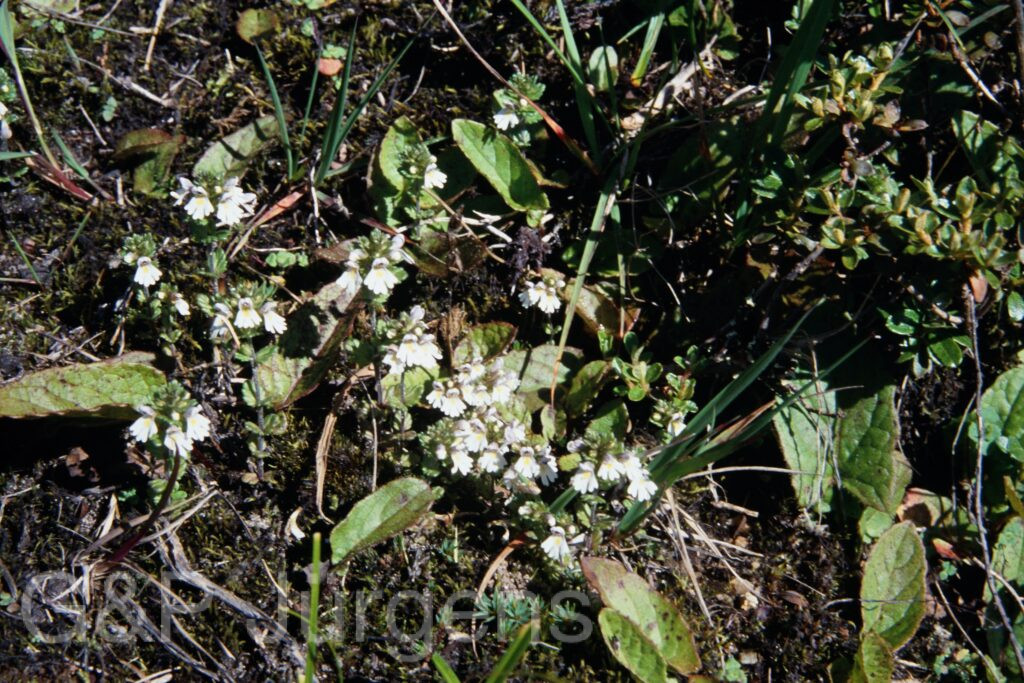
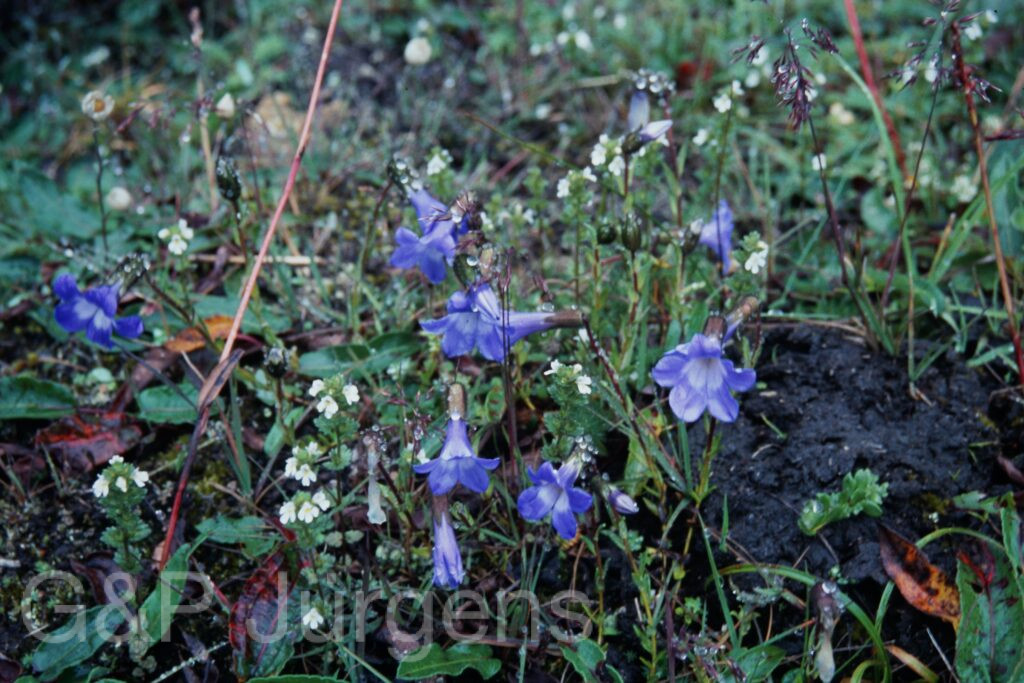
Euphrasia simplex is an alpine eyebright of the Himalaya, recorded from India and Nepal, and known from only a handful of georeferenced occurrences (five in GBIF), reflecting both its small stature, which makes it easily overlooked, and its restricted high-altitude range. It is a plant of short alpine turf, open grassy slopes and moist meadows above treeline. The illustrated material from Dzongri in Sikkim, gathered at about 4100 m in August, is characteristic of its occurrence high in the eastern Himalayan alpine zone, where it flowers in the late-summer growing season among low alpine vegetation.
The plant is a small, slender annual, as the epithet simplex suggests often little-branched or unbranched, with an erect, leafy stem. The leaves are small, opposite, sessile and ovate with a few coarse, often bristle-tipped teeth. The flowers are borne in the axils of the upper leaves, forming a leafy terminal spike; each has a tubular, four-lobed calyx and a two-lipped (bilabiate) corolla, the upper lip hooded and the lower lip three-lobed and spreading, the whole typically white to pale lilac with darker veining and a yellow throat-blotch. The fruit is a small, flattened, two-valved capsule containing several seeds.
Like other members of its genus, E. simplex is a hemiparasite, photosynthetic but attaching by haustoria to the roots of neighbouring grasses and herbs to draw water and nutrients; the genus has been transferred from the traditional Scrophulariaceae to the Orobanchaceae in light of this parasitic habit and molecular evidence. Euphrasia is notoriously difficult taxonomically owing to plasticity and hybridisation, and the high-altitude Himalayan species are imperfectly known. Its rarity in collections makes the status of E. simplex uncertain, and further field survey would clarify its true distribution and abundance.
Author: D. Don · Sources: POWO (Kew), GBIF, Flora of Nepal, Annotated Checklist of the Flowering Plants of Nepal, Yeo: monographic studies of the genus Euphrasia