
Ser.
Description
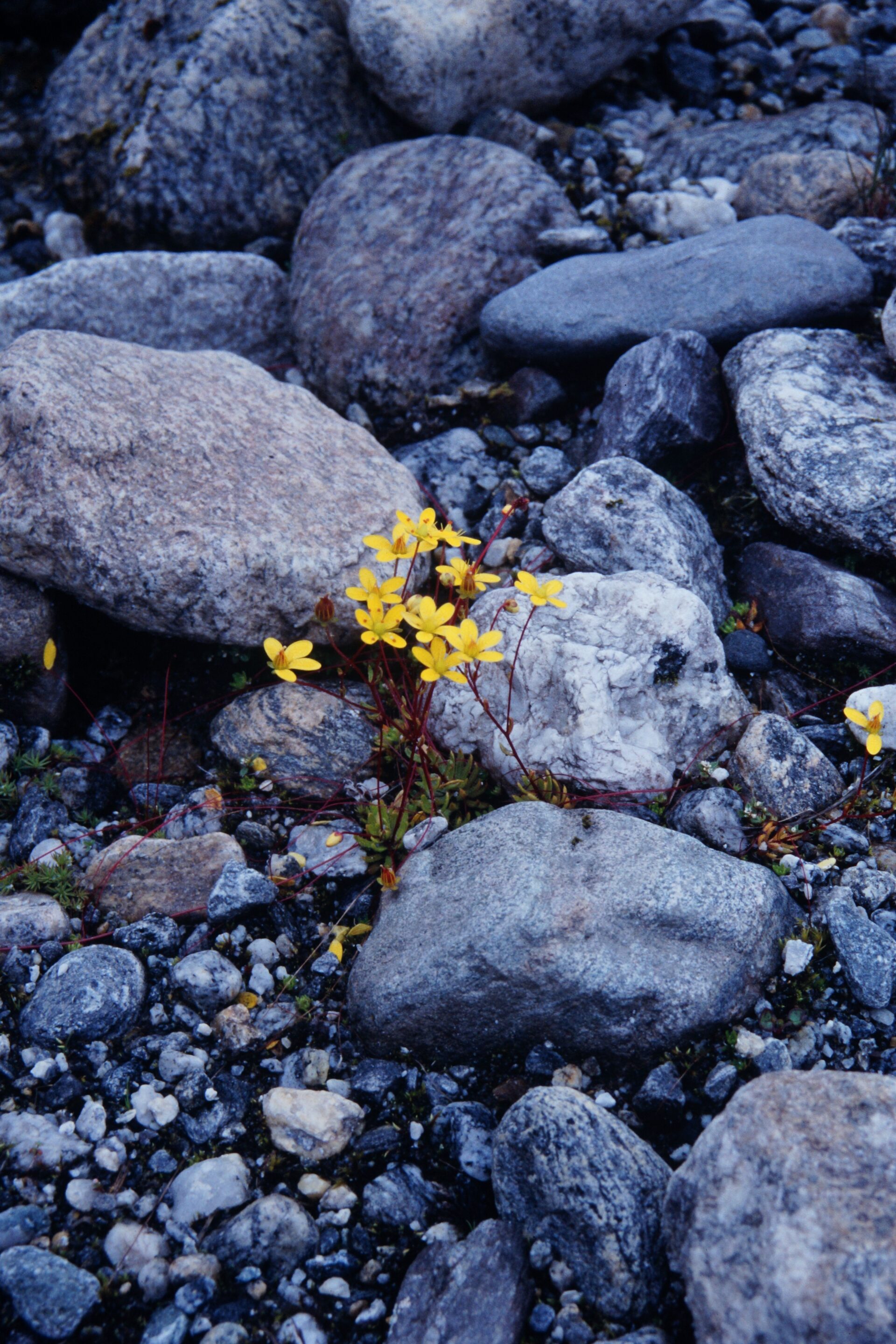
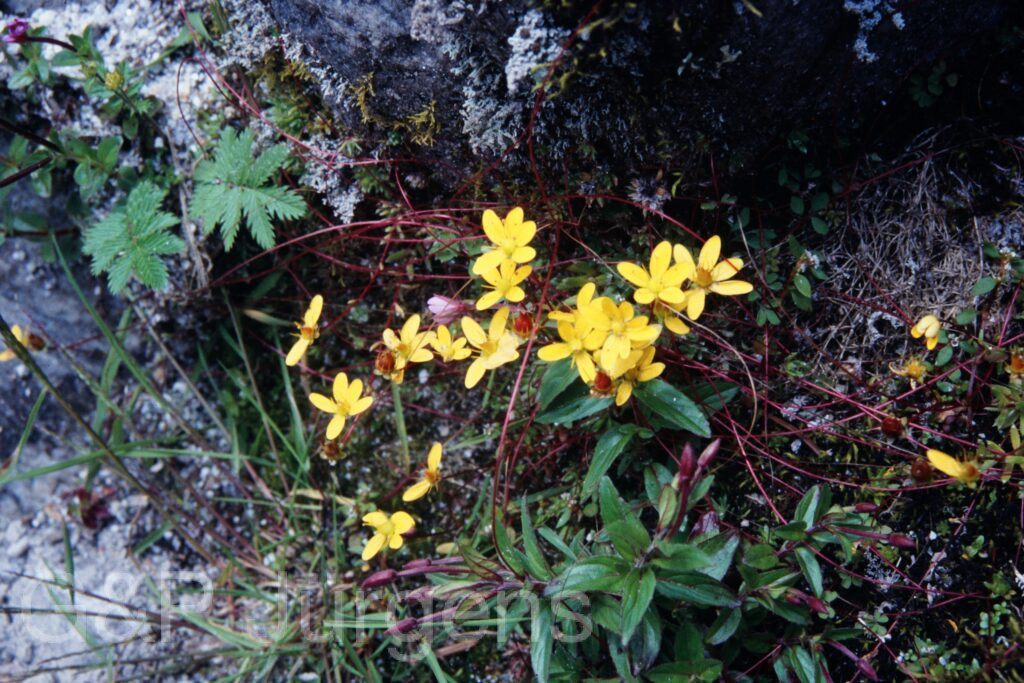
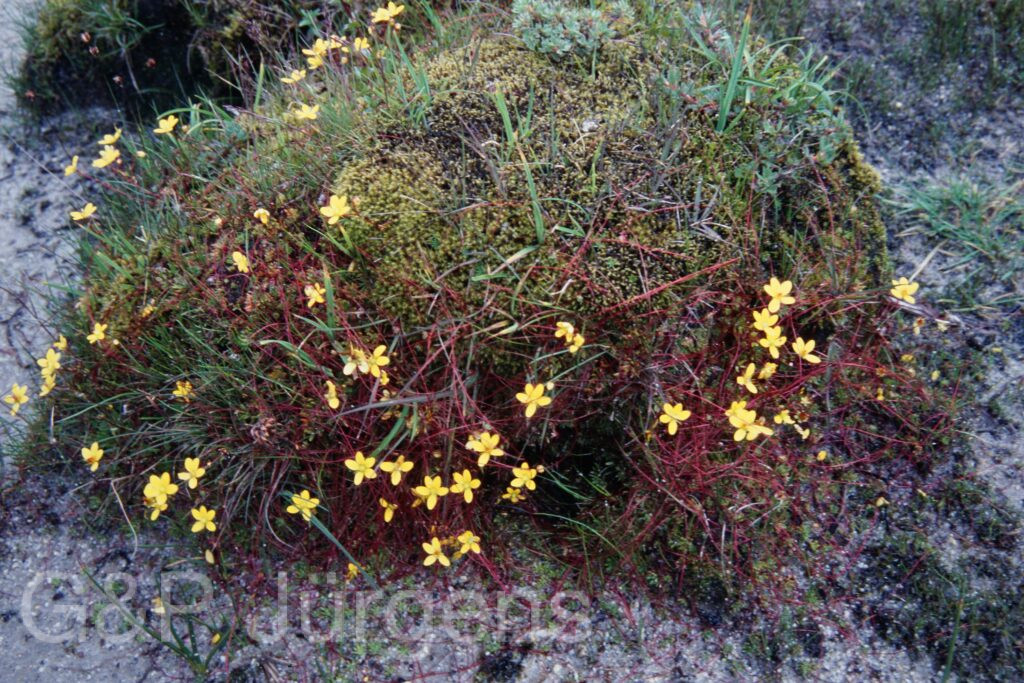
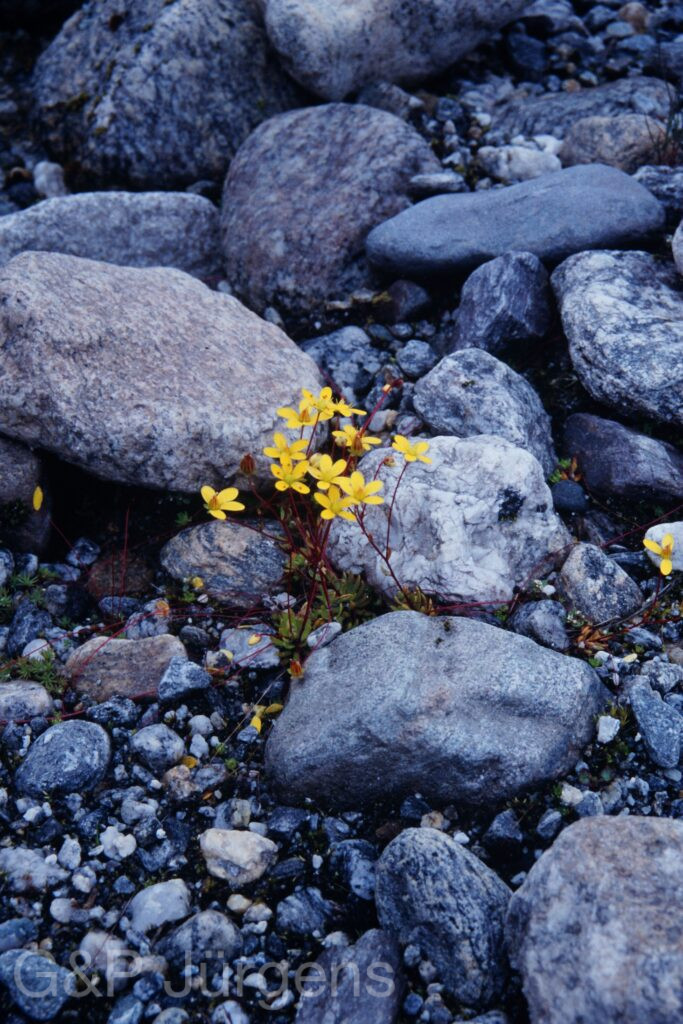
Saxifraga brunonis is a high-alpine cushion-forming herb of the Himalaya and adjacent Tibetan ranges. GBIF records confirm its distribution through Nepal, India, China, Bhutan, Bangladesh, Myanmar and Pakistan, with around 332 occurrences concentrated in the eastern Himalayan high mountains. It is a plant of moist rock ledges, cliff crevices, mossy banks and stable scree at the upper limits of the alpine zone, often where seepage keeps the substrate cool and damp through the growing season. The photographed material from Dzongri in Sikkim at 3900–4200 m, collected in August, is characteristic of its preferred habitat in the summer-monsoon-watered alpine belt, where it flowers at the height of the brief growing season.
It forms low, spreading mats by means of slender, reddish, filiform stolons that root at the nodes to give rise to new rosettes. The leaves are small, oblong to spathulate, entire, fleshy and ciliate-margined, crowded into dense basal rosettes. The flowering stems are short and few-flowered, bearing bright yellow flowers with five free, spreading petals, ten stamens and a half-inferior to nearly superior bicarpellate ovary. The fruit is a two-beaked capsule dehiscing to release numerous minute seeds.
Within the large and taxonomically complex genus Saxifraga, S. brunonis is placed in section Ciliatae, a predominantly Sino-Himalayan group of stoloniferous and rosette-forming alpines. Its runner-mediated clonal spread is an effective strategy for colonising unstable rock surfaces, while seed reproduction allows dispersal to fresh sites. As a strictly high-altitude endemic of the central and eastern Himalaya, the species is potentially sensitive to the upward shift of alpine vegetation belts driven by climate warming.
Author: Ser. · Sources: POWO (Kew), GBIF, Flora of Bhutan, Flora of China (Saxifragaceae), Saxifrages of the World (Webb & Gornall)