
Hook. f.
Description
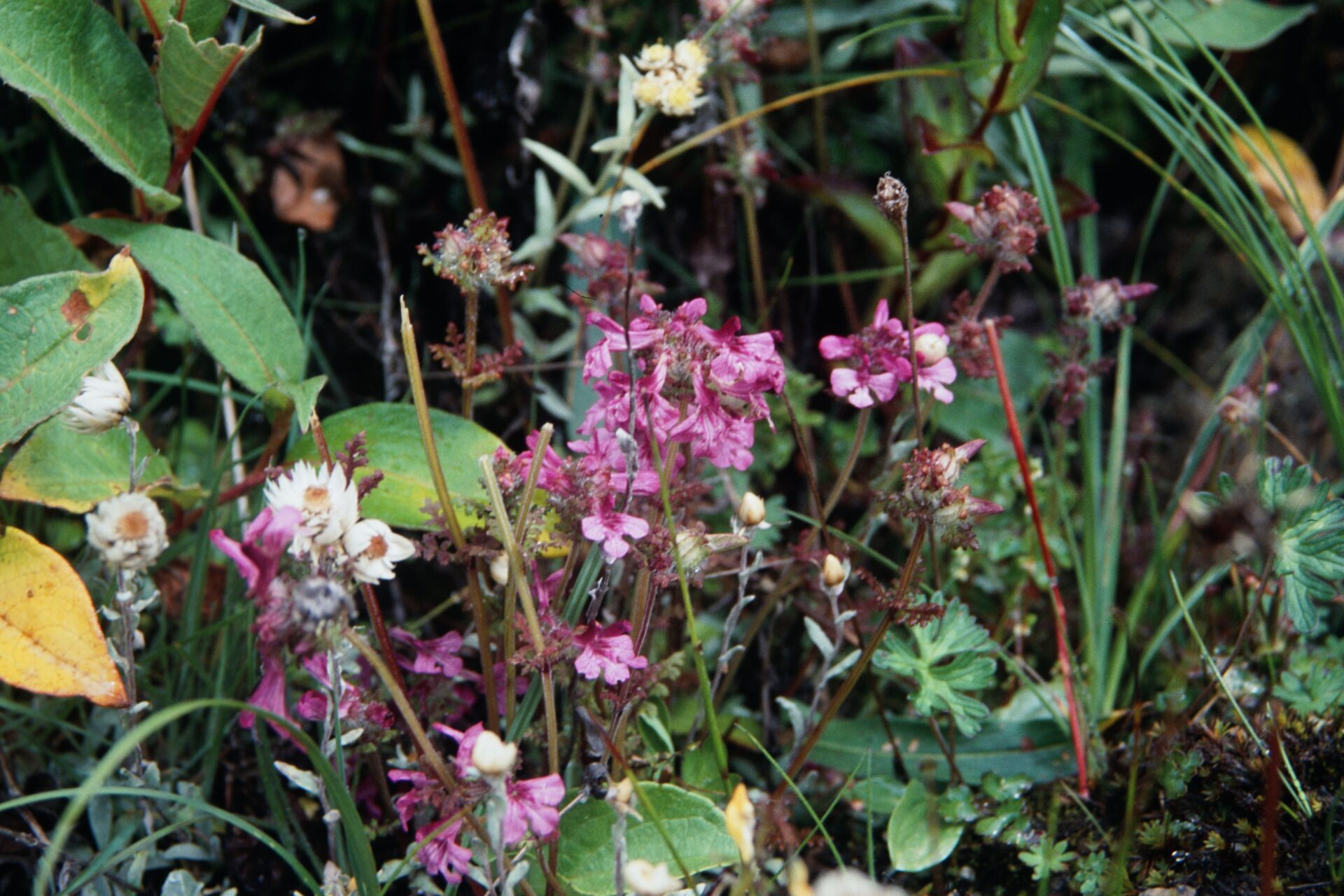
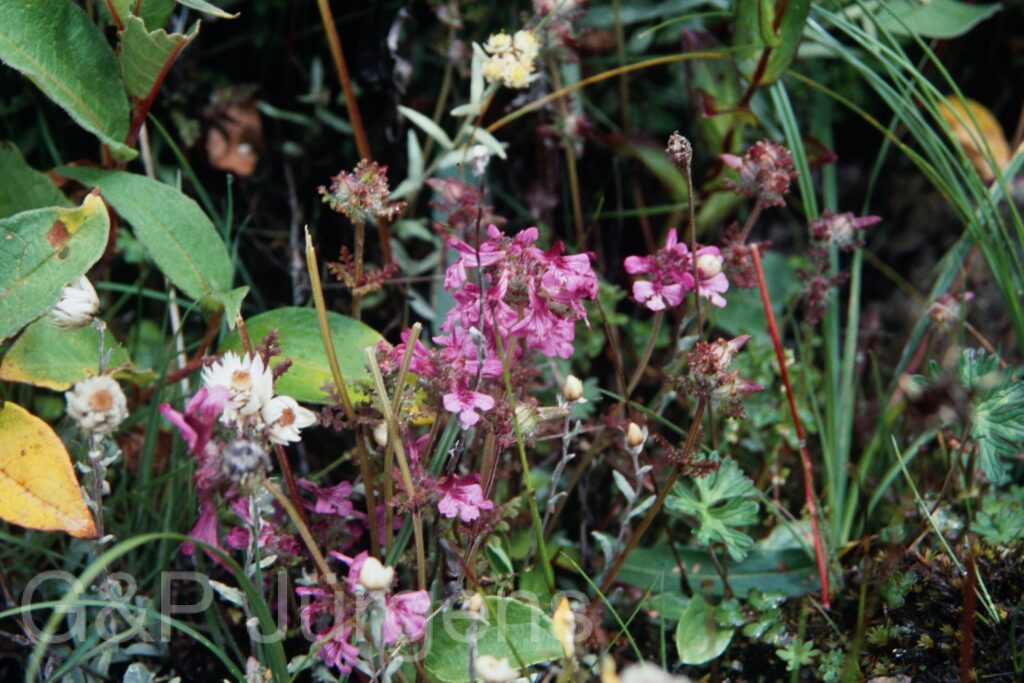
Pedicularis globifera is a Sino-Himalayan hemiparasite distributed across China (CN), Nepal (NP), India (IN) and Bhutan (BT), with 293 GBIF occurrences indicating it is reasonably frequent through the central and eastern Himalaya. It inhabits open alpine meadows, damp grassy slopes and the margins of seepages and streams in the high subalpine to alpine zone, commonly between about 3500 and 4500 m. The figured plant was photographed in the Lachung Valley of Sikkim at around 3600 m in August, at the height of the monsoon flowering period when alpine Pedicularis are most conspicuous.
It is a perennial herb with a thickened rootstock, the parasitic roots forming haustoria on host grasses and sedges. Stems are erect, bearing leaves that are pinnately lobed to pinnatisect with crenate-toothed segments. The flowers are arranged in a dense, head-like or globose terminal cluster, the feature evoked by the epithet globifera. The calyx is tubular and lobed; the corolla is bilabiate, with an arched, beakless or shortly beaked galea forming the upper lip and a broad three-lobed lower lip. The four didynamous stamens lie within the galea. Fruit is an oblique, compressed capsule enclosing several seeds.
Pedicularis reaches its global diversity peak in the high mountains of western China and the Himalaya, and species such as P. globifera contribute to the spectacular alpine displays of these grasslands while playing an ecological role as bumblebee-pollinated hemiparasites that influence community structure. The genus is now firmly placed in Orobanchaceae following recognition of its parasitic biology and phylogenetic position.
Author: Hook. f. · Sources: POWO (Kew), GBIF, Flora of China, Flora of Nepal, Flora of Bhutan, Tsoong's Monograph of the genus Pedicularis