
(Link) Tirveng.
Description
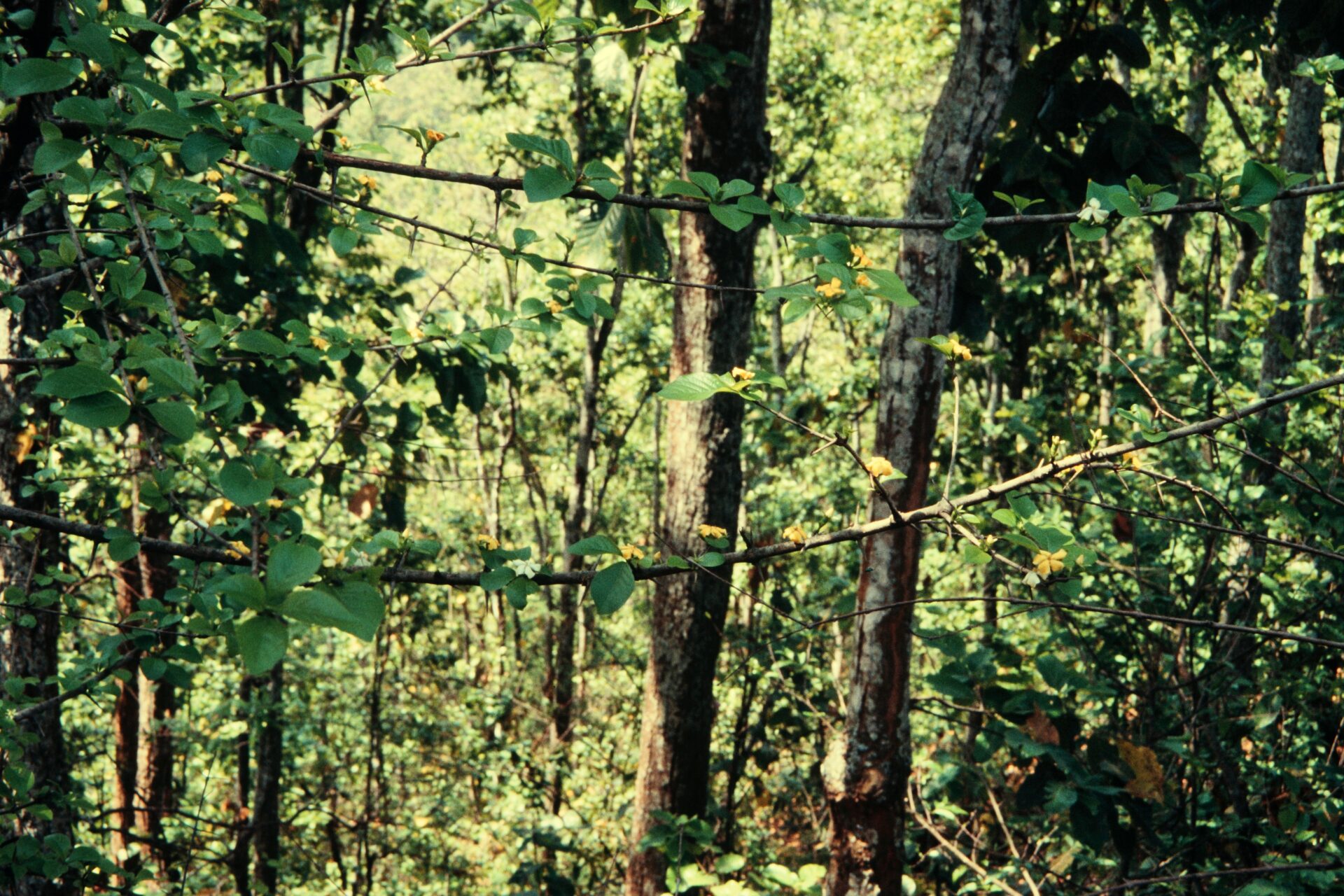
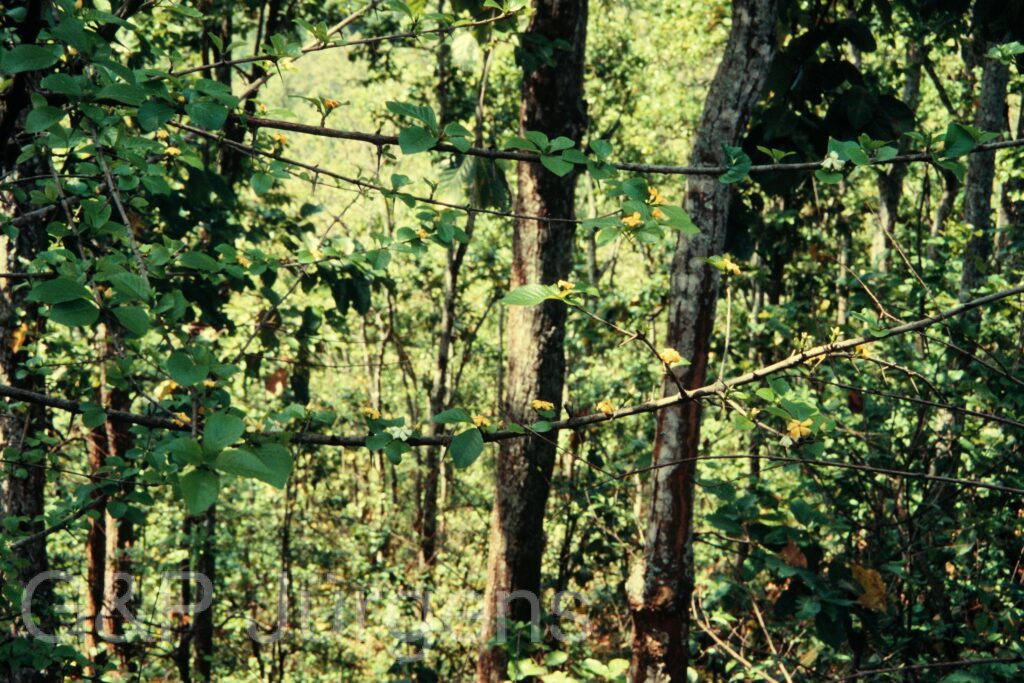
Catunaregam longispina is a spiny shrub or small tree of tropical and subtropical Asia, distributed from India and Nepal through Bhutan, Myanmar, Thailand, Cambodia and Vietnam. GBIF records about 165 occurrences across this range, concentrated in the Indian subcontinent and mainland South-East Asia. It is a plant of dry deciduous and mixed forest, thorn scrub, open hillsides and disturbed ground at low elevations, typically in the warm subtropical foothill and plains zone. The population imaged at Dhoban in Nepal (740 m, April) is characteristic of its habitat in the warm, seasonally dry hill country of the lower Himalayan foreland, flowering in spring before the monsoon.
The plant is a much-branched, often armed shrub bearing stout, straight, axillary thorns from which the epithet derives. The leaves are opposite or fascicled on short shoots, obovate to elliptic, entire, often clustered at the nodes, with interpetiolar stipules. The flowers are solitary or few at the shoot tips, fragrant, with a campanulate calyx and a salver- to funnel-shaped corolla that opens white or cream and frequently ages to yellow, the five lobes spreading and contorted in bud. Five stamens are inserted in the corolla throat and the ovary is inferior. The fruit is a leathery to woody, globose berry crowned by the persistent calyx and containing numerous seeds embedded in pulp.
Catunaregam (tribe Gardenieae) was segregated from the broadly defined Randia, and this species, transferred by Tirvengadum, has circulated under several synonyms in the Randia/Xeromphis complex; care is needed in distinguishing it from related thorny gardenioid shrubs. As a widespread and adaptable species of secondary and dry forest it is not of conservation concern, and its fruit and bark have local ethnobotanical uses, including as a fish poison and in folk medicine.
Author: (Link) Tirveng. · Sources: POWO (Kew), GBIF, Flora of British India, Flora of Bhutan, Flora of Thailand, Annotated Checklist of the Flowering Plants of Nepal, revision of Catunaregam and allied Gardenieae (Tirvengadum)