
Lodd, G.Lodd. & W.Lodd
Description
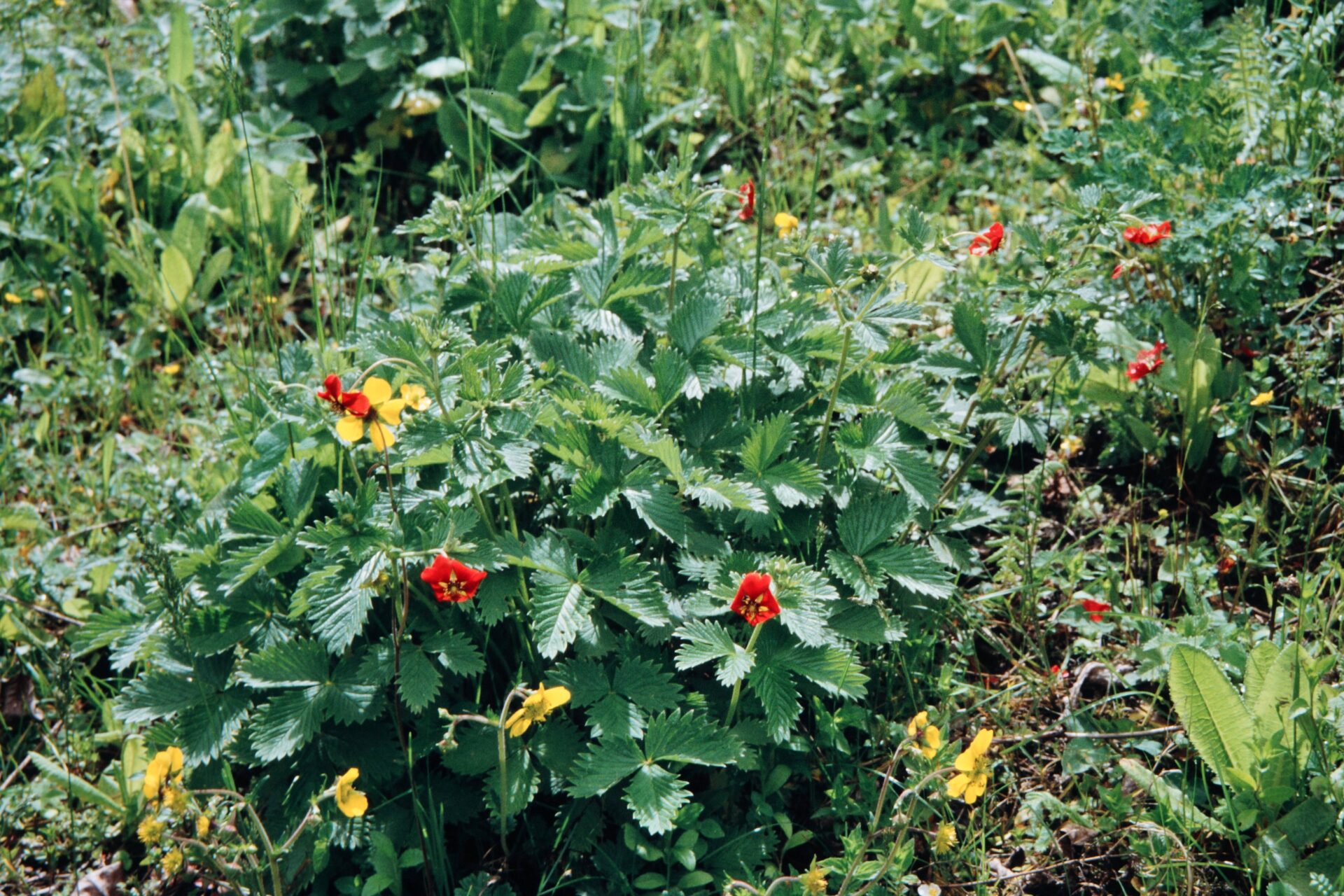
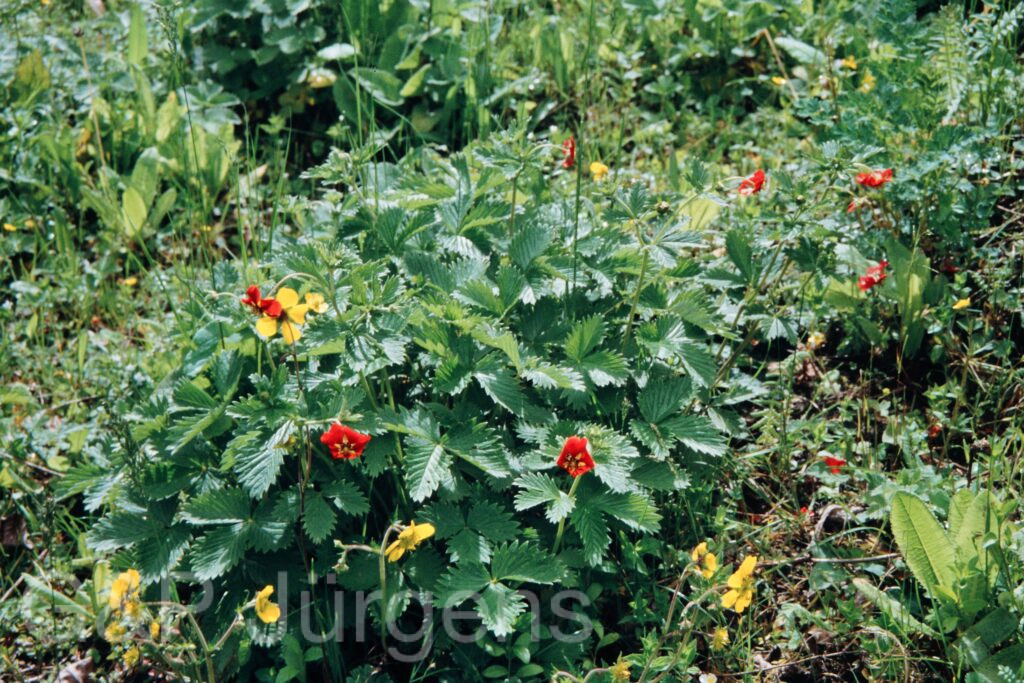
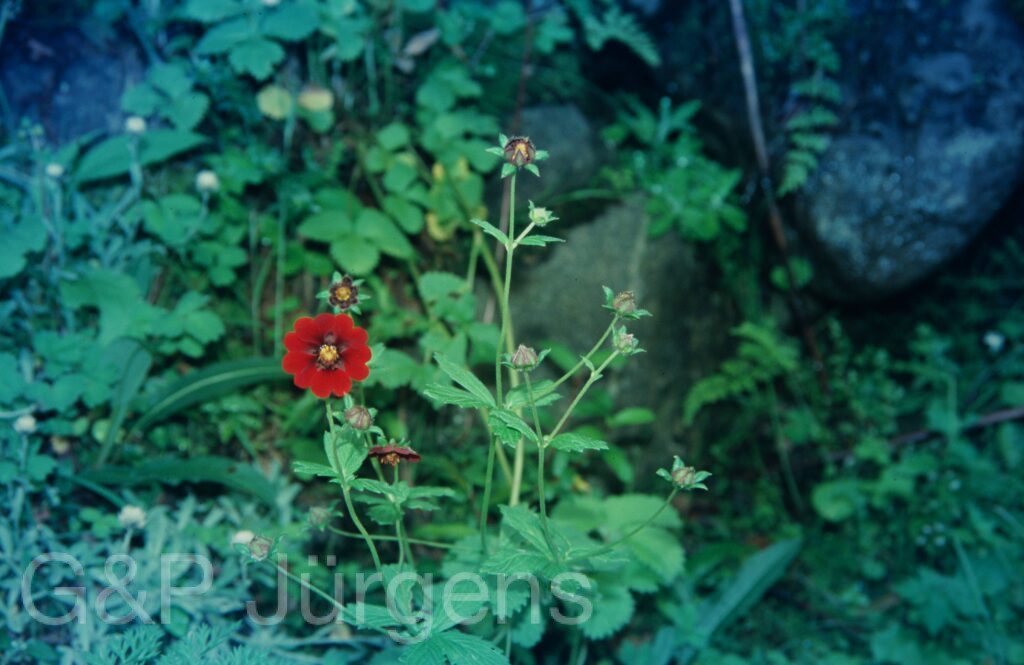
Potentilla atrosanguinea is a Himalayan alpine herb ranging from Pakistan through the western and central Himalaya into Nepal. GBIF documents about 450 occurrences, drawing on native populations in India, Nepal and Pakistan plus numerous cultivated and naturalised records across Europe and North America. It grows in alpine and subalpine meadows, open grassy slopes and rocky ground, typically between about 2500 and 4000 m. The photographed plants come from West Nepal south of Rara Lake at roughly 3600 m in June and the Valley of Flowers in Garhwal, India, at about 3350 m in September, both species-rich high-meadow settings.
The species is a tufted perennial arising from a stout, woody rootstock. The basal leaves are long-petioled and pinnately or digitately compound, with three to five obovate, coarsely toothed leaflets that are green above and densely white-tomentose beneath. The stems are erect, branched and silky-hairy, bearing reduced cauline leaves. The flowers are borne in lax cymes and are showy, with five spreading petals ranging from deep blood-red and orange to occasionally yellow, an epicalyx alternating with the calyx lobes, and numerous stamens. The fruit is an aggregate of small dry achenes on a dry receptacle.
GBIF flags the recorded name as a SYNONYM, with Potentilla atrosanguinea as the accepted name. The species is variable in flower colour and leaf division, and several varieties and segregates have been recognised. Its richly coloured forms have entered horticulture and underlie garden hybrids. Widespread and common across its native alpine range, it is of no conservation concern and is an important component of Himalayan meadow communities.
Author: Lodd, G.Lodd. & W.Lodd · Sources: POWO (Kew), GBIF, Flora of Nepal, Flora Simlensis, Th. Wolf: Monographie der Gattung Potentilla