
Wall. ex Duby
Description
Androsace lehmannii Wall. ex Duby is a cushion-forming alpine of the high Himalaya, distributed through Nepal, India, China and Bhutan, with outlying records reported from further across temperate Asia. It is documented from West-Nepal at Kalmura (4200 m) and Baga-La-Phedi (4500 m), from Sikkim at Saniti Lake (4200 m) and from Bhutan along the Ludlow-Sherriff trail near Warrthang-Tso (4400 m), flowering from June to August. The species inhabits open alpine turf, rocky slopes, moraine and gravelly flats, typically between 4000 and 5000 m, where it forms low cushions adapted to wind exposure, intense radiation and a short, cool growing season. Its roughly 158 GBIF records mark it as a genuine high-alpine specialist.
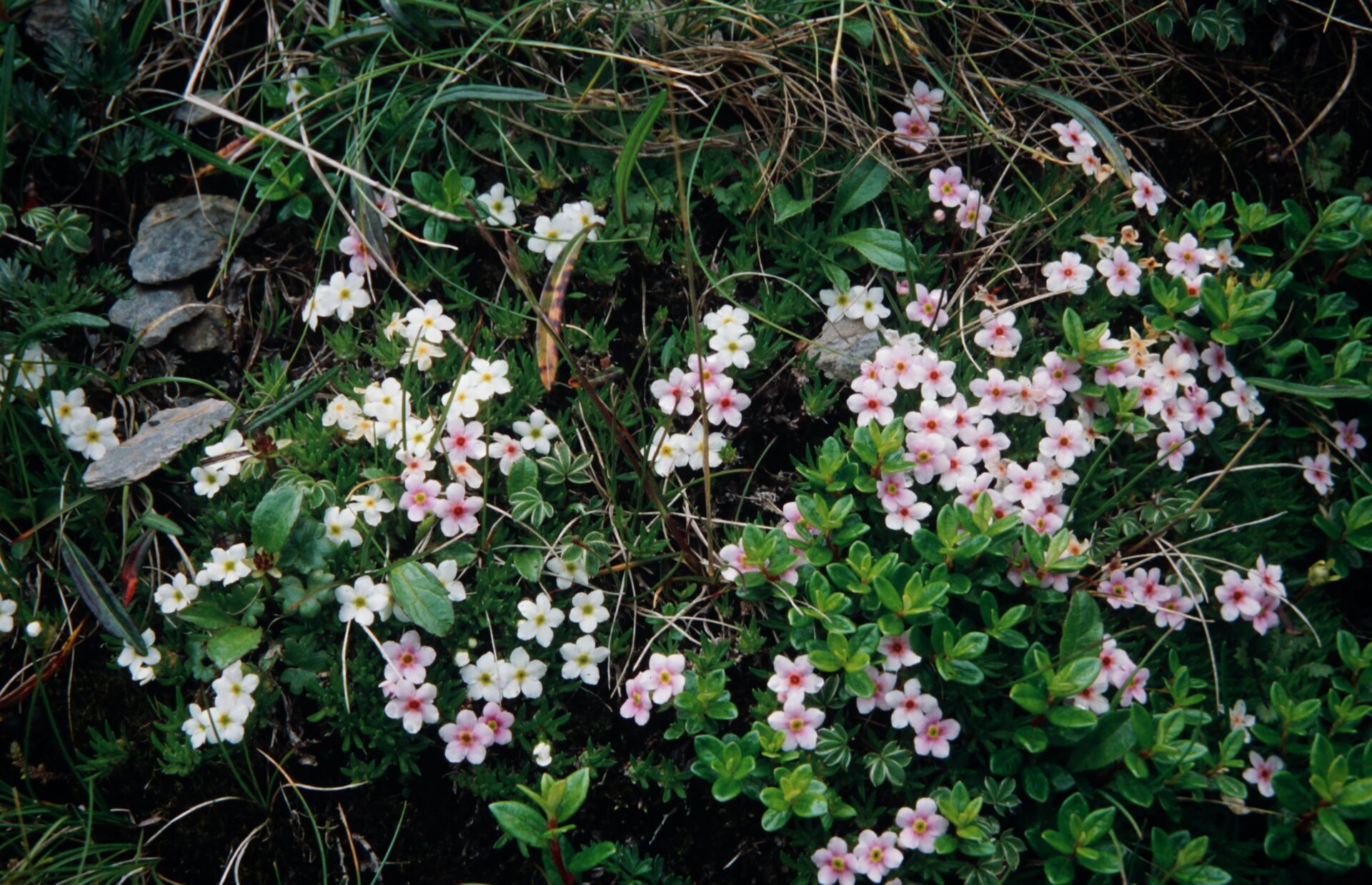
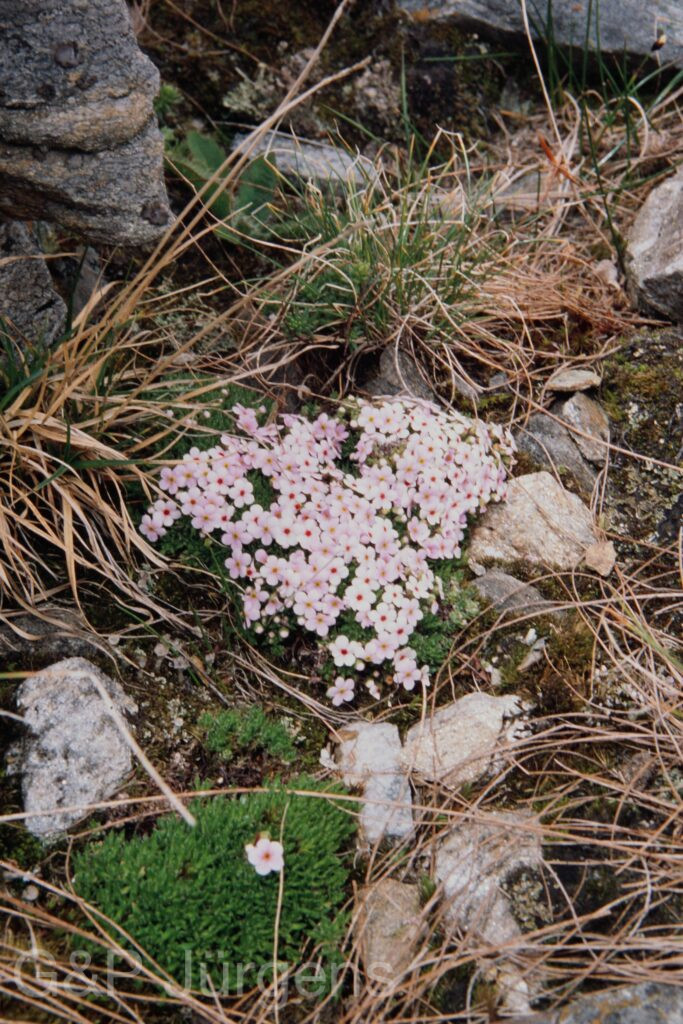
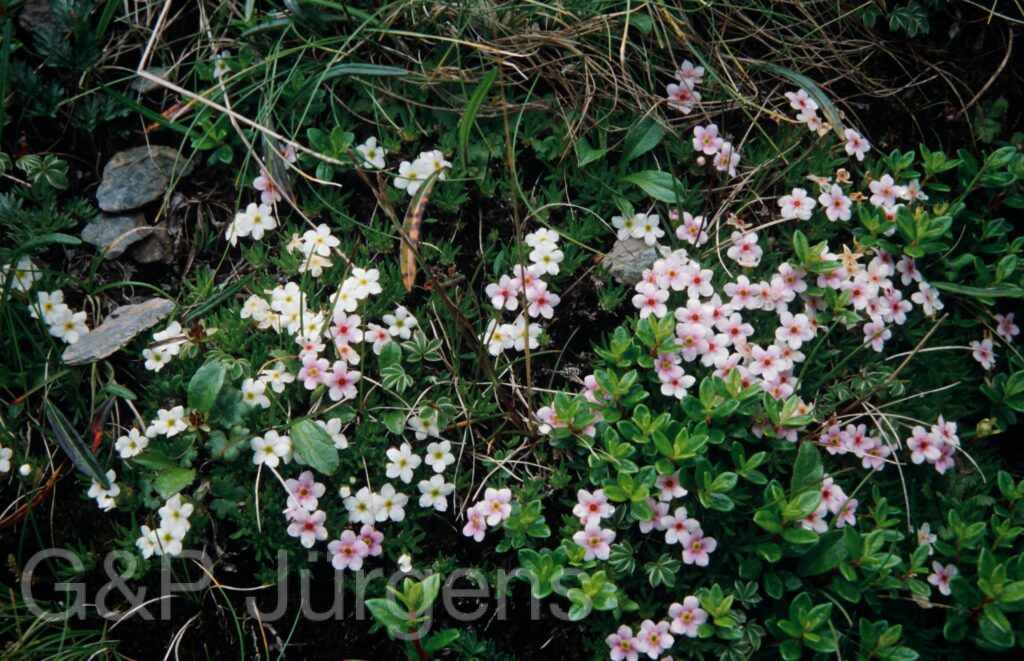
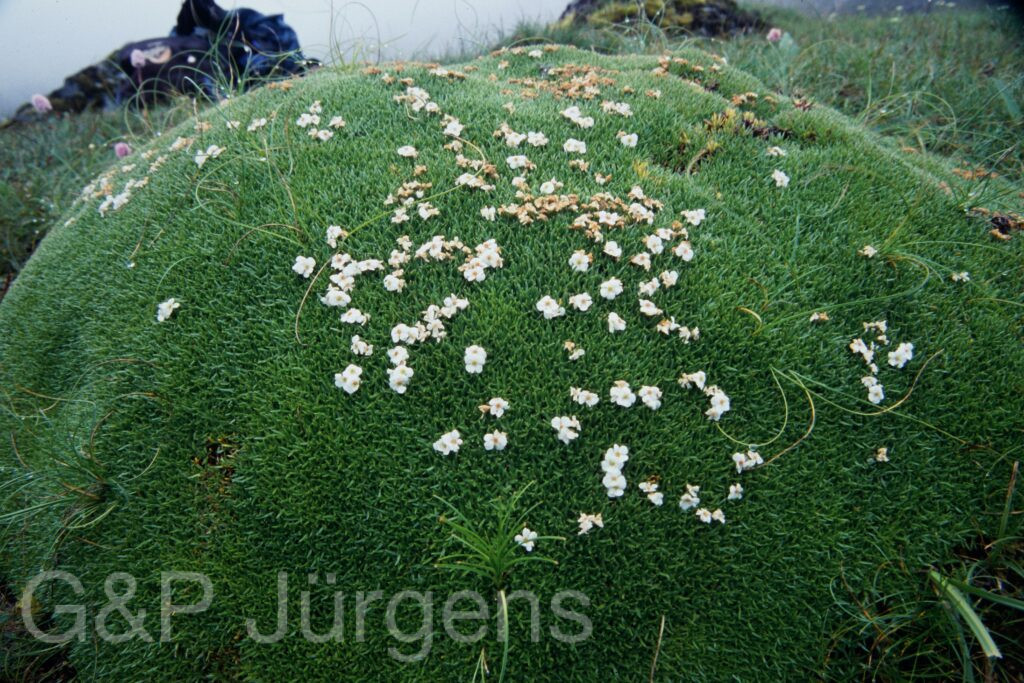
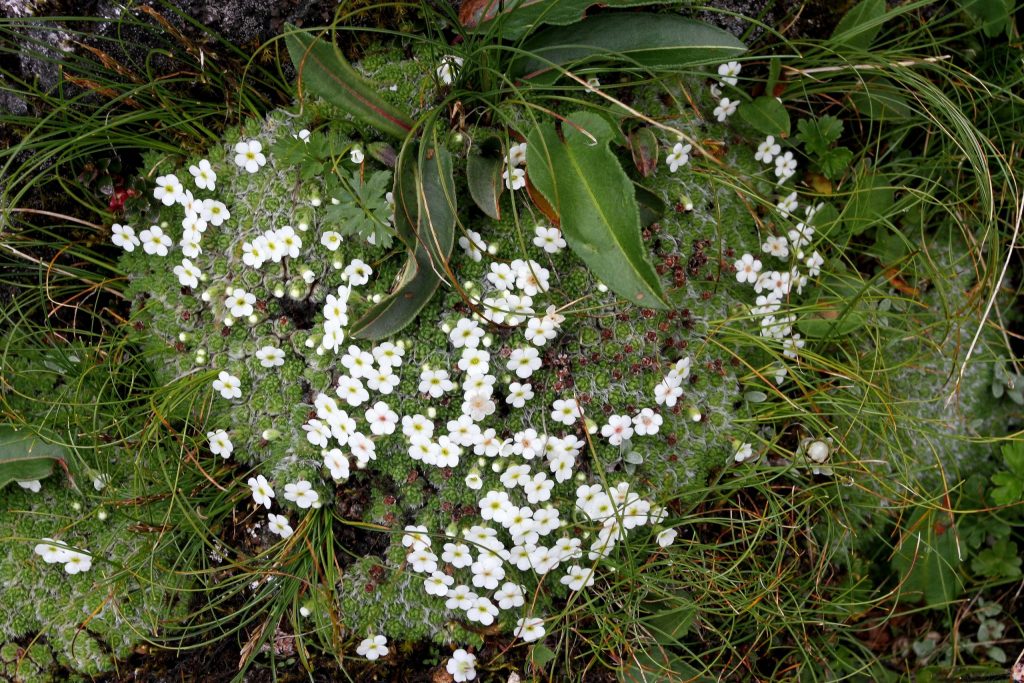
The plant builds a dense, hemispherical cushion of crowded rosettes borne on branched, columnar shoots packed with the marcescent remains of old leaves. The living leaves are small, oblong to spathulate, entire, often ciliate-margined and frequently bearing whitish hairs that reduce water loss and radiation damage. Solitary, almost sessile flowers nestle among the leaves, each with a campanulate calyx and a salver-shaped, five-lobed corolla in white to pale pink, the throat marked by a contrasting yellow or pinkish eye. The fruit is a small, few-seeded capsule dehiscing by valves.
Androsace lehmannii belongs to the section of cushion androsaces (allied to sect. Aretia), a growth form that has evolved repeatedly in cold, high-mountain floras as a thermal and mechanical adaptation, the compact canopy trapping warmth and moisture within the cushion. Such plants are slow-growing, long-lived and pioneer-like on unstable substrates. Though not currently threatened, cushion androsaces are recognised as climate-sensitive sentinels, vulnerable to warming, altered snow cover and trampling along increasingly frequented high-altitude routes.
Author: Wall. ex Duby · Sources: POWO (Kew), GBIF, Flora of Nepal, Flora of China, Flora of Bhutan, Androsace monograph (Smith & Lowe)